Quidel Corp., of San Diego, has scored another win at the U.S. FDA, receiving emergency use authorization (EUA) for the Lyra Direct SARS-CoV-2 Assay to allow direct sample processing. What’s special about this assay is that it does not require an up-front sample extraction. Instead, it uses a reformulated buffer that replaces that process with a simple 10-minute heat step, saving about 50 minutes in processing time.
Balt USA LLC, of Irvine, Calif., has received a thumbs up from the FDA to begin an IDE trial of its Squid liquid embolic device for the treatment of chronic subdural hematoma (cSDH). The nonadhesive agent offers a minimally invasive option for a disabling neurological condition that often requires brain surgery to correct.
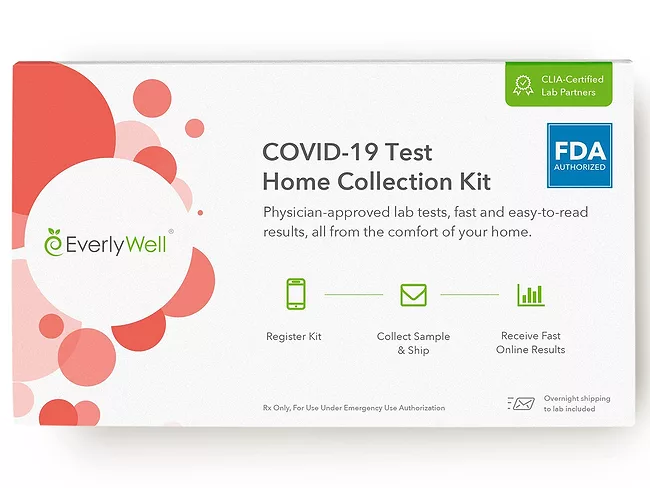
The FDA has granted an emergency use authorization (EUA) for the home sample collection kit made by Austin, Texas-based Everlywell Inc., which can be run on two lab-developed tests. However, the agency has also shut down a Gates Foundation-backed effort in Seattle to develop another home sample collection kit even though the organization behind the effort has been authorized by state health authorities. The FDA announced the news about the Everlywell EUA with the stipulation that the user of the kit has completed an online questionnaire that is subsequently reviewed by a health care professional.
Women, black and Hispanic/Latinx participants were underrepresented in pivotal clinical trials for drugs approved from 2007 to 2017, according to a new report by the Tufts Center for the Study of Drug Development. In the pivotal clinical trials, 44.9% of patients were women. Participants who identified as black or of African descent were the most underrepresented participant group, representing 5.4% of participants in clinical trials.
Only hours after Blueprint Medicines Corp. disclosed an FDA complete response letter for avapritinib in fourth-line gastrointestinal stromal tumor (GIST), Deciphera Pharmaceuticals Inc.’s kinase inhibitor, ripretinib, won the agency’s approval for the same indication, well ahead of its Aug. 13 PDUFA date.
Abbott Laboratories’ ID Now test for the SARS-CoV-2 virus made waves when it was introduced thanks to the rapid turnaround time the molecular test promised. But questions about the test’s performance have surfaced several times in recent weeks. The latest criticism comes from a study conducted at the New York University Langone Medical Center, which claims the diagnostic compared poorly against a competitor. However, the U.S. FDA said that it has questions about the swabs and transport media used in connection with the test. As a result, it will stand pat regarding the ID Now’s place in the emergency use authorization (EUA) program.
The FDA’s weekly town hall on testing for the COVID-19 pandemic included the usual range of concerns about test performance, but concerns regarding swabs and sample sites continue to mount. The predicament has led to the announcement that the FDA along with the National Institutes of Health (NIH) will hold a May 15 town hall regarding swabs, with a particular interest in swabs produced via additive manufacturing.
The U.S. FDA has given the greenlight to Eko Devices Inc.’s electrocardiogram (ECG)-based algorithm to aid in detecting patients with heart failure during the COVID-19 pandemic. The artificial intelligence (AI)-powered algorithm, which provides a quick way to screen for low ejection fraction, won FDA breakthrough status in December of 2019.
Abbott Laboratories received FDA emergency use authorization (EUA) for its COVID-19 molecular test, which will run on the company's new Alinity m system, as well as its COVID-19 antibody blood test, which will run on the Alinity i system. The two actions bring to five the number of COVID-19 tests developed by the Abbott Park, Ill.-based company to receive EUAs.
The May 12 Senate hearing regarding the COVID-19 pandemic included the usual conversations about contact tracing, but Anthony Fauci, director of the National Institute of Allergy and Infectious Diseases, said he is “cautiously optimistic” that one of the vaccines currently in trial in the U.S. will work, but that it is unlikely a vaccine will be ready by September 2020. In contrast, Assistant Secretary for Health Brett Giroir said testing capacity may reach 50 million tests per month by that time, thanks in part to the fact that antigen testing is now part of the FDA’s emergency use authorization mechanism.
 RSS
RSS