The U.S. FDA granted an emergency use authorization (EUA) for Quest Diagnostics Inc.’s self-collection kit for COVID-19. The kit allows individuals to collect their own specimens at home or in a health care setting.
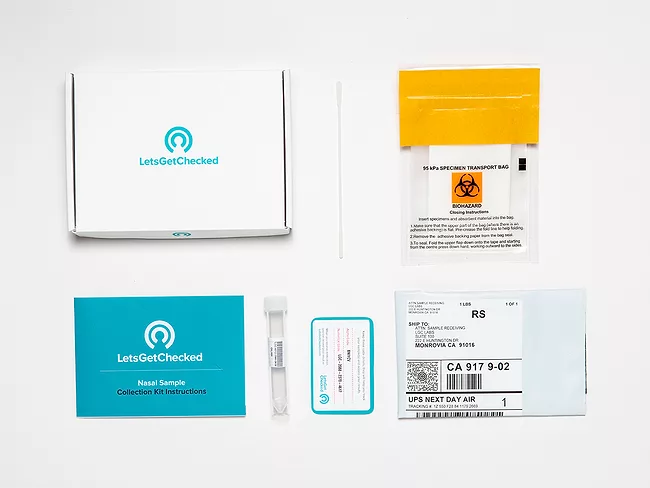
New York-based at-home testing startup Letsgetchecked said Friday that the U.S. FDA has granted emergency use authorization (EUA) for its COVID-19 Sure-track Test for signs of active SARS-CoV-2 infection. The polymerase chain reaction (PCR) nasal swab test is for use by at-risk individuals in the home and delivers results within 24 hours of a sample being received by the company’s CLIA-certified laboratory.
The number of tests of various types for the SARS-CoV-2 virus are still growing, but the emergency use authorization (EUA) program is not the only option for developers. Timothy Stenzel, director of the Office of In Vitro Diagnostics and Radiology, said on the agency’s May 27 town hall that the agency would like to see test developers file for a 510(k) for their tests when the data are sufficient to support an application, adding that any such clearances will not affect the U.S. FDA’s interest in keeping plenty of similar tests on the market via the EUA mechanism.
Intravenous artesunate, the international standard of care to treat severe malaria, has finally won full FDA approval for the condition, which affects about 300 of the approximately 2,000 people diagnosed with malaria in the U.S. each year.
As the FDA continues to shift its limited resources to the development and review of COVID-19 therapies and vaccines, other drugs in the pipeline may be delayed. In a question-and-answer guidance released late Tuesday, the agency acknowledged that, going forward, it may not be able to sustain its current performance level in meeting all its goal dates for new drugs and biologics.
Nearly four years after differences between U.S. and Russian clinical results derailed an NDA for its pregnancy prevention candidate, Phexxi, San Diego-based Evofem Biosciences Inc. has prevailed, winning FDA approval today for the vaginal pH regulator.
The U.S. FDA reported that 28 serology tests for antibodies for the SARS-CoV-2 virus either have been withdrawn from the market by the sponsor or delisted by the agency for failure to comply with its notification process for emergency use authorization (EUA). The agency said the list of unavailable tests will be updated over time. For his part, Commissioner Stephen Hahn said the move was undertaken “to ensure that Americans have access to trustworthy tests.”
PERTH, Australia – Perth-based regenerative medicine company Orthocell Ltd. has submitted a 510(k) application to the U.S. FDA for its Celgro collagen medical device for dental guided bone and soft tissue regeneration applications. The submission follows positive results from an FDA-guided bone regeneration study, which is a key component toward the goal of gaining U.S. marketing approval.
Sunovion Pharmaceuticals Inc.’s apomorphine sublingual film (APL-130277), a dopamine agonist the company will market as Kynmobi, has won FDA approval for the acute intermittent treatment of motor fluctuations (off episodes) associated with Parkinson’s disease.
The pandemic-driven FDA guidance for device shortages addressed a topic that has been discussed for devices for some time despite lack of congressional action, but shortages may be ordinarily interpreted as a consequence of reduced or terminated production that crimps supplies. That interpretation has been expanded for the duration of the COVID-19 pandemic, however, to include circumstances in which demand exceeds supply even when the manufacturer sustains normal production levels, in which case the manufacturer is liable for reporting the shortage to the FDA.
 RSS
RSS