A second attempt by Nabriva Therapeutics plc to win U.S. approval for the antibiotic Contepo (fosfomycin) has been undone by COVID-19. Manufacturing issues stymied the original NDA. This time, restrictions of FDA staff travel to Europe sunk the venture, leading to a new complete response letter (CRL) for the candidate as a potential treatment of complicated urinary tract infections (cUTI), including acute pyelonephritis.
Evoke Pharma Inc., of Solana Beach, Calif., which has struggled in the past year through troughs in its stock price and doubts from the FDA in its quest for approval for Gimoti (metoclopramide), was vindicated today as the FDA approved the treatment for adults with acute and recurrent diabetic gastroparesis.
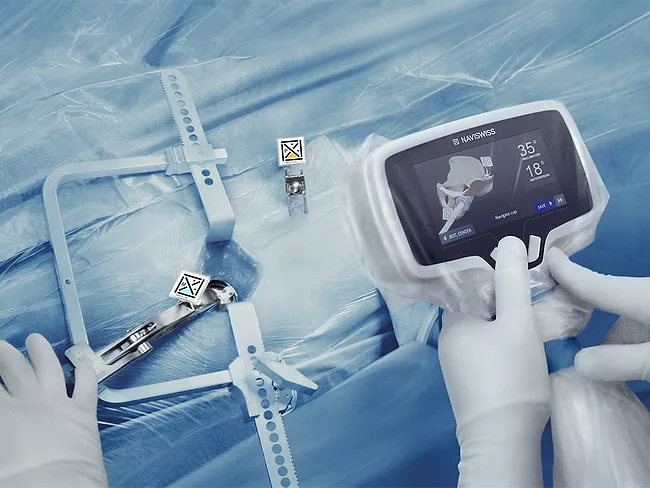
Smart assisted surgery company Naviswiss AG, of Brugg, Switzerland, has gained U.S. FDA clearance for its miniature navigation technology for hip replacement surgery. The hand-held system, with an open platform that supports all implant vendors, is being offered on a fee per-use basis.
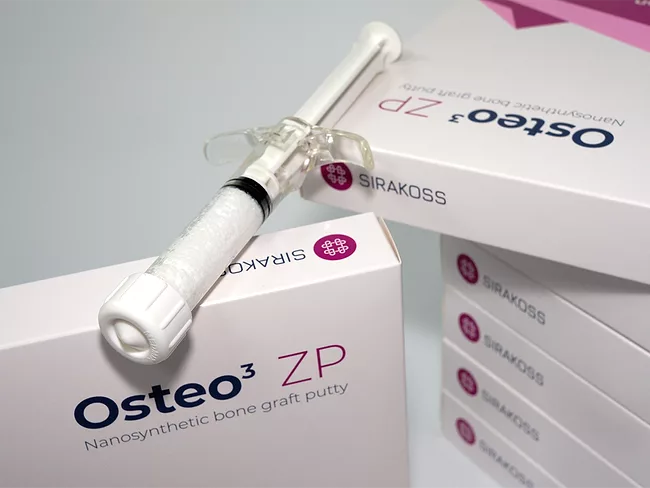
LONDON – Sirakoss Ltd. has received FDA 510(k) clearance for its nanoparticle synthetic bone graft substitute, after showing the ready-to-use putty is equivalent to the CE-approved dry formulation. Rather than granules that are mixed with a patient’s blood before administration, the inorganic calcium phosphate-based Osteo3 Zp putty consists of the granules suspended in a fully synthetic resorbable carrier.
About six months after Epizyme Inc. won FDA clearance of Tazverik (tazemetostat) for epithelial sarcoma (ES), the firm scored accelerated approval in the larger indication of relapsed or refractory (r/r) follicular lymphoma (FL). Specifically, U.S. regulators cleared the methyltransferase inhibitor for adults whose tumors test positive for an EZH2 mutation who have received at least two prior systemic therapies and for those with no satisfactory alternative treatment options – language that “gives physicians a lot of flexibility to use their clinical judgement in how to best prescribe” the drug, CEO Robert Bazemore noted.
The U.S. FDA detailed which kinds of SARS-CoV-2 tests are getting top priority, with access to rolling, rapid reviews for emergency use authorization (EUA) during the unfolding pandemic. The agency is aiming to authorize point-of-care and at-home tests to better distribute the use of testing in various locations. It also is looking at automated and high-throughput tests that can offer analysis of larger batches of tests at one time.
Four years after the EMA first approved Novartis AG's Ilaris (canakinumab) for the treatment of adult-onset Still’s disease (AOSD), the FDA has followed suit, giving it a green light in the indication following a priority review. The rare rheumatic condition usually affects younger adults and can occur as infrequently as once, but also intermittently or chronically.
In a step toward what may become the new normal, at least for now, the Pediatric Oncology Subcommittee of the FDA’s Oncologic Drugs Advisory Committee is meeting virtually Wednesday and Thursday to review pediatric development plans for four cancer drugs.
A wireless system to monitor mothers in labor and their fetuses has been introduced by Royal Philips NV in the U.S. Known as the Avalon CL Fetal and Maternal Pod and Patch, it is commercialized under recently updated guidance from the U.S. FDA. The Amsterdam-based company is continuing to pursue a standard 510(k) clearance for the system, which is marketed in European countries, Australia, New Zealand and Singapore.
Clew Medical Ltd., of Netanya, Israel, has secured an emergency use authorization (EUA) from the U.S. FDA for its ClewICU system for use with COVID-19 patients in intensive care units (ICUs). The screening system is a standalone software as a medical device product that uses vital signs, laboratory data, medications and other information to assess the likelihood a patient has been infected with SARS-CoV-2, the virus that causes COVID-19.

 RSS
RSS