Xinthera Inc. has disclosed integrin α4β7 (LPAM-1) antagonists reported to be useful for the treatment of inflammatory bowel disease, colitis, pouchitis, gastroenteritis, eosinophilic esophagitis and lung inflammatory disease.
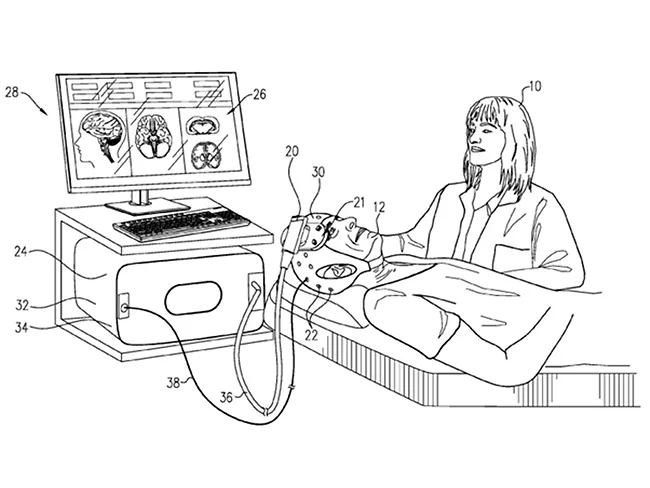
Quantalx Neuroscience Ltd. filed for protection of a system and method for the diagnosis of normal pressure hydrocephalus and prediction of patient response to ventriculoperitoneal shunting surgery treatment. The U.S. FDA granted the company’s Delphi-MD breakthrough device designation for these indications in May 2023.
University of Regensburg has described water-soluble FLT3 (FLK2/STK1) inhibitors and their prodrugs reported to be useful for the treatment of acute myeloid leukemia (AML).
Universität Bonn has divulged P2X purinoceptor 4 (P2RX4; P2X4) antagonists reported to be useful as diagnostics and for the treatment of pain, inflammation, cancer, stroke, multiple sclerosis, atherosclerosis and obesity.
Hangzhou Zhongmei Huadong Pharmaceutical Co. Ltd. has synthesized proteolysis targeting chimera (PROTAC) compounds comprising an E3 ubiquitin ligase binding moiety covalently bonded to a GTPase KRAS (G12D mutant) targeting moiety through a linker reported to be useful for the treatment of cancer.
The U.S. Court of Appeals for the Federal Circuit has upheld a district court decision that Natera Inc. is entitled to an injunction of a Neogenomics Inc. assay for detection of circulating tumor DNA (ctDNA). This outcome serves as a sobering reminder that injunction can be obtained at the preliminary injunction stage by demonstrating that an effort to prove infringement is likely to succeed even in the absence of a thorough evaluation of the contested claims in that patent.
The first patenting from Los Angeles-based Ecate LLC sees the company’s founder, Allesandro Maggi, describe a bi-directional, closed-loop spinal cord machine interface that can bridge the gap in communication between the brain and the body in paralyzed patients.
University of Copenhagen has described cyclic peptides acting as postsynaptic density-95 (PSD-95) protein inhibitors reported to be useful for the treatment of neuropathic pain.

 RSS
RSS