Cypralis Ltd. has divulged macrocyclic compounds acting as peptidyl-prolyl cis-trans isomerase A (PPIA; cyclophilin A; CYPA) and/or cyclophilin D inhibitors reported to be useful for the treatment of multiple sclerosis and epilepsy.
Zhejiang Wenda Pharma Technology Ltd. has identified HER2 (erbB2) and its (exon 20 insertion [Ex20Ins], (Ala775_Gly776insTyrValMetAla)) mutant inhibitors reported to be useful for the treatment of cancer.
Researchers at Sichuan Huiyu Pharmaceutical Co. Ltd. and Sichuan Huiyu Seacross Pharma Technology Ltd. have synthesized hydroxyamide derivatives acting as dual lysine-specific histone demethylase 1A (KDM1A, LSD1) and histone deacetylase (HDAC) inhibitors reported to be useful for the treatment of cancer and autoimmune disease.
Soltego Inc. has disclosed pyrimidopyrimidone compounds acting as serine/threonine-protein salt-inducible kinases (SIK) inhibitors reported to be useful for the treatment of erythematotelangiectatic and papulopustular rosacea.
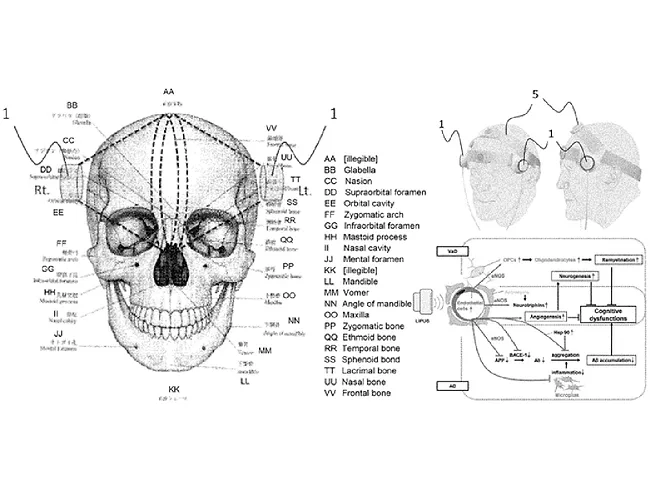
Sound Wave Innovation Co. Ltd. seeks patent protection for a method of using an ultrasonic device which transmits non-converging ultrasonic energy to the brain for the treatment of dementia, including mild Alzheimer’s-type dementia and mild cognitive impairment.
Hangzhou Unogen Biotech Ltd. has divulged protein arginine N-methyltransferase 5 (PRMT5) inhibitors reported to be useful for the treatment of lymphoma.
Researchers at Tufts University and University of Houston System have identified receptor-interacting serine/threonine-protein kinase 2 (RIPK2; RIP-2) and/or nucleotide-binding oligomerization domain-containing protein 2 (NOD2) inhibitors reported to be useful for the treatment of multiple sclerosis.
Gilead Sciences Inc. has synthesized indoline compounds acting as viral replication inhibitors reported to be useful for the treatment of herpes simplex virus infection and herpes simplex virus encephalitis.
Researchers at Albert-Ludwigs-Universität Freiburg and Deutsches Krebsforschungszentrum (DKFZ) have disclosed drug conjugates comprising fluorescent-labeled dye covalently linked to a radionuclide and a ligand targeting glutamate carboxypeptidase II (NAALADase; NAAG peptidase, FOLH1; PSMA) acting as positron-emission tomography (PET) and fluorescent imaging agents for diagnosis and treatment of prostate cancer.

 RSS
RSS