Kyoto University has disclosed compounds and their nanoparticles acting as radiosensitizers for radiotherapy reported to be useful for the treatment of cancer.
Scientists at Washington University in St. Louis reported filing patent protection for their breath test that quickly identifies those infected with SARS-CoV-2, requires only one or two breaths to be performed, and provides results in less than a minute.
Sookmyung Women’s University has described histone deacetylase 6 (HDAC6) inhibitors reported to be useful for the treatment of cancer, inflammation, autoimmune diseases and fibrosis.
Beigene Ltd. has divulged 4-(aminomethyl)-6-(1-methyl-1H-pyrazol-4-yl) isoquinolin-1 (2H)-one derivatives acting as protein arginine N-methyltransferase 5 (PRMT5) inhibitors reported to be useful for the treatment of cancer.
Insilico Medicine IP Ltd. has identified heteroaromatic compounds acting as membrane-associated tyrosine- and threonine-specific Cdc2-inhibitory kinase (PKMYT1) inhibitors reported to be useful for the treatment of cancer.
Duality Biologics (Suzhou) Co. Ltd. has synthesized antibody-drug conjugates comprising anti-GPC3 antibodies covalently linked to exatecan derivatives through a linker. They are reported to be useful for the treatment of cancer.
Biotheryx Inc. has disclosed PROTAC compounds comprising an E3 ubiquitin-protein ligase binding moiety covalently linked to a SOS1 targeting moiety via linker.
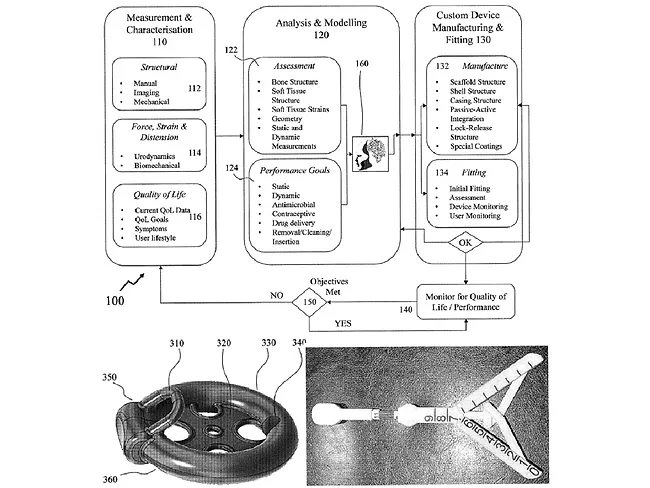
Derek Sham, founder and CEO, of Toronto, Ontario-based Cosm Medical Corp. reported filing for patent protection for devices, systems and methods for vaginal therapeutics. He reported on a range of surgical treatment options for pelvic organ prolapse (POP) and urinary incontinence (UI) as well as non-surgical treatments exist for POP and UI.
Jiangsu Hengrui Medicine Co. Ltd. and Shanghai Hengrui Pharmaceutical Co. Ltd. have described fused heterocyclic compounds acting as receptor-interacting serine/threonine-protein kinase 1 (RIPK1; RIP-1) inhibitors.
Molecular glues acting as zinc finger protein Helios (IKZF2) degradation inducers are described in a Gilead Sciences Inc. patent and reported to be useful for the treatment of cancer.

 RSS
RSS