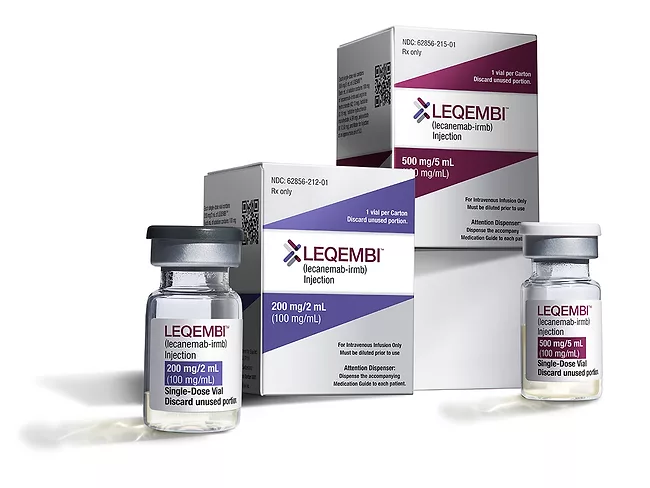
As pricing negotiations for Biogen Inc./Eisai Co. Ltd.’s newly approved Leqembi (lecanemab) for Alzheimer’s disease get underway at Japan’s Central Social Insurance Medical Council (Chuikyo), industry watchers see opportunity for potential drug price reform.
Acurastem Inc. said on Sept. 25 that it struck an out-licensing deal potentially worth $580 million with Takeda Pharmaceutical Co. Ltd. to develop drugs for amyotrophic lateral sclerosis (ALS) and other PIKfyve gene-targeting therapeutics. Under the terms, Tokyo-headquartered Takeda obtains exclusive worldwide rights to Acurastem’s PIKfyve-targeting therapeutics, including Acurastem’s lead AS-202 asset, an antisense oligonucleotide therapy to treat ALS.
Peptidream Inc. and Genentech Inc., a Roche Holding company, signed a deal worth up to $1 billion to discover and develop macrocyclic peptide-radioisotope (peptide-RI) drug conjugates. Peptidream, of Kawasaki, Japan, will use its peptide discovery platform system technology to discover, optimize and develop macrocyclic peptide candidates for use as peptide-RI drug conjugates against targets of interest to Genentech. Genentech will pay Peptidream an up-front payment of $40 million and up to $1 billion in potential development, regulatory, and commercial-based milestones. In addition, Peptidream is eligible to receive tiered royalties on net sales (ex-Japan) of any products arising from the collaboration.
Inventiva SA is getting $10 million up front and the possibility of $231 in clinical, regulatory and commercial milestones by exclusively licensing its nonalcoholic steatohepatitis (NASH) candidate, lanifibranor, to Hepalys Pharma Inc. to sell in Japan and South Korea, two massive markets for the indication.
Thanks to a raft of new approvals by Japan’s Ministry of Health, Labor and Welfare (MHLW), patients in Japan will soon have access to Biogen Inc./Eisai Co. Ltd.’s Leqembi (lecanemab), an amyloid-beta binder, for slowing progression of mild cognitive impairment and mild dementia due to Alzheimer's disease.
Inventiva SA is getting $10 million up front and the possibility of $231 in clinical, regulatory and commercial milestones by exclusively licensing its nonalcoholic steatohepatitis (NASH) candidate, lanifibranor, to Hepalys Pharma Inc. to sell in Japan and South Korea, two massive markets for the indication.
Peptidream Inc. and Genentech Inc., a Roche Holding company, signed a deal worth up to $1 billion to discover and develop macrocyclic peptide-radioisotope (peptide-RI) drug conjugates. Peptidream, of Kawasaki, Japan, will use its peptide discovery platform system technology to discover, optimize and develop macrocyclic peptide candidates for use as peptide-RI drug conjugates against targets of interest to Genentech. Genentech will pay Peptidream an up-front payment of $40 million and up to $1 billion in potential development, regulatory, and commercial-based milestones. In addition, Peptidream is eligible to receive tiered royalties on net sales (ex-Japan) of any products arising from the collaboration.
Daiichi Sankyo Co Ltd.’s HER3-directed antibody-drug conjugate patritumab deruxtecan showed clinically meaningful and durable responses in patients with EGFR-mutated locally advanced or metastatic non-small-cell lung cancer (NSCLC) in the Herthena-Lung1 phase II trial.
Japan’s Pharmaceutical and Medical Devices Agency (PMDA) has jumped on board the e-consent train for clinical trials, publishing a guidance for the use of electronic means for obtaining a study participant’s informed consent.
In its second big pharma deal to date, Shape Therapeutics Inc. drew Otsuka Pharmaceutical Co. Ltd. to the table in a potential $1.5 billion-plus collaboration initially aimed at developing gene therapies for ocular diseases. The multitarget agreement, which includes options for additional targets and tissue types, will combine Shape’s AI-driven adeno-associated virus (AAV) platform and Otsuka’s expertise in ophthalmology to develop intravitreally delivered AAV therapies.
 RSS
RSS