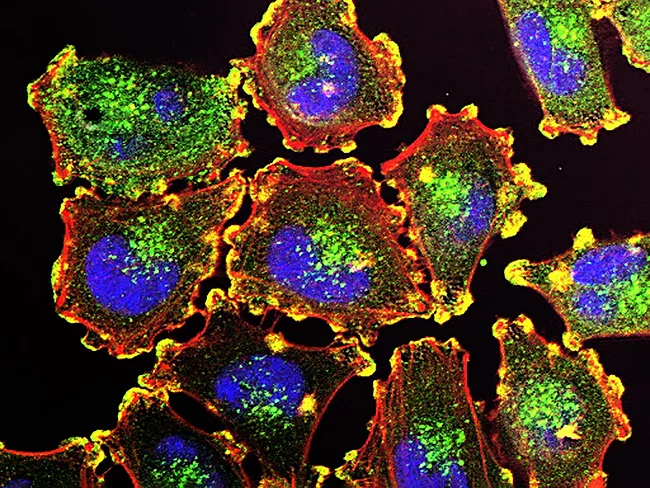
The mTORC2 complex plays an important role in the PI3K/AKT/mTOR pathway, allowing activation of AKT and contributing to the development of BRAF-mutated (BRAFm) melanomas and their resistance to treatments. Researchers from Inserm aimed to identify new candidates for targeting the mTORC2 complex in melanoma, with focus on one principal protein of this complex, MAPKAP1 (also known as SIN1).
Researchers from Tonix Pharmaceuticals have presented preclinical data for mTNX-1700 (mTTF2-MSA), a novel recombinant fusion protein with an extended half-life, in anti-PD-1 treated colorectal cancer (CRC) models.
Researchers from Memorial Sloan Kettering Cancer Center and affiliated organizations presented data from a study that aimed to investigate the immunomodulatory functions of lysine-specific demethylase 1 (LSD1) in regulating MHC-I antigen presentation pathway (APP) and resistance to immunotherapy in patients with small-cell lung cancer (SCLC).
CD73 is known to induce immune evasion in solid tumors by release of immune-suppressive adenosine in the tumor microenvironment. Researchers from Cidara Therapeutics Inc. have presented preclinical data on the CD73 inhibitor drug FC-conjugate CBO-212 for the potential treatment of solid tumors.
IOA-244 is a selective phosphoinositide 3-kinase delta (PIK3δ) inhibitor that is being tested in the clinic for lymphoma and solid tumors. Researchers from Ionctura SA and their collaborators tested IOA-244’s antiproliferative activity in MTT assays at 72 h.
Researchers from Case Western Reserve University presented data from a study that aimed to investigate gut integrity, oxidized lipids and inflammatory markers associated with the pathogenesis of post-acute sequelae of COVID-19 (PASC).
The mechanisms behind the mortality associated with early antiretroviral therapy (ART) treatment in children infected perinatally with HIV are poorly understood. Researchers sought to find potential biomarkers associated with the increased mortality. They created three groups of subjects: deceased (dead HIV+, n=20), nondeceased HIV+ (HIV+, n=59) and healthy controls (n=13).
 RSS
RSS