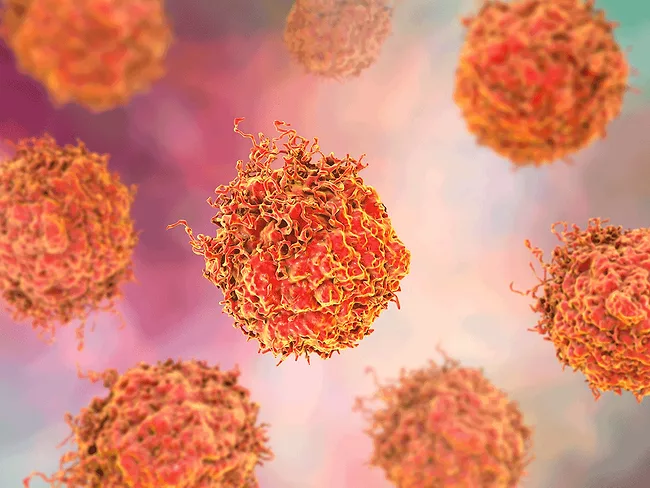
Midkine (MDK) is a multifunctional heparin-binding cytokine highly overexpressed and extracellularly enriched in the tumor microenvironment (TME) of several cancers.
Researchers from Bristol Myers Squibb Co. (BMS) presented preclinical data on BMS-986453 (tunlucabtagene autoleucel), a dual-targeting BCMA×GPRC5D CAR T-cell therapy, in models of multiple myeloma.
Rin Institute Inc. has disclosed antibody-drug conjugates consisting of an antibody targeting insoluble fibrin conjugated to MMAE through a plasmin-cleavable linker reported to be useful for the treatment of cancer.
Researchers at Theramir Ltd. presented preclinical proof-of-concept data for a new extracellular vesicle (EV) platform engineered to deliver miR-885-5p (EVmiR885-5p), targeting leukocyte-specific protein-1 (LCP-1)-mediated cytoskeletal remodeling in triple-negative breast cancer (TNBC) models.
Light chain multiple myeloma (LCMM) is a cancer driven by malignant plasma cells that produce excessive pathogenic free light chains (FLCs) that may cause kidney dysfunction and form amyloid deposits in key organs, thus leading to poor outcomes. Ab Studio Inc.’s CATA-001 is a bispecific antibody targeting both CD38 and aggregated light chains (ALs) designed to deplete CD38+ plasma cells and clear both circulating and tissue-deposited pathogenic FLC aggregates for the treatment of LCMM and AL amyloidosis.
MPM Bioimpact-spawned K2 Therapeutics Inc. inked a license deal plus option agreement, worth $980.5 million apiece, to gain ex-China rights to two of Antengene Corp. Ltd.’s preclinical anticancer bispecific T-cell engager (TCE) assets. The deal, announced June 21, will grant Singapore-based K2 exclusive rights to develop and commercialize Antengene’s ATG-106 outside of mainland China, Hong Kong, Macau and Taiwan.
Scientists from Nankai University Tianjin and Accendatech Technology Co. Ltd. have identified a majusculamide D derivative found to be useful for the treatment of cancer.
Henan Normal University and Henan Zhiwei Biological Engineering Co. Ltd. have discovered macrocyclic compounds acting as neurotrophic tyrosine kinase receptors (TRK) and/or proto-oncogene tyrosine-protein kinase ROS (ROS1; MCF3) and/or hepatocyte growth factor receptor (HGFR; MET) and/or macrophage colony-stimulating factor 1 receptor (CSF1R; CD115; c-Fms) and/or ALK tyrosine kinase receptor inhibitors found to be potentially useful for the treatment of cancer and pain.
Uniquest Pty Ltd., the commercialization company of the University of Queensland, has entered into an exclusive license agreement with the Ellison Medical Institute (EMI) to develop and commercialize the University of Queensland’s QED-203 for metastatic castration-resistant prostate cancer.

 RSS
RSS