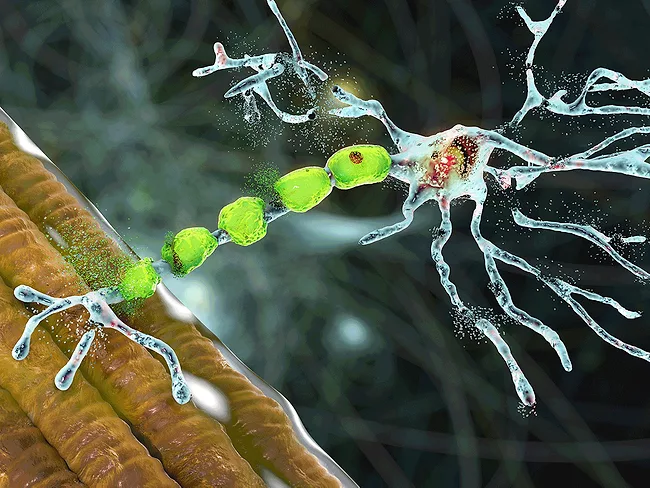
Eli Lilly & Co. has elected to pursue the development of therapeutics against two validated drug targets for amyotrophic lateral sclerosis (ALS) from its collaboration with Verge Analytics Inc. (dba Verge Genomics).
Recurrence rates and acquired treatment resistance in colorectal cancer have been linked to colorectal cancer stem cells, which are a subpopulation of slowly dividing cells within the tumor environment.
Gilead Sciences Inc. has synthesized 4-aminopyrrolo[2,1-F][1,2,4]triazine C-nucleoside analogues acting as prodrugs of GS-441524 and reported to be useful for the treatment of viral infections.
Arkuda Therapeutics Inc. has patented new fused tricyclic mucolipin-1 (MCOLN1; TRPML1) blockers reported to be useful for the treatment of cancer, liver diseases, amyotrophic lateral sclerosis, cardiovascular disorders, frontotemporal dementia, Alzheimer’s, Huntington’s and Parkinson’s disease.
Several recent Imhotex Ltd. patents describe novel analogues of muramyl dipeptide (MDP), desmuramylpeptides (DMPs), acting as nucleotide-binding oligomerization domain-containing protein 2 (NOD2) activators potentially useful for the treatment of Crohn’s disease.
Verge Analytics Inc. (dba Verge Genomics) has prepared and tested new hydrazone and pyrazole 3H-imidazo(4,5-b)pyridine compounds acting as 1-phosphatidylinositol 3-phosphate 5-kinase (PIKfyve) inhibitors.
Hangzhou Synrx Therapeutics Biomedical Technology Co. Ltd. recently presented the development and characterization of a novel PARG inhibitor, SYN-608, for the potential treatment of tumors with/without homologous recombination deficiency (HRD).
Tumor cell survival is dependent on phosphate homeostasis, which requires high amounts of energy. Researchers have demonstrated that the silencing of xenotropic and polytropic retrovirus receptor 1 (XPR1) led to reduced tumor growth in an ovarian cancer cell line xenograft, and similar vulnerability was found in lung cancer.
Hepatocellular carcinoma (HCC) is the most common type of liver cancer, with a 5-year survival rate of 18%. Glypican-3 (GPC3) is a protein with high expression in HCC but not in healthy tissue, making it an interesting target for therapy.
 RSS
RSS