At BioEurope Spring 2026, pharma representatives and investors shared their thoughts about current and future landscapes of different disease areas, and on how to move toward success – both at the level of individual companies and for indications as a whole.
There is broad agreement that psychiatric diagnoses in their current form are not reflective of any underlying biology, and that this is one of the things hampering psychiatric drug development. “We are still fully reliant on descriptive diagnoses that yield heterogeneous patient cohorts,” Steve Hyman told the audience at the European Congress of Neuropsychopharmacology (ECNP) Roadmap Meeting on Precision Psychiatry in Amsterdam in January.
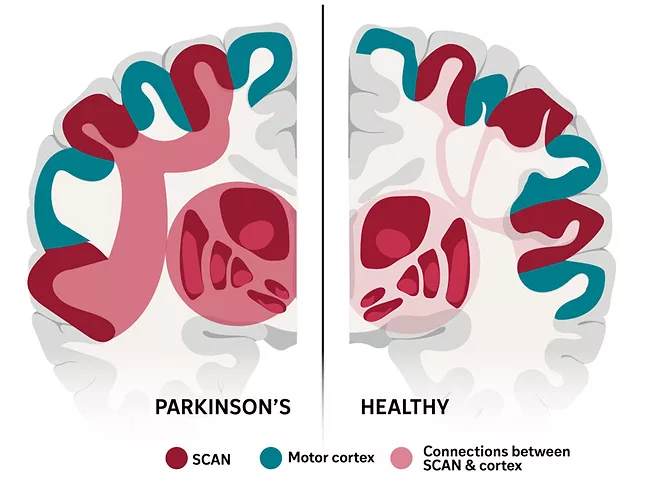
Parkinson’s disease is a neurodegenerative disorder that affects movement, and tremor is one of its signatures. But it is a much more wide-ranging disorder, and patients experience problems with cognitive and emotional processes as well. SCAN, the somato-cognitive action network identified in 2023, could reshape the definition of PD. Treating this circuit can improve outcomes.
It’s the biological resource that keeps on giving, and now UK Biobank has released the final tranche of data on the levels of 249 metabolites in the blood of its half a million participants.
South Korean researchers led by Lee In-suk of Yonsei University have reported the most complete oral microbiome catalog to date, with more than 72,000 genomes. Detailed in Cell Host & Microbe on Nov. 12, 2025, the database is expected to serve as a universal platform for academia and enable “precision microbiome medicine” for the industry, Lee told BioWorld.
Despite the formidable challenges for developing precision psychiatry, the approach is notching its first successes in the preclinical and even some clinical settings. Many individual studies as well as large projects like the Psychiatric Ratings using Intermediate Markers studies and the Psychiatric Biomarkers Network have been looking at multiple biomarker types, and have begun to identify predictors of specific symptoms, or disease progression.
Psychiatry has struggled to enter the precision medicine era. But through a mix of innovations and bootstrapping, progress is coming to the field. Scientists are working on improving diagnoses by investigating potential biomarkers and collection methods.
A team of U.S. and South Korean researchers have developed an AI model called MSI-SEER that can not only predict microsatellite instability-high (MSI-H) tumors based on tissue slides, but also flag “what it does not know.” “Have you ever asked ChatGPT anything, and the response was, ‘I don’t know?’” Cheong Jae-ho asked during an interview with BioWorld. “Probably not, and that is the problem with AI now.”
“New explosions in biotechnology are allowing us to interrogate cancers at a very sophisticated level compared to before,” Dennis Slamon told audience members at the Global Bio Conference in Seoul, South Korea Sept. 3.
Deep learning tools for protein design can also be used to create molecules that bind to them. Certain peptides, such as intrinsically disordered proteins (IDPs), are challenging to target due to their variable nature. However, scientists from the lab of Nobel laureate David Baker have developed a method to generate binders for IDPs by searching the world’s largest protein database with their AI-powered tool RFdiffusion.
 RSS
RSS