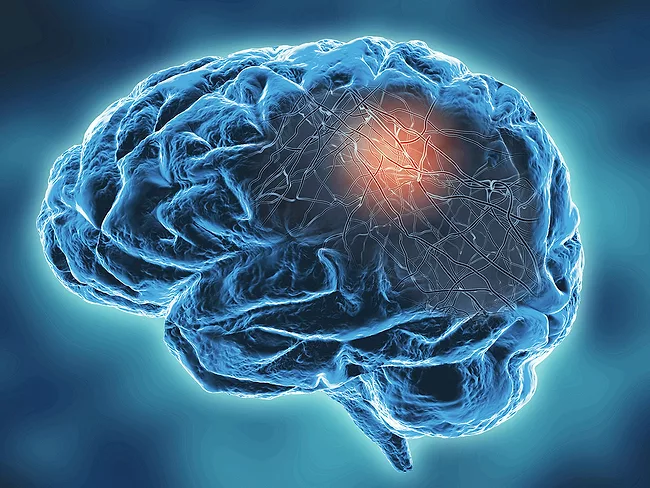
The switch will be flicked today to make the world’s largest dementia-related proteomics dataset freely available to researchers, at the same time as members of the consortium which compiled it publish the proteomics signatures of major neurodegenerative diseases that they uncovered in a first trawl of the data.
A publication based on longitudinal and cross sectional data and led by researchers at the U.S. NIH’s National Institute on Aging published on June 5, 2025 in Science has stated that the impact of taurine supplementation at delaying aging or treating aging-related conditions is context-dependent, and that the circulating levels of taurine are impacted by factors unique to each individual rather than declining with age. To qualify taurine as a true marker of aging, it should change with age across diverse populations over time and ideally supported by longitudinal data.
Researchers at the University of Rochester have described a neuroimaging-based biomarker that could identify individuals with early psychosis, and improved their identification when it was added to a standard neurocognitive diagnostic test. In a group of roughly 160 participants in the Human Connectome Early Psychosis Project, individuals who were in the early stages of psychosis had stronger connections from the thalamus (a midbrain sensory processing area) to the cortex, but weaker connections between different cortical areas, than controls.
Many studies have linked the presence of specific bacteria to various diseases. But a general overgrowth of gut bacteria can be a symptom of different conditions, including colorectal cancer and inflammatory bowel disease.
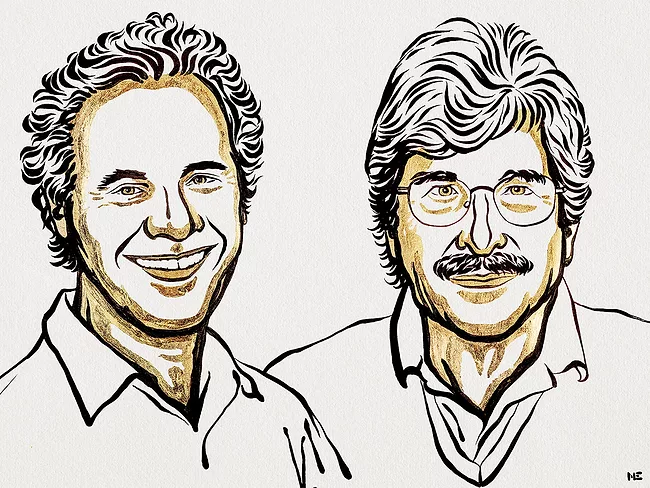
Research into the regulation of gene expression experienced a significant breakthrough with the discovery of microRNA, small RNA molecules that do not code for proteins but control their translation. This finding has earned its authors Victor Ambros and Gary Ruvkun the 2024 Nobel Prize in Physiology or Medicine.
Research into the regulation of gene expression experienced a significant breakthrough with the discovery of microRNA, small RNA molecules that do not code for proteins but control their translation. This finding has earned its discoverers – Victor Ambros and Gary Ruvkun – the 2024 Nobel Prize in Physiology or Medicine “for the discovery of microRNA and its role in post-transcriptional gene regulation.”
Based on its analysis of a large cohort of individuals homozygous for the ε4 variant of apolipoprotein E (ApoE4), a multinational team of researchers is arguing that homozygosity for ApoE4 should be considered a genetic form of Alzheimer’s disease (AD).
At a recent meeting on “Research priorities for preventing and treating Alzheimer’s disease and related dementias” (ADRD), convened by the National Academies, one consensus priority on ADRD research was that there needs to be more of it at every stage. Several speakers presented stark numbers on the relative volume of research in cancer and neurodegeneration. Research output, measured in peer-reviewed papers, for dementia is estimated to be around 10,000 papers annually, compared to 150,000 for cancer, while AD clinical trials are also few and far between compared to cancer trials. This final installment of BioWorld’s series on Alzheimer’s explores some of the reasons for this discrepancy along with the latest advances and ongoing efforts to accelerate research and drug development in the field.
By independently manipulating the lifespan of worms and one of its purported biomarkers, namely, the cessation of vigorous movement (CVM), investigators at the Center for Genomic Regulation (CRG) in Barcelona have demonstrated that the two are driven by partly independent processes.
Tumor mutational burden (TMB), a biomarker used to assess whether a patient will respond to immunotherapy, needs to be recalculated in order to be useful for patients of Asian or African descent. Scientists at the Dana-Farber Cancer Institute found a significant bias in the estimated TMB values affecting these populations and adjusted them for those patients.
 RSS
RSS