As U.S. President Donald Trump’s third nominee for CDC director, Erica Schwartz will soon find out if three times really is a charm. Trump announced the nomination on social media April 16, touting Schwartz’s credentials for the job. Calling her “incredibly talented,” Trump cited her “distinguished career” as a military doctor, in the Navy and Coast Guard, and her service as deputy surgeon general during his first term in office.
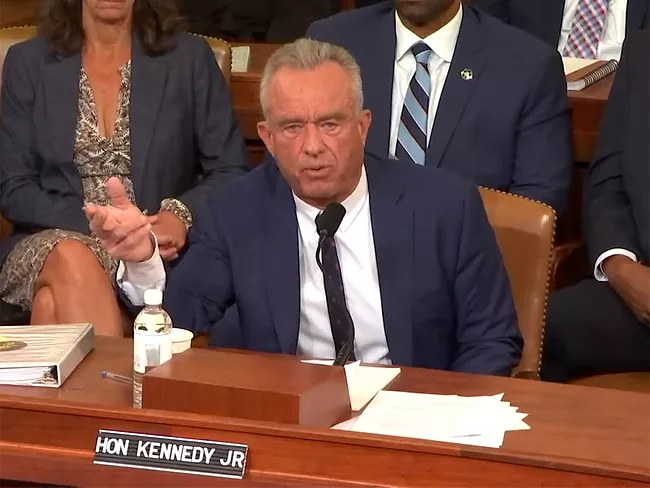
U.S. Health and Human Services (HHS) Secretary Robert Kennedy made his first stop April 16 on a congressional tour in support of President Donald Trump’s proposed fiscal 2027 budget, which would reduce discretional spending for HHS and its agencies by about 12%.
Despite key vacancies, ongoing staffing challenges and policy issues at the U.S. CDC, FDA and NIH, some of the regulatory churn that roiled those agencies in the first year of the second Trump administration is settling a bit, at least in terms of the number of executive orders (EOs) coming out of the Oval Office.
Amending his previous two-year-renewal of the standard charter for the U.S. CDC’s Advisory Committee on Immunization Practices (ACIP), Health and Human Services Secretary Robert Kennedy made monitoring adverse vaccine events a primary function of the committee and expanded its liaison membership to include organizations that have challenged vaccine safety.>
The U.S. confirmed the agreement in principle made last December to exempt U.K. pharmaceuticals from import tariffs, as the U.K government put its commitment to spend more on patented drugs into effect.
Don’t like a court order? Sidestep it. That seems to be the idea behind U.S. Health and Human Services Secretary Robert Kennedy’s latest changes to his renewal of the charter for the CDC’s Advisory Committee on Immunization Practices (ACIP).
After nearly a year of threats and promises of a global biopharma tariff of 25% to 500%, U.S. President Donald Trump finally delivered it. In the name of national security, he imposed a 100% sector tariff on prescription drugs and their associated ingredients beginning in about four months for large manufacturers and six months for smaller companies. However, depending on the drug, where it’s made and whether a manufacturer has reached onshoring and pricing agreements with the Department of Health and Human Services, the actual tariff could be as low as 0%.
Chaos continues at the U.S. CDC and its Advisory Committee on Immunization Practices (ACIP) with the resignation of ACIP member Robert Malone and the impending deadline for the president to nominate a new CDC director following the dramatic exit last year of Susan Monarez and months of acting directors.
U.S. lawmakers and industry experts are raising alarm over China’s expanding dominance across the pharmaceutical supply chain, warning that reliance on Chinese inputs poses a growing national security and public health risk.
Australia is attempting a once-in-a-generation reset of its innovation system, and biotech industry leaders have lauded the federal government’s independent review into Australia's slipping R&D ranks and its proposals to reverse the decline.
 RSS
RSS