Breaking with a 30-year tradition, the U.S. FDA selected the strains for the next flu vaccine March 13 without convening its independent vaccine advisory committee. Instead, the agency brought together 15 scientific and public health experts from within the FDA, the CDC and the Department of Defense to make the recommendations for the next flu season. That group met the same day that the agency’s Vaccines and Related Biological Products Advisory Committee had been scheduled to make the selection.
While data on functional endpoints are still to come, Avidity Biosciences Inc. executives said the firm is moving ahead with plans for a BLA filing by the end of 2025 for del-zota, an antibody-oligonucleotide conjugate, in Duchenne muscular dystrophy with mutations amenable to exon 44 skipping (DMD44), based on positive top-line data that analysts say bode well for Avidity’s other late-stage programs targeting rare neuromuscular diseases.
Artificial intelligence (AI) drug developer Insilico Medicine raised $110 million in a series E round led by an Asian private equity fund, Value Partners Group, that will see Insilico advance its pipeline and AI platform developments.
Investors wanted more from Incyte Corp.’s top-line results in hidradenitis suppurativa (HS) from its pivotal phase III Stop-HS trial program with oral small-molecule JAK1 inhibitor povorcitinib in adults with moderate to severe disease. Shares of the Wilmington, Del.-based firm (NASDAQ:INCY) closed March 17 at $62.01, down $5.85, after the company made public that Stop-HS1 and Stop-HS2 met the primary endpoint at both tested doses (45 mg and 75 mg)
The antibody-drug conjugate (ADC) juggernaut powers on, with Japan’s Taiho Pharmaceutical Co. set to acquire Araris Biotech AG for up to $1.14 billion. Of that, $400 million will be up front, with the remainder tied to milestones with a maximum value of $740 million, around the progress of three ADCs for treating solid and hematological cancers.
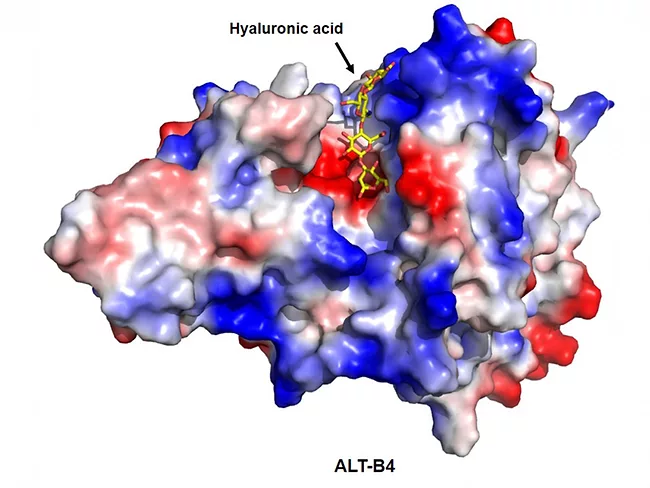
Alteogen Inc. signed its first billion-dollar partnership this year for ALT-B4 technology through two separate contracts with Astrazeneca plc’s U.K.- and U.S.-based Medimmune subsidiaries worth up to $1.35 billion combined.

 RSS
RSS