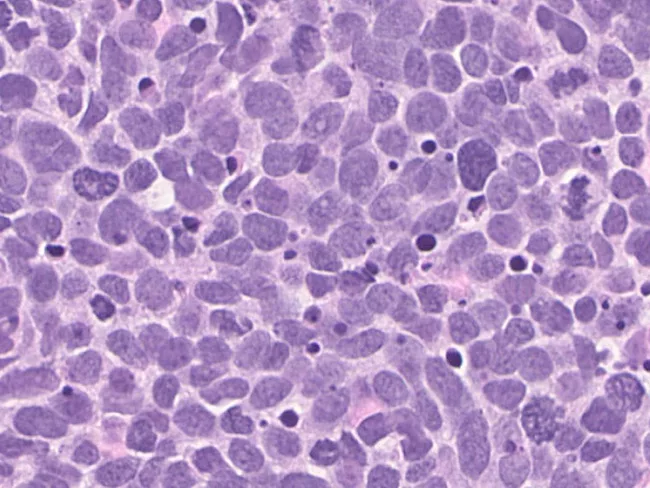
The Nobel Committee announced today that it has awarded the 2025 Nobel Prize in Physiology or Medicine to three scientists for their discovery of regulatory T cells, which are a critical part of the way the body prevents autoimmune attacks.
Pharma companies are collaborating to boost the power of artificial intelligence (AI) in drug discovery by allowing access to proprietary structural data to train a large language model. Each of the partners is contributing data from several thousand experimentally determined protein:ligand interactions, creating one of the most diverse datasets and the richest chemistry assembled to date for model training.
Two back-to-back papers published in Nature on Sept. 10, 2025, shed new light on the unexpected role of neurons in shaping the evolution of small-cell lung cancer (SCLC). It’s already known that, in gliomas, cerebral cancer cells actively damage axons, contributing to tumor progression through direct neural disruption.
A new generative AI model trained on UK Biobank data can simultaneously forecast the risks and timing of developing over 1,000 different diseases a decade into the future. The developers applied similar algorithmic concepts to those used to develop large language models like ChatGPT and Gemini to build the model, using medical records from 402,799 participants in UK Biobank.
New research has filled in missing links between gene variants that have been implicated in disease through genome-wide association studies and how the variants drive disease pathology. The research involved using induced pluripotent stem cells derived from healthy donors and transforming them into macrophages. These were then exposed to 24 different stimuli mimicking infection and inflammation, and the gene expression profiles assessed six and 24 hours later, to see which genes were turned on or off in response.
On Thursday, the Supreme Court handed the Trump administration another significant victory in its attempts to defund NIH-sponsored research. In a 5-4 decision, the justices paused the June 16 order of U.S. District Judge William Young to restore funding for hundreds of canceled NIH research grants focusing on gender and diversity, equity and inclusion (DEI). The funding had first been cut through a series of executive orders shortly after President Donald Trump resumed power in January.
A new method for accelerating the maturation of neuronal cell models and brain organoids is poised to make it possible to track the etiology of neurodegenerative diseases that develop over decades.
German researchers have cracked the decades-long mystery of why males are more susceptible to acute kidney injury than females, demonstrating that estrogen has a protective effect in females.
The U.K. Medicines and Healthcare products Agency (MHRA) is calling for more research into the vaginal microbiome as a way to redress the historic under-representation of women in clinical studies, which it said has contributed to “critical shortcomings” in understanding of female-specific conditions.
The largest genome-wide association study to date of myalgic encephalomyelitis/chronic fatigue syndrome has identified eight genetic loci that are significantly associated with the chronic debilitating condition. Onset of ME/CFS often is traced back to an infection and four of the loci involve genes that are expressed in response to viral or bacterial infections.
 RSS
RSS