V-Wave Ltd. said on Dec. 17 that it has closed all remaining tranches of a $98 million extended series C financing led by Deerfield Management. The funds will be used to complete a pivotal IDE trial for its Ventura interatrial shunt system for the treatment of advanced heart failure (HF) and submit a PMA to the FDA for U.S. marketing approval.
Regulatory agencies across the globe had their hands full in 2020 and 2021 in responding to the COVID-19 pandemic, but that is just one reason that regulatory frameworks for artificial intelligence are lagging. Several regulatory proposals have been floated, but one of these hints at a need for regulatory harmonization, a requirement that seems certain to add yet more drag to a process that is already years behind the technology.
TORONTO – Hyperfine Inc. has received Health Canada approval for the first FDA-cleared portable magnetic resonance imaging (MRI) device, which also features advanced reconstruction deep learning software. The company simultaneously announced its commercial launch of the Swoop imaging system in Canada.
Regulatory snapshots, including global submissions and approvals, clinical trial approvals and other regulatory decisions and designations: Firstkind, Implicity, Roche, Sky Medical Technology.
Fist Assist Devices LLC received a breakthrough device designation from the FDA for its Fist Assist Model FA-1 device for patients with end-stage renal disease (ESRD). The pre-surgical dilation device promotes arteriovenous (AV) fistula creation in renal failure patients with inadequate vein size for creation of an AV fistula for hemodialysis. An AV fistula is a surgical connection between an artery and a vein used as an access point for dialysis.
The FDA’s regulation of medical technology may be assumed to have a number of unintended consequences, and one of those seems to be the lawsuit between Johnson & Johnson (J&J) and Auris Health Inc. Due to a 2018 FDA policy change regarding 510(k) devices, a robotic surgery system acquired by a J&J subsidiary from Auris was forced into the lengthier de novo premarket channel. This change ultimately helped derail the development effort for the Auris Iplatform surgical system and thus played a role in the $2.35 billion lawsuit alleging that J&J had engaged in fraud in its deal with Auris over the acquisition.
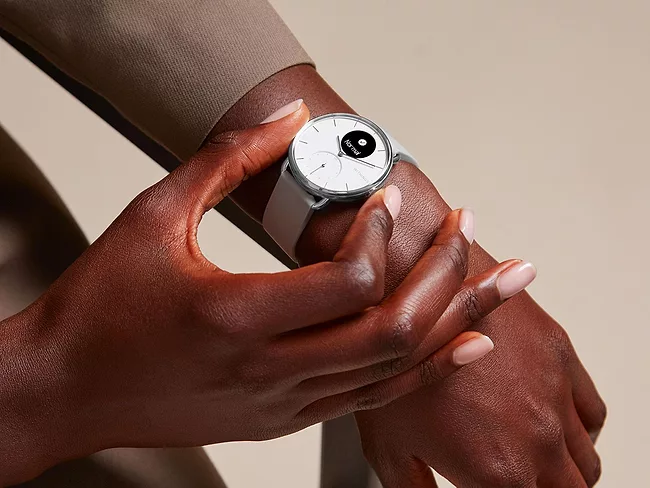
This year saw continued advances in smartwatches as they increasingly move from wellness assistants to medical monitors. Nowhere has that been clearer than in cardiovascular health, where multiple wearables now allow users to quickly detect atrial fibrillation, a notoriously shy condition previously only detectable in early stages by chance in a physician’s office or by wearing a cumbersome Holter monitor for 24 to 48 hours.
 RSS
RSS