Pulse Medical Technology Inc. obtained breakthrough device designation from the FDA for its fourth generation μFR system, which would accelerate the commercialization of the device. “The fourth generation μFR system is currently not available on the market, but Pulse Medical is preparing for the marketing approval of the product in the U.S.,” Jingfeng Han, director of science division at Pulse Medical, told BioWorld.
Merit Medical Systems Inc. is making progress on its acquisition badge, with a $100 million purchase of assets from Angiodynamics Inc. following shortly on the heels of its acquisition of a catheter system from Bluegrass Vascular Technologies Inc. for $32.5 million. The acquisitions strengthen Merit’s position in the specialty dialysis devices market and are expected to boost the company’s revenues $13 million to $15 million through Dec. 31, 2023, and by $30 million on an annualized basis going forward.
Standing as one of the more prominent among incurable conditions, Parkinson’s disease (PD) still hasn’t met a medicine or surgical intervention that can slow or stop progression, despite efforts of many drug developers testing new strategies.
Regulatory snapshots, including global submissions and approvals, clinical trial approvals and other regulatory decisions and designations: Avita Medical, Corneat Vision, Femasys, FX Solutions.
Med-tech happenings, including deals and partnerships, grants, preclinical data and other news in brief: Alivecor, Avanos, Echosens, Happitech, Hardy, Luscii, Medical Technology Assoc., Obvius Robotics, Omron, Pixium Vision, Premier Medical, Serac Imaging Systems, Sunmed.
Recent regulatory reforms to Australia’s medical device framework have shown Australia’s Therapeutic Goods Administration (TGA) a new way of collaborating with industry to make improvements and ensure patient safety, said Tracey Duffy, deputy secretary for the TGA’s Medical Devices and Product Quality Division, during the recent Ausmedtech conference in Adelaide.
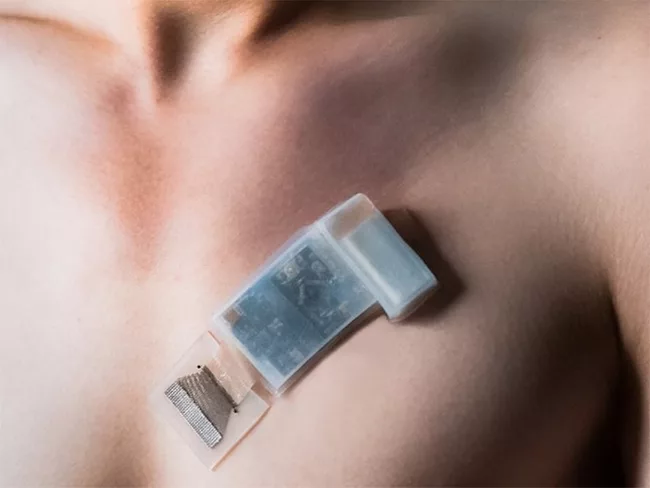
They call it the world's “first fully integrated wearable” ultrasound system for evaluating cardiovascular function while you walk, run, even ride a bicycle. Built on the nanoengineering research at the University of California San Diego (UCSD) the wearable ultrasonic system-on-patch (USoP) employs machine learning to interpret deep tissue vital signs data and track subjects in motion.
Proponents of telehealth have been pressing Congress to statutorily broaden coverage of telehealth since before the COVID-19 pandemic, and the Telehealth Expansion Act of 2023 carries the weight of at least some of these expectations. The House Ways and Means Committee’s health subcommittee recently voted 30-12 to pass along the legislation to the full committee, but the bill operates principally to allow high-deductible health plans to cover telehealth benefits before the enrollee has met the deductible, leaving a substantial amount of telehealth terrain unaddressed.

 RSS
RSS