Brain Trust Bio Inc. (BTB) will soon begin phase I trials in Australia of its IT-Riluzole delivered to the brain via a continuous intrathecal drug delivery method in people with amyotrophic lateral sclerosis. The company’s concept is to take known drugs that work and make them better by delivering them exclusively to where patients need them most, BTB co-founder and CEO Chen Benkler told BioWorld.
The U.S. FDA granted fast track designation to Telix Pharmaceutical Ltd.’s TLX101-CDx for glioma imaging as the firm prepares to file its NDA in the first half of 2024, a Telix spokesperson told BioWorld.
A day after investing $40 million in China’s D3 Bio Inc., London-based venture capital firm Medicxi is investing $25 million to co-found a new U.K.-based company called Petalion Therapeutics Ltd. that will focus on an early stage oncology asset from Australia’s Starpharma Holdings Ltd. to develop novel dendrimer-based treatments.
Scientists from the Australian National University have discovered the gene mutation responsible for causing psoriasis, and the findings could lead to improved diagnosis and treatment for patients with psoriasis and psoriatic arthritis, a chronic inflammatory skin disease. “We were able to identify the gene that could be important in enabling this progression from a skin-only condition to a skin-and-joint condition,” lead study author Chelisa Cardinez told BioWorld.
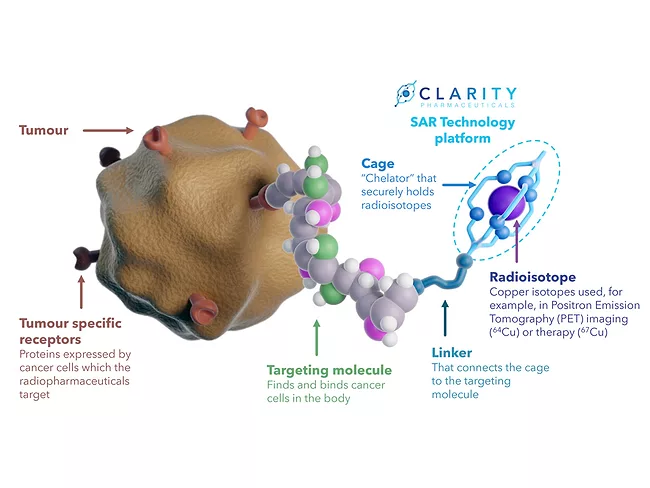
Clarity Pharmaceuticals Ltd. raised AU$121 million (US$79.29 million) through a private placement that will fund the company’s radiopharma pipeline comprising targeted copper therapies out to early 2026.
Kazia Therapeutics Ltd. has out-licensed paxalisib as a potential treatment for intractable epilepsy in focal cortical dysplasia type 2 and tuberous sclerosis complex disease in a carve-out deal with Sovargen Co. Ltd. for $20.5 million plus sales royalties.
Regenerative medicine company Mesoblast Ltd. saw its stock shoot up 45% on the news that the U.S. FDA is satisfied with the additional data submitted from the company’s phase III study for remestemcel-L for treatment of adults with steroid-refractory acute graft-vs.-host disease (SR-aGVHD) to support filing a BLA in pediatric patients with SR-aGVHD.
PYC Therapeutics raised AU$40 million of an anticipated AU$74 million (US$48.6 million) capital raise to advance three candidates, including lead candidate VP-001, which could potentially be the first treatment for retinitis pigmentosa type 11 (RP11), which causes blindness that begins in childhood and ultimately leads to legal blindness by middle age.
Dimerix Ltd. announced a AU$20 million ($US13.22 million) capital raise following the news that its lead candidate, DMX-200, was successful in a prespecified interim analysis of the efficacy endpoint in its pivotal phase III trial in focal segmental glomerulosclerosis, a rare kidney disease.
Pharmaust Ltd.’s monepantel met its primary safety endpoints and showed positive signals of potential efficacy in a phase I trial in patients with motor neuron disease (MND)/amyotrophic lateral sclerosis (ALS). With these results, the company will now progress to a pivotal phase II/III trial by midyear, Pharmaust CEO Michael Thurn told BioWorld.
 RSS
RSS