Multiple updates on TROP2-directed antibody-drug conjugates (ADCs) for lung and breast cancers highlight both progress made and opportunities for improvement for the targeted class of cancer therapeutics.
New regulations tighten regulatory oversight of China’s investigator-initiated trials (IITs) but legitimize the pathway that will be open to other modalities beyond cell and gene therapies.
Of all the issues that could be on the table at the talks between U.S. President Donald Trump and China President Xi Jinping, the life sciences sector is the “sweet spot” for collaboration between the two countries in a way that would benefit the world, Sen. Thom Tillis, R-N.C., said in a Brookings Institution webinar in advance of the two-day summit that starts May 14.
It’s a sure bet when the U.S. Trade Representative releases its annual Special 301 Report that Chile, China, India, Indonesia, Russia and Venezuela will be on the Priority Watch List. The 2026 report was no exception.
Singapore’s Communicable Diseases Agency on May 7 said that it isolated two residents for hantavirus testing after the individuals disembarked from an Atlantic cruise ship on May 2 and May 6, respectively. The measure comes in response to the cluster of cases from the cruise ship, MV Hondius, that has resulted in three deaths so far.
Three decades of trial-and-error, and the resulting safety data, in the oligonucleotide-based therapeutic space have paved way for the present-day innovations and the promise of “programmable,” precision medicine for patients, speakers at Bio Korea 2026 said April 28.
China’s investigator-initiated trial (IIT) system is increasingly being used to generate early human data in cell and gene therapies, and new changes that widen the pathway are expected to drive more multinational companies to conduct IITs in China, panelists said during the Chinabio Partnering Forum in Shanghai April 28-29.
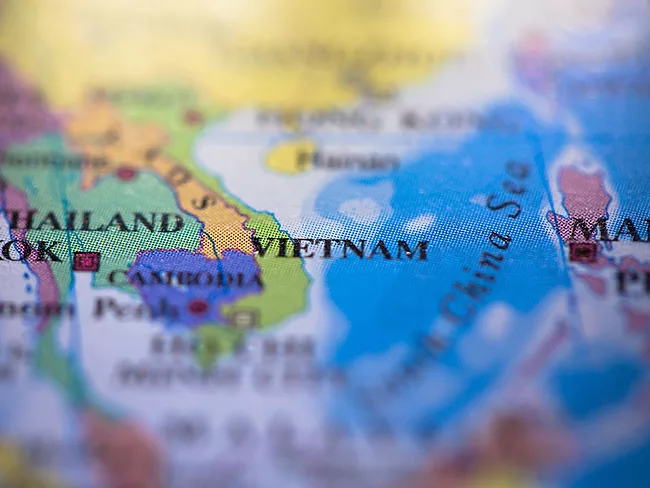
For the first time in 13 years, the U.S. Trade Representative (USTR) singled out one of the U.S. trading partners as the worst of the worst when it named Vietnam as a Priority Foreign Country (PFC) in its newly released Special 301 Report.
South Korea’s Ministry of Food and Drug Safety (MFDS) approved Curocell Inc.’s Rimqarto (anbalcabtagene-autoleucel; anbal-cel) April 29 as the first homegrown CAR T-cell therapy to treat patients with advanced diffuse large B-cell lymphomas.
Delta-Fly Pharma Inc. is pressing ahead with discussions with the FDA for its lead acute myeloid leukemia (AML) candidate, radgocitabine (DFP-10917), despite a phase III miss on its primary endpoint, instead leaning on earlier-stage efficacy signals and emerging combination data to support a potential path toward conditional approval.
 RSS
RSS