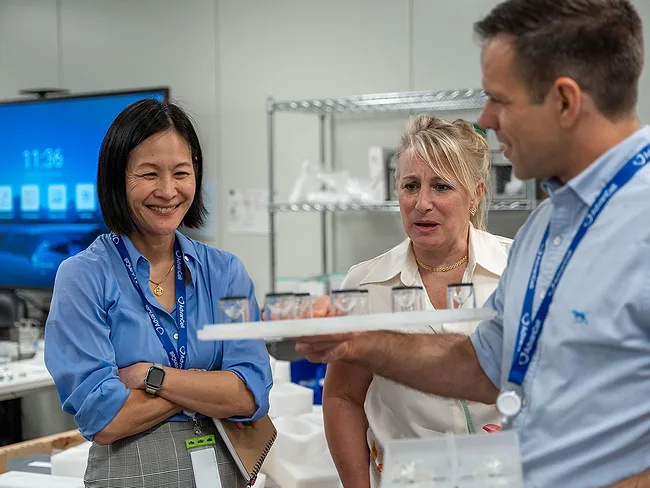
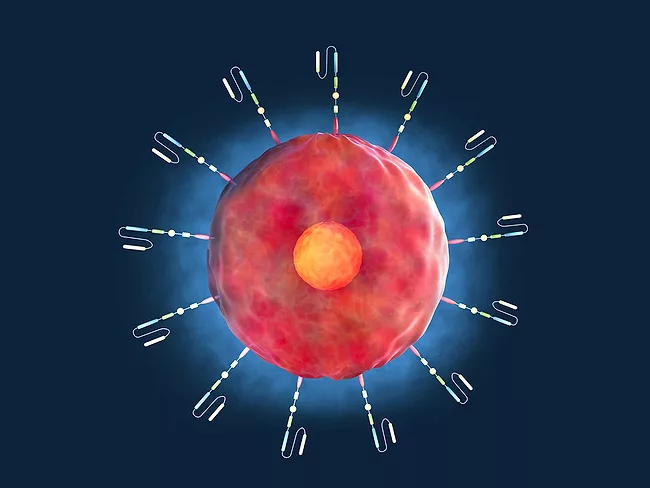
Axiom Biosciences, rebranded from Cytonus Therapeutics Inc. in June 2026, plans to be one of the first U.S. biotechs to IPO on the main board of The Stock Exchange of Hong Kong. The San Diego-based company is preparing audits as the first step to a potential IPO in 2027.
Biopharma deal value through the first half (H1) of 2026 reached $170.11 billion, surpassing every prior year in BioWorld’s records, including 2025’s $139.35 billion, the previous high-water mark. June was the second-strongest month of H1 at $34.59 billion, trailing only May’s $41.95 billion.
Another day, another two multibillion-dollar deals with Asian companies, this time involving Dizal Pharmaceutical Co. Ltd. and its EGFR inhibitor for lung cancer, as well as Innovent Biologics Inc. and its anti-CD40L antibody for a chronic fibroinflammatory condition.
Hansoh Pharmaceutical Group Co. Ltd. has taken a new step in the evolution of China’s “newco” strategy, combining its newly created U.S. company, Avere Therapeutics Inc., with Nasdaq-listed Nextcure Inc. in a deal designed less to merge pipelines than to create a public vehicle for global development of a China-originated asset.
Signs of recovery are emerging in the biotechnology investment sector, although investors across Asia say that capital is flowing selectively to companies that can demonstrate clinical differentiation, strong management teams and a clear path to commercialization.
Advancell Co. Ltd. has raised an oversubscribed $315 million series D round to accelerate its push to become a fully integrated global radiopharma developer, funding late-stage clinical development alongside isotope supply and manufacturing infrastructure.
The field of cell and gene therapy is moving toward a new phase of scalability and clinical durability, with in vivo chimeric antigen receptor (CAR) T-cell therapeutics emerging as the dark horse in what speakers at BIO Asia-Taiwan 2026 described as CAR T’s second revolution.
Regulatory snapshots for biopharma and med tech in Asia-Pacific, including global submissions and approvals, and other regulatory decisions and designations: Aspen Pharmacare, Bioarctic, Clinuvel, Eisai, Orasis, Shionogi, Sichuan Biokin, Systimmune.
Biopharma and med-tech happenings in Asia-Pacific, including deals and partnerships, and other news in brief: Adneuris, Bioarctic, China Medical System, Dimerix, DP Technology, Eisai, Excalipoint, Insilico Medicine, Mission, Organon, Samsung Bioepis, Zheijiang Conba.
Clinical updates for biopharma and med tech in Asia-Pacific, including data readouts and publications: Axiom, Eisai, Immutep, Innocare, Kelun-Biotech, Medinno, Merck, Takeda.
 RSS
RSS