Japan has approved the world’s first therapies derived from induced pluripotent stem cells (iPSCs), marking a major milestone for regenerative medicine and, potentially, a turning point in treating Parkinson’s disease.
China’s National Medical Products Administration has approved Asieris Pharmaceuticals Co. Ltd.’s cold light photodynamic drug-device combination product, Cevira (APL-1702, hexaminolevulinate hydrochloride), which is used as a nonsurgical therapy for treating patients with cervical intraepithelial neoplasia grade 2.
On the heels of China’s approval of Sino Biopharmaceutical Ltd.’s rovadicitinib, Sanofi SA is now inlicensing the first-in-class dual JAK/ROCK inhibitor in a deal worth more than $1.4 billion.
Shortly after Amgen Inc. walked away from its partnership with Kyowa Kirin Co. Ltd., the Tokyo-based company said it is discontinuing all ongoing clinical trials for rocatinlimab due to safety concerns.
The K-health MIRAE Initiative, also known as Korean ARPA-H, announced plans to allocate about ₩162 billion (US$110 million) in nine new projects over the next five years, with a focus on strengthening national health security.
Eli Lilly and Co. will invest $500 million to support South Korea’s biopharmaceutical industry over the next five years, following high-level talks March 9 between Prime Minister Kim Min-seok and Lilly Executive Vice President Patrik Jonsson.
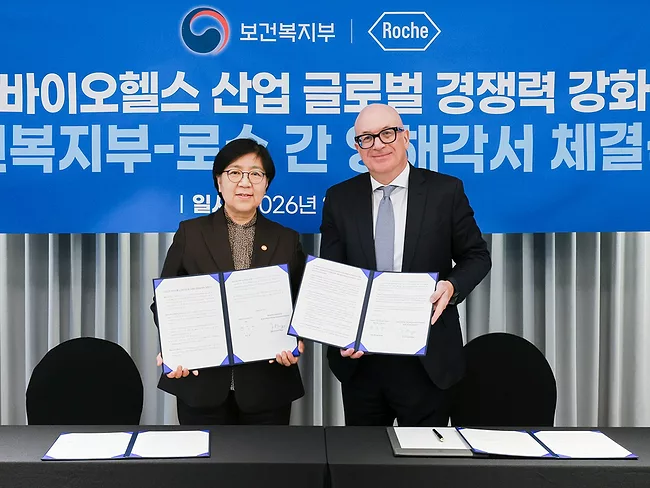
Roche Holding AG pledged to invest ₩710 billion (US$484.6 million) in South Korea over the next five years, positioning the country as a major global hub for clinical trials. The near $500 million agreement inked with the Korean government will bring Roche’s clinical trials for common or incurable diseases and innovative biopharmaceutical products to the country.
Taiwan plans to invest NT$24 billion (US$752 million) over four years to bolster national biosecurity, expand domestic pharmaceutical production and safeguard against global supply chain volatility.

 RSS
RSS