Ribomic’s umedaptanib pegol (RBM-007) looks to have some advantages compared to competitors in the achondroplasia space, and the company plans to progress the oligonucleotide-based aptamer that targets anti fibroblast growth factor 2 to phase III trials, Ribomic’s business development head, Kihei Yamashita, told BioWorld.
Beone Medicines Ltd. (formerly Beigene Ltd.) is selling its worldwide royalty rights on Imdelltra (tarlatamab) sales, excluding China, to Royalty Pharma for up to $950 million.
Akeso Pharmaceuticals Inc.’s gumokimab (AK-111) and manfidokimab met all primary efficacy endpoints in its phase III trials in active ankylosing spondylitis and in moderate to severe atopic dermatitis, respectively.
Regulatory snapshots, including drug submissions and approvals, clinical trial approvals and other regulatory decisions and designations in Asia-Pacific: Antengene, Biodlink, Sanofi.
Biopharma happenings in Asia-Pacific including deals and partnerships, grants, preclinical data and other news in brief: ARC Therapies, Bio-Thera, Dong-A, Kukbo, Redhill Biopharma, Roche, Stada Arzneimittel, Xtalpi.
Daewoong Pharmaceutical Co. Ltd. and Daewoong Therapeutics Inc. reported that their self-developed microneedle patch loaded with semaglutide demonstrated 80% relative bioavailability compared to an injectable subcutaneous formulation of semaglutide in a pilot human pharmacokinetic study. That far exceeds rates seen in other patches or oral formulations.
Remegen Co. Ltd.’s telitacicept (RC-18) met the primary endpoint in a phase III trial for treating primary Sjögren's syndrome (pSS), and the company plans to submit a BLA to China’s National Medical Products Administration (NMPA) on the data.
Beijing Luzhu Biotechnology Co. Ltd.’s shingles vaccine LZ-901 outperformed GSK plc’s Shingrix (HZ/su) vaccine in a head-to-head phase III trial. A recombinant herpes zoster vaccine candidate independently developed by Luzhu, LZ-901 is the company’s core product.
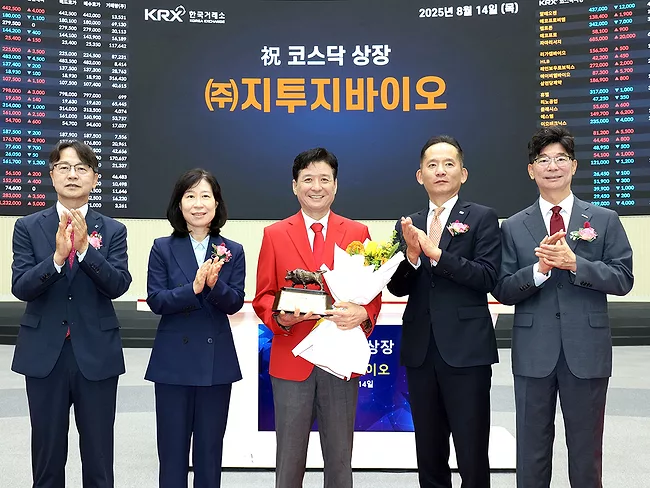
G2Gbio Inc. debuted on the Korea Exchange with a ₩52.2 billion (US$37.7 million) IPO Aug. 14. Nearly half of the funds raised will be used to expand Cheongju-si, South Korea-based G2Gbio’s manufacturing plants and help mass produce sustained-release injectable drug products such as GB-5001, its lead candidate in development as a once-monthly formulation of donepezil (Aricept; Eisai Co. Ltd.) for Alzheimer’s disease.
 RSS
RSS