Biopharma happenings in Asia-Pacific including deals and partnerships, grants, preclinical data and other news in brief: AFT, Crispr Therapeutics, Hyloris, Pfizer, Rani, Sirius Therapeutics, SK Bioscience.
Fujirebio Diagnostics Inc.’s Alzheimer’s disease assay received the U.S. FDA’s first clearance for a blood test for the debilitating neurodegenerative disease. Fujirebio’s Lumipulse G pTau217/ß-Amyloid 1-42 plasma ratio is indicated for the early detection of amyloid plaques associated with Alzheimer’s disease in symptomatic individuals aged 55 years and older.
Apimeds Pharmaceuticals US Inc. (APUS), a subsidiary of Kospi-listed Inscobee Inc., said May 12 that it raised $13.5 million from its stock sale on the NYSE American exchange May 9 through an offering of 3.375 million shares at $4 per share. Hopewell, N.J.-based APUS is the second pharmaceutical company with Asian ties to float shares on the U.S. market this year.
Rznomics Inc. scored a potential ₩1.9 trillion (US$1.35 billion) global license option agreement with Eli Lilly and Co. to codevelop a novel RNA editing gene therapy to treat hereditary hearing loss.
Hengrui Pharmaceuticals Co. Ltd. announced a global offering on the Hong Kong Stock Exchange to raise up to $1.27 billion to advance its growing pipeline focused on oncology, metabolic and cardiovascular diseases, immunological and respiratory diseases, and neuroscience.
China’s Pegbio Co. Ltd. launched its IPO on the Hong Kong stock exchange May 19, to raise up to HK$300.82 million (US$38.4 million) to advance visepegenatide (PB-119), its glucagon-like peptide 1 (GLP-1) receptor agonist.
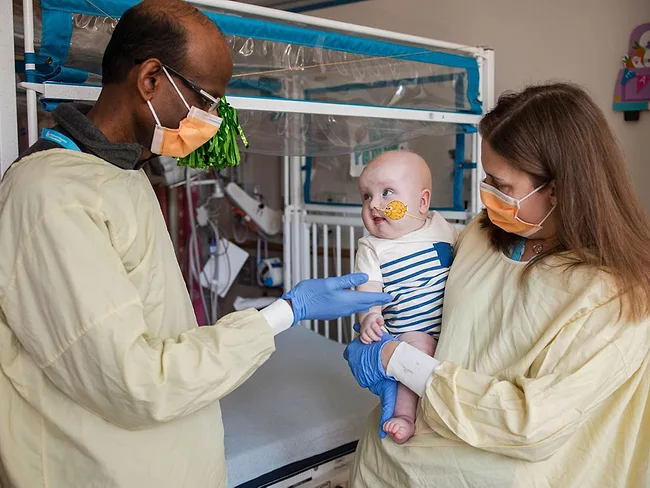
Using a customized gene editing therapy, researchers at the Children’s Hospital of Philadelphia have reported success in treating an infant with a severe metabolic disorder. Kiran Musunuru, Barry J. Gertz Professor for Translational Research in the University of Pennsylvania’s Perelman School of Medicine, presented the case at the American Society of Gene and Cell Therapy’s 2025 annual meeting. The case study was simultaneously published in The New England Journal of Medicine.
The U.S. FDA approved 20 drugs for market in April, slightly down from 22 in March, 16 in February and 12 in January. This brings the total number of FDA approvals for the first four months of 2025 to 70, a decrease from 77 in the same period last year but higher than the 50 drugs approved during the first four months of 2023 and 48 in 2022. Despite the decrease from last year, the 2025 total remains the second-highest in BioWorld’s records for this time frame.
Pfizer Inc. is paying $1.25 billion up front and up to $4.8 billion in milestone payments to gain global, ex-China rights to SSGJ-707, a PD-1/VEGF bispecific antibody from 3Sbio Inc. that recently won China clearance for a phase III study in lung cancer as a potential first-line monotherapy. Announced after U.S. market hours May 19, the exclusive agreement for SSGJ-707 spells up to $6.15 billion combined for Shenyang, China-based 3Sbio, along with separate tiered double-digit royalty payments on sales of SSGJ-707, if approved.

 RSS
RSS