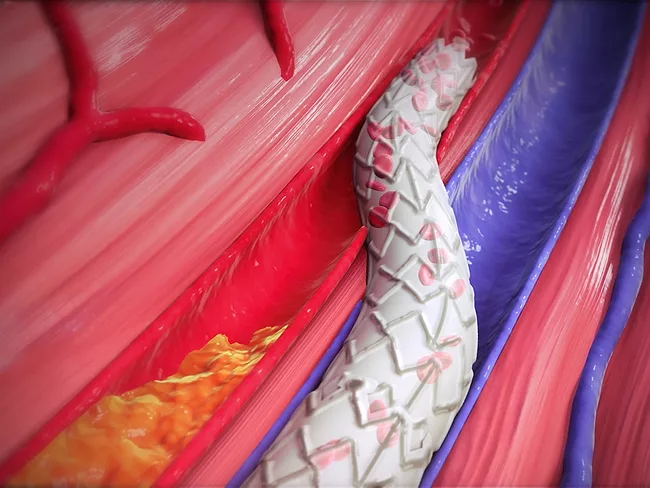
Just weeks after securing U.S. FDA approval for its flagship system to treat chronic limb-threatening ischemia (CLTI), Limflow SA kept the good news flowing to investors with the announcement of an agreement to be acquired by Inari Medical Inc. in a deal valued at up to $415 million. Inari will pay $250 million in cash at closing with up to $165 million in additional payments going to Limflow based on achievement of specified commercial and reimbursement milestones starting in 2025. The companies expect the deal to close by the end of the year.
Access Vascular Inc. (AVI) closed a $22 million series C funding round that it plans to use principally to increase production capacity for its Mimix hydrophilic biomaterial vascular access devices. The company’s catheters are designed to evade identification as foreign bodies, reduce bacterial adhesion and eliminate catheter-related thrombus development.
There’s nothing scary for Ametek Inc. shareholders in the $1.9 billion acquisition of Paragon Medical Inc. announced on Oct. 31, 2023. The deal moves the industrial technology company solidly into the med-tech space as it picks up Paragon’s portfolio of products in orthopedics, minimally invasive surgery, robotic surgery and drug delivery, and adds an estimated $500 million per year in revenue and “very strong EPS accretion,” Ametek CEO David Zapico said in an investor call on Oct. 31.
One-year results from the CLASP IID trial and registry showed outstanding results in patients with significant symptomatic degenerative mitral regurgitation (DMR) for Pascal, Edwards Lifesciences Corp.’s transcatheter-edge-to-edge repair (TEER) system, in a presentation at the 2023 Transcatheter Cardiovascular Therapeutics (TCT) meeting in San Francisco hosted by the Cardiovascular Research Foundation.
Left atrial appendage (LAA) occlusion procedures are designed to reduce the risk of thromboembolism in patients who have non-valvular atrial fibrillation, but a study presented at the 2023 Transcatheter Cardiovascular Therapeutics annual meeting in San Francisco demonstrated that about half of patients continue to have LAA leaks – and potentially the risk of dangerous blood clots and stroke – a year after the procedure.
The EU approved the first drug-coated balloon for treatment of in-stent restenosis nearly a decade ago, but U.S. physicians continue to have their hands tied in treating the fairly common problem. Results from Boston Scientific Corp.’s investigational device exemption trial for its Agent paclitaxel-coated balloon presented in San Francisco at Transcatheter Cardiovascular Therapeutics could finally put the tool in the hands of cardiologists. The device demonstrated a nearly 50% reduction in the risk of target lesion revascularization and target vessel myocardial infarction compared to conventional balloon angioplasty.
An analysis of real-world data pulled from Truveta’s electronic health records of 30 U.S. health care systems found that patients treated for pulmonary embolism (PE) using Boston Scientific Corp.’s Ekos endovascular system had lower rates of adverse events, particularly intracerebral hemorrhage, than those treated with Inari Medical Inc.’s Flowtriever system.
Anteris Technologies Ltd. presented multiple sessions at the Transcatheter Cardiovascular Therapeutics (TCT) 2023 annual meeting in San Francisco this week on its novel Duravr biomimetic heart valve, a balloon-expandable, single-piece transcatheter aortic valve designed to closely replicate the shape and performance of a human aortic valve. The device was used for the first time earlier this year in a valve-in-valve replacement procedure and began its early feasibility study, both of which were reviewed at the cardiology meeting.
No matter how you look at it, guiding percutaneous coronary interventions to treat complex lesions with optical coherence tomography (OCT) or intravascular ultrasound (IVUS) produces similar results in patients with complex lesions, a study presented Oct. 23 at the Transcatheter Cardiovascular Therapeutics (TCT) annual meeting in San Francisco indicated.