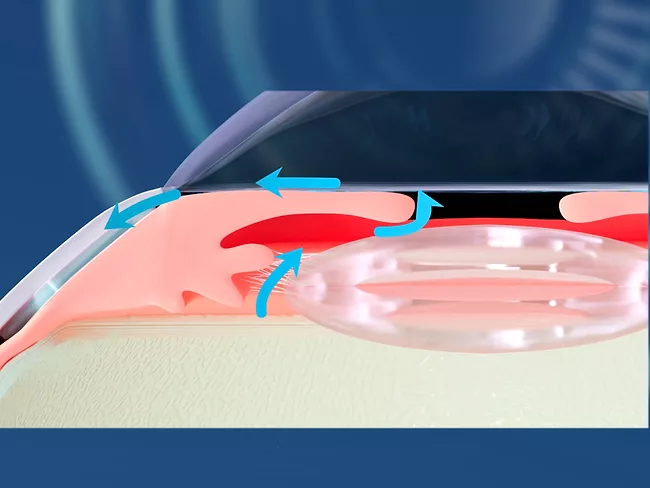
A new technique may allow reduction of intraocular pressure (IOP) associated with glaucoma without opening the anterior eye chamber, eliminating much of the risk associated with current glaucoma procedures. The cilio-scleral inter-position device (CID) facilitates outflow without creating an artificial egress using a thin one-piece implant.
Colorectal cancer (CRC) is expected to increase steadily through the decade to reach more than 2.2 million cases and 1.1 million deaths by 2030 as two concurrent trends tick up—an aging population, that typically has higher rates of the disease, and an alarming increase in cases in younger people. Iterative Scopes Inc. hopes to help gastroenterologists find precancerous lesions before they progress with its Skout device, which received U.S. FDA 510(k) clearance this week.
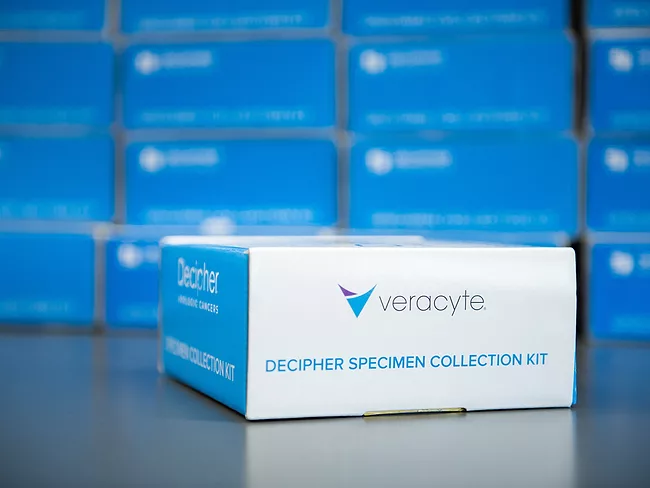
Aggressive prostate cancer disproportionately affects—and kills—African American men, but identifying which men are at highest-risk has proved challenging, particularly in younger patients. Veracyte Inc.’s Decipher prostate genomic classifier could help identify these men with early, localized prostate cancer at the greatest risk of aggressive disease, a new study published in the Journal of the National Cancer Institute found.
The 2022 Transcatheter Cardiovascular Therapeutics annual meeting highlighted mostly positive outcomes from major trials conducted by nearly all the big players in the cardiac device market. Here’s our round-up of the meeting’s high points, with updates from Abbott Laboratories, Abiomed Inc., Boston Scientific Corp., Edwards Lifesciences Corp., Inari Medical Inc., Medtronic plc and Recor Medical Inc.
Transcatheter aortic valve replacement (TAVR) continues to grow, so it is little surprise that the 2022 Transcatheter Cardiovascular Therapeutics (TCT) annual meeting featured multiple presentations about TAVR-related devices and outcomes. The American College of Cardiology/American Heart Association’s latest guidelines recommends TAVR for patients over age 80 and surgery for those under age 65. Those in the middle can go either way, depending on comorbidities and patient preferences.
In an unexpected turn of events, Medtronic plc presented results from the Symplicity HTN-3 trial at year 3 showed sustained reductions in blood pressure with radiofrequency renal denervation (RDN) for resistant hypertension, contrary to the trial’s results at the six-month mark—and it wasn’t alone in showing positive results for the procedure.
Inari Medical Inc. released results from its 800-person Flowtriever All-Comer Registry for Patient Safety and Hemodynamics (FLASH) registry in pulmonary embolism (PE) at the 2022 Transcatheter Cardiovascular Therapeutics conference in Boston on Sept. 18 showing that treatment of PE with its Flowtriever device provided immediate hemodynamic and symptom improvement with all-cause mortality rates under 1.0% at 30 days.
One of the biggest stories coming out of Transcatheter Cardiovascular Therapeutics’ annual meeting in Boston this weekend focuses on the success of Edwards Lifesciences Corp.’s freshly FDA-approved Pascal Precision transcatheter valve repair system in the CLASP IID trial, which compared it to Abbott Laboratories’ Mitraclip device in patients with degenerative mitral regurgitation (DMR) who were determined to be at prohibitive surgical risk.
While no one can tell the future, a panel of autoantibodies developed by researchers at New York University Grossman School of Medicine and Perlmutter Cancer Center may give physicians a much better idea about how a patient will respond to immunotherapy. That could help improve therapy selection by accurately predicting whether a patient’s cancer will recur following immunotherapy or they will experience autoimmune side effects as a result of treatment, a study published in Clinical Cancer Research on Sept. 15 found.
Challenges scheduling time for a mammogram, frustration waiting for the exam itself and pain from the test have caused any number of women to cry. Namida Lab Inc. may take the inconvenience and anxiety out of breast health assessment with its Auria test, but the tears will stay. Like a growing number of assays, the test uses tear-based analytics to determine cancer risk.