U.K. biotech companies raised 46% less in the third quarter (Q3) of 2025 than in the previous quarter, at £187 million (US$249.3 million). The Q3 2025 figure was also in the shade compared to Q1 2025, when biotechs raised £881 million, and 73% less than in Q3 2024.
French VC Andera Partners has reached the first close of its Biodiscovery Fund 7 at more than €300 million (US$349 million) and says it is on track to surpass the size of the previous fund, which closed at €456 million during the pandemic-driven boom of 2021.
Ipsen SA is expanding its cancer portfolio with the €1 billion (US$1.16 billion) acquisition of immuno-oncology specialist Imcheck SAS, and will pay €350 million up front with the balance to come in regulatory and sales-based milestones for the lead program ICT-01.
Newco Elevara Medicines Ltd. has raised $70 million in a series A to fund a phase IIa/IIb trial of ELV-001, a first-in-class, oral cyclin dependent kinase 4/6 inhibitor, in the treatment of rheumatoid arthritis (RA) patients who do not have an adequate response to methotrexate and anti-TNF biologic therapies.
Step Pharma is financed to move its pipeline-in-a-product strategy forward on a broad front, after raising a €38 million (US$44.2 million) series C. That will see three ongoing trials testing the company’s potentially first-in-class, orally available cytidine triphosphate synthase 1 inhibitor, dencatistat, through to phase II in T-cell and B-cell lymphoma, in an ovarian, endometrial and lung cancer study, and in essential thrombocythemia.
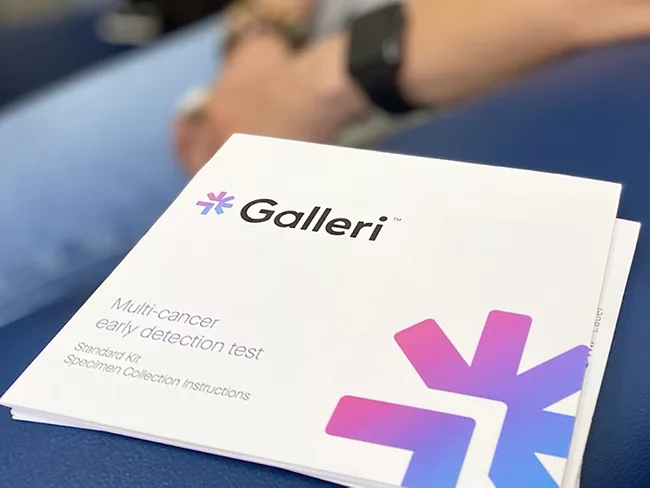
Grail LLC has presented data showing that when added to standard screening procedures for breast, cervical, colorectal and lung cancers, its Galleri circulating tumor DNA test led to a sevenfold increase in the number of cancers detected.
There was a curate’s egg for Sanofi SA from this month’s meeting of the EMA’s Committee for Medicinal Products for Human Use, with a recommendation to approve one of the French pharma’s drugs – and the rejection of another.
A year and half from its inception, Adcytherix SAS has raised a €105 million (US$122 million) series A, enabling it to take the lead antibody-drug conjugate (ADC) program into clinical development next year.
A year and half from its inception, Adcytherix SAS has raised a €105 million (US$122 million) series A, enabling it to take the lead antibody-drug conjugate (ADC) program into clinical development next year.
Aicuris Anti-Infective Cures AG is preparing to file for U.S. FDA approval after reporting positive phase III results for lead antiviral pritelivir in the healing of refractory herpes simplex virus lesions in immunocompromised patients.