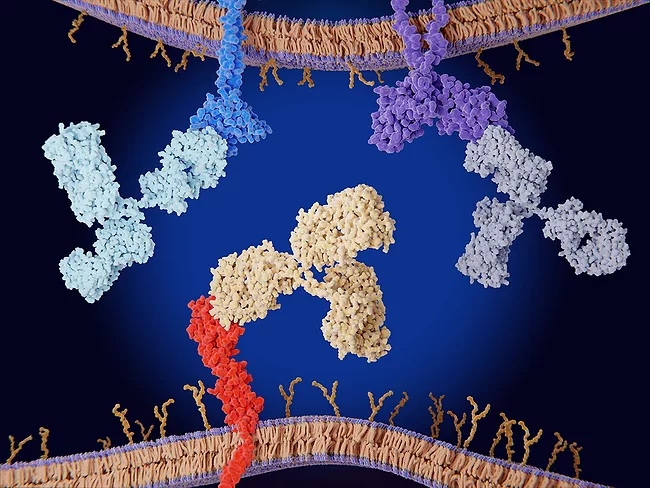
Shattuck Labs Inc. opted, as one analyst put the matter, to do “the right thing early” by ending the clinical program with phase I-stage SL-172154 and shift resources to SL-325, a death receptor 3 antagonist, initially for inflammatory bowel disease, where TL1A/DR3-blocking antibodies have shown compelling monotherapy efficacy.
Cereno Scientific AB’s positive top-line results from the phase IIa trial of histone deacetylase inhibitor CS1 in pulmonary arterial hypertension provide a “clear path forward” in the debilitating, fatal disease, the company said.
The U.S. FDA’s approval of yet another indication for Dupixent (dupilumab), partnered between Regeneron Pharmaceuticals Inc. and Sanofi SA, could mean another $6.4 billion-plus in sales by the end of the decade. Regulators cleared the drug as an add-on maintenance treatment for chronic obstructive pulmonary disease (COPD) with an eosinophilic phenotype who are prone to flare-ups. Dupixent, the first-ever biologic for COPD, entered the market in March 2017.
The FDA’s Oncologic Drugs Advisory Committee (ODAC) met for what chairperson Christopher Lieu called, at the end, “an incredibly long day” to decide whether approval of immune checkpoint inhibitors should be restricted in accordance with expression levels of PD-L1.
With two drugs cleared by the U.S. FDA for Niemann-Pick disease type C (NPC) in less than seven days, Wall Street was pondering the differences between the compounds, given what’s known so far about each. Most recently, the FDA approved Intrabio Inc.’s Aqneursa (levacetylleucine) on its PDUFA date for the treatment of neurological manifestations of NPC in adults and pediatric patients weighing at least 15 kg, making Aqneursa the only approved stand-alone therapy indicated for NPC. On Sept. 20, Zevra Therapeutics Inc. won FDA clearance for Miplyffa (arimoclomol) as the first treatment for NPC.
The U.S. FDA’s Oncologic Drugs Advisory Committee (ODAC) on Sept. 26 will take up a controversy that’s hardly new: whether approval of immune checkpoint inhibitor drugs should be restricted in accordance with PD-L1 expression.
What the results might mean for the future of other developers in the cannabinoid receptor 1 (CB1) weight-loss arena came into question after Novo Nordisk A/S unveiled phase IIa findings with monlunabant, a small-molecule oral inverse agonist, formerly INV-202.
The specter of elevated liver enzymes, a known problem with the drug class, became a topic of talk with regard to Sanofi SA’s tolebrutinib, the central nervous system-penetrating Bruton's tyrosine kinase (BTK) inhibitor for multiple sclerosis (MS). Meanwhile, another player in the space, Immunic Inc., has caught the eye of Wall Street lately.
After disclosing data from the phase II Herald study, Aligos Therapeutics Inc. may sign a partner to help advance ALG-055009, a thyroid hormone receptor (THR) beta agonist, in subjects with metabolic dysfunction-associated steatohepatitis (MASH, formerly nonalcoholic steatohepatitis, or NASH).
Wall Street apparently wanted more from Prelude Therapeutics Inc.’s phase I data with SMARCA2 enzyme degrader PRT-3789 in cancer, which rolled out Sept. 13 during the recent European Society of Medical Oncology Congress in Barcelona, but hopes are still high for other prospects in the class pushed forward by various developers.