For individuals who develop an unexpected psychosis, there is something to be said for testing them for autoimmune antibodies. And something against. At the 36th Congress of the European College of Neuropsychopharmacology (ECNP) this week, the topic was worth a controversy session, where speakers presented the pros and cons of the approach. Currently used tests have a specificity of 99%. But as Ester Coutinho, consultant neurologist at the University of Coimbra, pointed out, the validity of diagnostic tests depends on the prevalence of the disorder one is looking for as well. Coutinho estimated that autoimmune psychoses account for 1% of psychoses overall.
For most psychiatric illnesses, the precipitating event is mysterious. Many conditions are thought to result from a mix of genetic risk and environmental factors, but the specific trigger remains unknown. In post-traumatic stress disorder (PTSD), the environmental trigger is usually clear. In many cases, it is all the affected individuals can think about. “Intrusive reliving” of the triggering situation is one of the core features of PTSD.
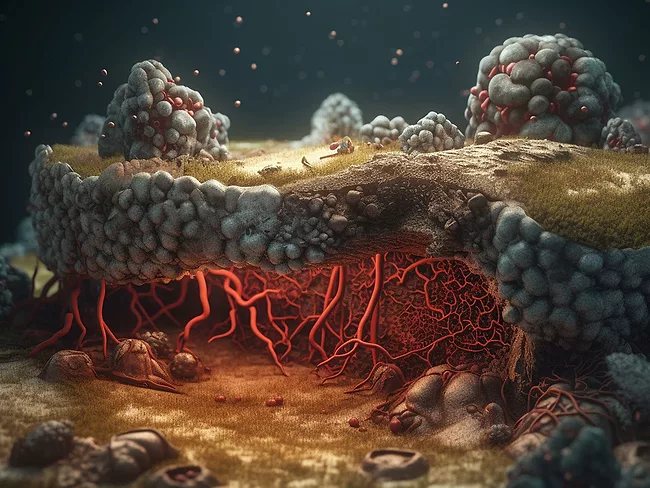
Tuberculosis (TB) is the second leading infectious disease killer. According to the World Health Organization, every year, more than 10 million people fall ill with TB, and 1.5 million people die from the disease. The thing is, though, that it could be worse. Not nearly everyone who is infected has TB disease. “Tuberculosis is a disease that targets a small number of infected people,” Igor Kramnik, of Boston University, told BioWorld.
Arialys Therapeutics Inc. launched this month with $58 million in seed funding, an experimental compound it is developing for autoimmune encephalitis and autoimmune psychosis, and high aspirations for its field. “Yes, I want to treat these patients, I want these patients to have a better life. But I also want drug discovery and development folks to think differently about discovering new drugs for the CNS,” Jay Lichter told BioWorld.
Long bones, vertebrae and skull bones have distinct types of stem cells, and new insights into those stem cells could lead to new ways to treat both rare developmental disorders of skull formation and the all-too-common phenomenon of bone metastases. Scientifically, the work, which was published in two papers by Matthew Greenblatt and colleagues in Nature, adds to the increasing understanding of bone’s complexities. “Bone may serve as an endocrine organ that is secreting factors throughout the body,” Greenblatt said.
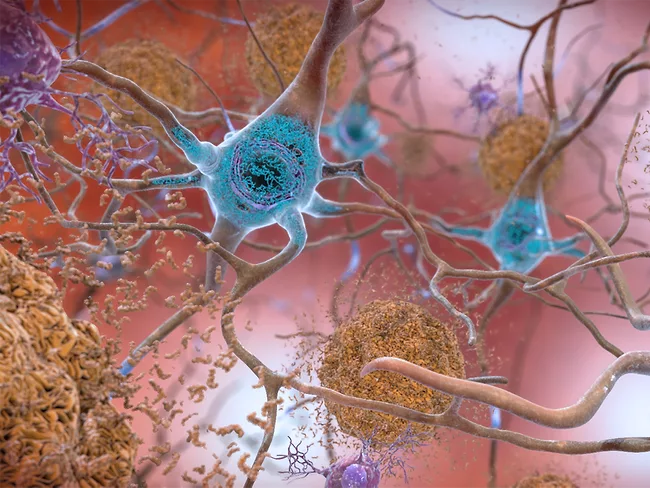
By creating a new mouse model of Alzheimer’s disease that better recapitulated how the disease plays out in humans, investigators at KU Leuven have gained new insights into how amyloid plaques, tau tangles and neuronal death are related at the molecular level.
Lipids are “very diverse, but also vastly understudied,” Anne Brunet told the audience at the recent meeting on Aging Research and Drug Discovery. Advances in the ability to predict protein structures have fueled a much better understanding of the human proteome and its estimated 20,000 members. The lipidome is much larger, numbering maybe 100,000 total. And what those lipids do remains much more fuzzy. “Very little is known about their function, and especially their function during aging,” Brunet said. Slowly, however, technological advances are enabling researchers to understand the roles of lipids as well.
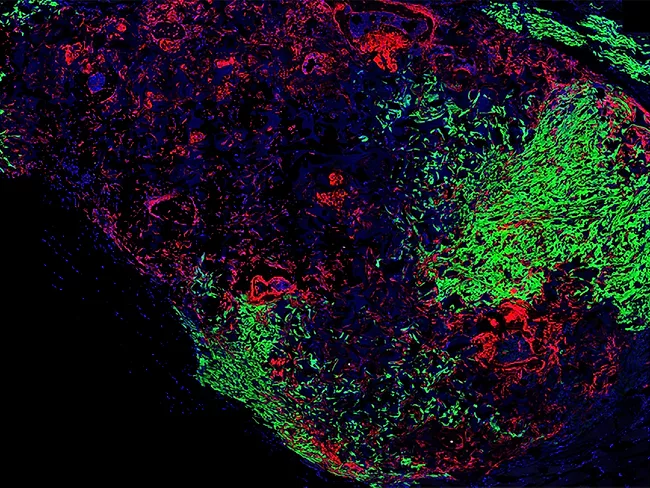
Throughout the body, the vasculature and the nervous system are fellow travelers. Renaissance physician and anatomist Andreas Vesalius described their proximity on the macroanatomical level in the 16th century, and modern microscopic techniques have shown that it extends into the micrometer range – where there is a blood vessel, there is often a nerve nearby, and vice versa.
“Change is the only constant” is an ageless truth. In the search for age-related biomarkers, it is also a prosaic confounding factor.
Age-related biomarkers will be critical for the development of antiaging therapeutics. “Nobody is planning to do a life span study in humans,” Eric Verdin told the audience at the 10th Conference on Aging Research and Drug Development in Copenhagen on Monday. “Hence the need for … surrogate markers.”
“Change is the only constant” is an ageless truth. In the search for age-related biomarkers, it is also a prosaic confounding factor. Age-related biomarkers will be critical for the development of antiaging therapeutics. “Nobody is planning to do a life span study in humans,” Eric Verdin told the audience at the 10th Conference on Aging Research and Drug Development in Copenhagen on Monday. “Hence the need for … surrogate markers.” And “we are not there … we are actually quite far from there.”