Separate research teams have reported new insights into resistance mechanisms to the antibody-drug conjugate (ADC) Padcev (enfortumab vedotin, Astellas Pharma Inc./Pfizer Inc.), and possibly to ADCs more broadly. Urothelial cancer drug Padcev, which targets the cell adhesion molecule Nectin-4, was approved in 2019 and is currently one of Pfizer’s top 10 medicines and vaccines, generating $1.94 billion in 2025.
The majority of epilepsies are developmental disorders that start in childhood. But there is a large minority that starts in late adulthood. And increasingly, researchers are suspecting that such epilepsies share mechanisms with dementia. Summarizing the highlights of epilepsy research presented at the recent Annual Congress of the European Academy of Neurology (EAN), Aleksandar Ristic told his audience that the biggest epilepsy story out of the Congress was “not a drug, but it was a reframing.”
Two papers published in the July 1, 2026, issues of Nature and Nature Cancer have reported on preclinical and early clinical data with glycoprotein nonmetastatic melanoma protein B (GPNMB)-targeting CAR T cells in two separate solid tumor types.
Deep brain stimulation (DBS) through implanted electrodes has enabled fundamentally new ways of treating certain disorders. More than 100,000 severely ill patients have received an implant to treat Parkinson’s disease, which is DBS’ greatest success story.
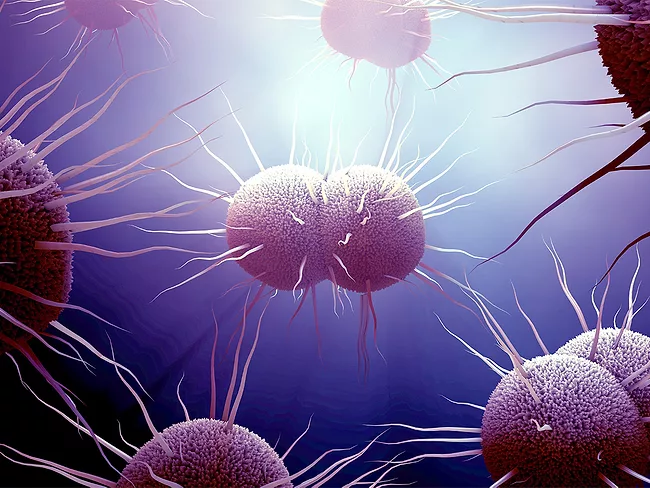
Researchers at the Wyss Institute of Harvard University have used a mix of machine learning and classical screening techniques to identify small molecules that were effective against Neisseria gonorrhoeae in vagina-on-a-chip and mouse models of infection. Their findings were published in the June 17, 2026, issue of Science Translational Medicine.
Researchers at the Wyss Institute of Harvard University have used a mix of machine learning and classical screening techniques to identify small molecules that were effective against Neisseria gonorrhoeae in vagina-on-a-chip and mouse models of infection. Their findings were published in the June 17, 2026, issue of Science Translational Medicine.
On the eve of the June 17 Vaccines and Related Biological Products Advisory Committee (VRBPAC) meeting, which will discuss Moderna Inc.’s mRNA-1010, researchers at Washington University School of Medicine in St. Louis have reported that the vaccine conferred broader and more durable protection than a standard flu shot.
Treatment with first-generation CAR T cells regularly sent patients to the intensive care unit. Now, investigators are envisioning a future where CAR T treatment could occur on an outpatient basis.
Clonal hematopoiesis (CH), where few blood stem cells produce a significant fraction of mature blood cells that are genetically identical, is partly an inevitable feature of aging. Certainly, it is near universal in those older than 60. CH is not itself a disease, but 1%-2% of CH cases progress to acute myeloid leukemia, and it raises the risk of some other types of cancer as well. A total of eight genes are responsible for 95% of CH cases, George Vassiliou told the audience in Saturday’s plenary session at the 2026 Annual Congress of the European Hematology Association (EHA 2026).
Clonal hematopoiesis (CH), where few blood stem cells produce a significant fraction of mature blood cells that are genetically identical, is partly an inevitable feature of aging. Certainly, it is near universal in those older than 60. CH is not itself a disease, but 1%-2% of CH cases progress to acute myeloid leukemia, and it raises the risk of some other types of cancer as well. A total of eight genes are responsible for 95% of CH cases, George Vassiliou told the audience in Saturday’s plenary session at the 2026 Annual Congress of the European Hematology Association (EHA 2026).