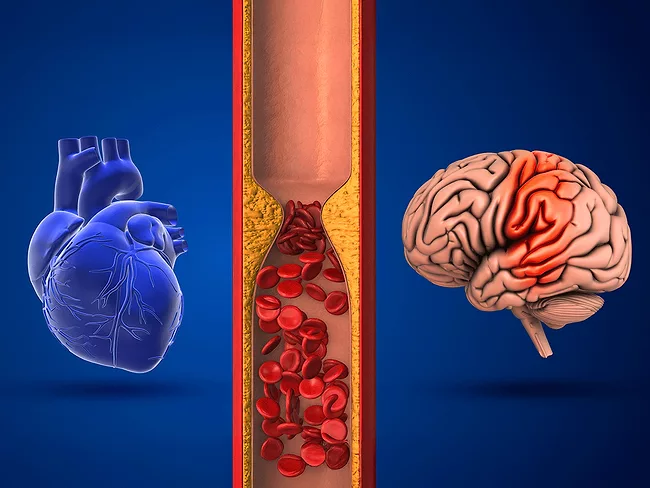
At the 2025 Alzheimer’s Association International Conference (AAIC), one of the bigger splashes was made by a cardiovascular drug. In a presentation on July 30, Newamsterdam Pharma Co. NV presented data showing that its cholesterol drug obicetrapib lowered levels of the Alzheimer’s Disease biomarker p-tau217.
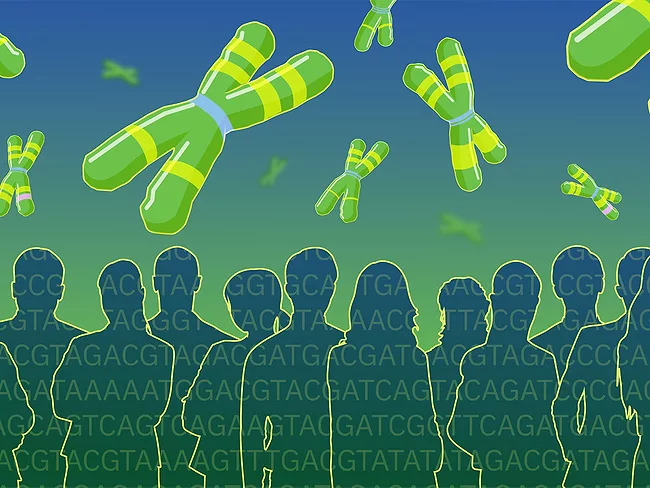
The human genome has yielded another round of secrets with the publication of two back-to-back papers in Nature on July 23, 2025. Both studies re-sequenced probands from the open-access 1000 Genomes Project, which was one of the first projects to sequence individuals from diverse populations.
The human genome has yielded another round of secrets with the publication of two back-to-back papers in Nature on July 23, 2025. Both studies re-sequenced probands from the open-access 1000 Genomes Project, which was one of the first projects to sequence individuals from diverse populations. While one paper “goes very deep and tries to reconstruct a few genomes to basically near completion,” the other specifically looked at structural variants in a larger number of genomes. Together, they give new insights into genome variation.
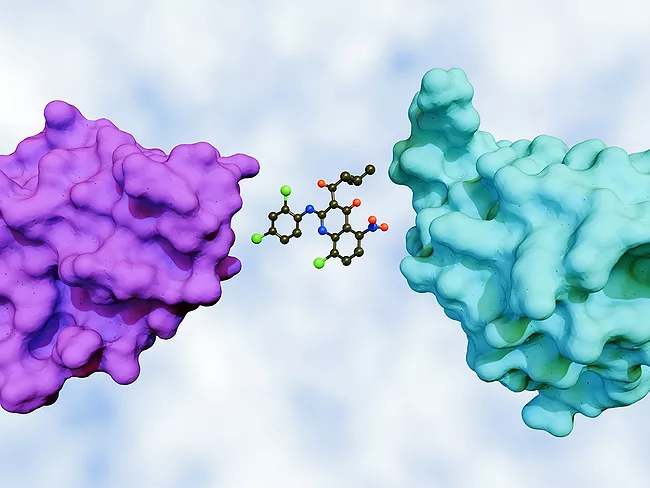
Degradation is a therapeutic strategy that could offer possibilities to get at currently undruggable target proteins. In targeted degradation, compounds induce interactions between a target protein and a protein that can tag the target for degradation. In principle, there are several pathways that could be used for such tagging; the most attention has gone to ubiquitin ligases, in particular cereblon, a protein that is part of a ubiquitin ligase complex and the target of several approved drugs.
“Loss of synapses and dysfunctional synapses in a region-specific way is important in Alzheimer’s. It’s actually the strongest correlate of cognitive decline, far more so than plaques and tangles, which are the pathological hallmarks,” Soyon Hong told the audience at the XVII Meeting on Glial Cells in Health and Disease, which was held in Marseille last week.
At first blush, the brain’s extracellular matrix (ECM) seems like the opposite of synaptic plasticity. Plasticity is the ability to change; the ECM is stable, to the point that it is often described as a scaffold – something to lend stability. “ECM proteins have some of the longest lifetimes of any protein in the brain,” Anna Molofsky told her audience at the XVII Meeting on Glial Cells in Health and Disease, which is being held in Marseille this week.
Degradation is a therapeutic strategy that could offer possibilities to get at currently undruggable target proteins. In targeted degradation, compounds induce interactions between a target protein and a protein that can tag the target for degradation. In principle, there are several pathways that could be used for such tagging; the most attention has gone to ubiquitin ligases, in particular cereblon, a protein that is part of a ubiquitin ligase complex and the target of several approved drugs.
At first blush, the brain’s extracellular matrix (ECM) seems like the opposite of synaptic plasticity. Plasticity is the ability to change; the ECM is stable, to the point that it is often described as a scaffold – something to lend stability. “ECM proteins have some of the longest lifetimes of any protein in the brain,” Anna Molofsky told her audience at the XVII Meeting on Glial Cells in Health and Disease, which is being held in Marseille this week.
Degradation is a therapeutic strategy that could offer possibilities to get at currently undruggable target proteins. In targeted degradation, compounds induce interactions between a target protein and a protein that can tag the target for degradation. In principle, there are several pathways that could be used for such tagging; the most attention has gone to ubiquitin ligases, in particular cereblon, a protein that is part of a ubiquitin ligase complex and the target of several approved drugs.