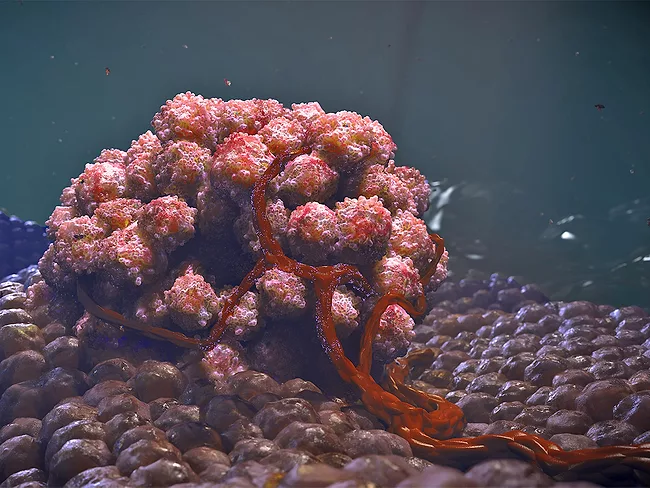
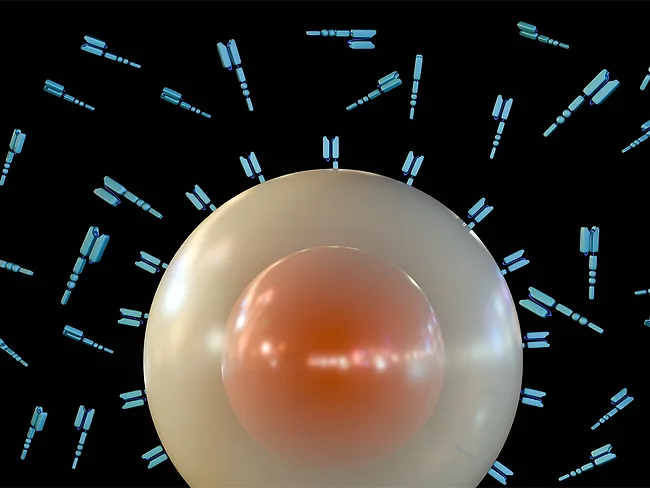
Investigators at the German Cancer Research Center (Deutsches Krebsforschungszentrum, DKFZ) have demonstrated that in the liver, some endothelial cells (ECs) acted as antigen-presenting cells of sorts. These lipoprotein lipase (LPL)-expressing cells cross-presented tumor antigens on their surface, alerting T cells to the presence of metastases.
Researchers at Washington University in St. Louis have used click chemistry to link a second antibody to a pre-existing antibody-drug conjugate (ADC) in vivo. In preclinical models of HER2 and EGFR co-expressing pancreatic, breast and gastric tumors, sequential administration of the ADC and the second antibody was better at shrinking tumors than either ADC monotherapy or a combination of antibody and ADC treatment.
Tuesday brought what was arguably the most anticipated presentation of the 2026 Alzheimer’s Association International Conference when Catherine Mummery, head of novel therapeutics at University College London’s Dementia Research Center, presented data from the phase II Celia trial of tau-lowering antisense oligonucleotide diranersen (BIIB-080, Biogen Inc.). Based on both clinical and biomarker data, “Celia establishes a proof of concept,” Mummery said, that reducing tau may slow the progression of Alzheimer’s disease.
The Alzheimer’s Association International Conference (AAIC) is the world’s biggest dementia conference. And at the AAIC 2026 meeting, there is big buzz around tau. Sunday’s plenary speaker Ryan Watts, CEO of Denali Therapeutics Inc., highlighted tau-lowering agents as being among the most exciting themes of the conference. “At this conference, we’re going to see additional clinical data that may validate [tau as] a second target in Alzheimer’s disease, amyloid being the first,” he told the audience.
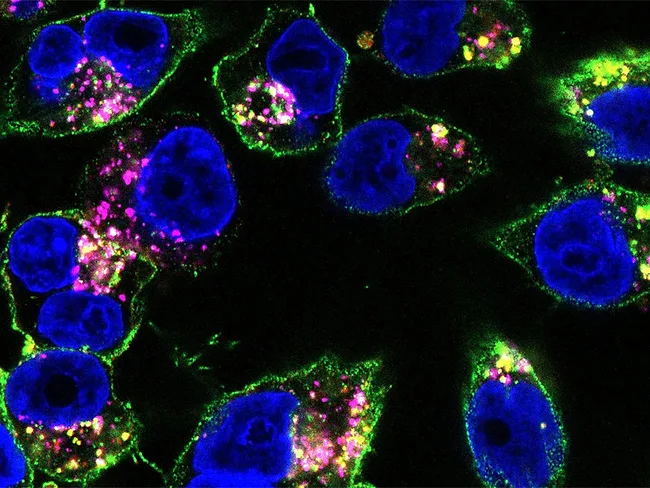
Separate research teams have reported new insights into resistance mechanisms to the antibody-drug conjugate (ADC) Padcev (enfortumab vedotin, Astellas Pharma Inc./Pfizer Inc.), and possibly to ADCs more broadly. Urothelial cancer drug Padcev, which targets the cell adhesion molecule Nectin-4, was approved in 2019 and is currently one of Pfizer’s top 10 medicines and vaccines, generating $1.94 billion in 2025.
The majority of epilepsies are developmental disorders that start in childhood. But there is a large minority that starts in late adulthood. And increasingly, researchers are suspecting that such epilepsies share mechanisms with dementia. Summarizing the highlights of epilepsy research presented at the recent Annual Congress of the European Academy of Neurology (EAN), Aleksandar Ristic told his audience that the biggest epilepsy story out of the Congress was “not a drug, but it was a reframing.”
Two papers published in the July 1, 2026, issues of Nature and Nature Cancer have reported on preclinical and early clinical data with glycoprotein nonmetastatic melanoma protein B (GPNMB)-targeting CAR T cells in two separate solid tumor types.
Deep brain stimulation (DBS) through implanted electrodes has enabled fundamentally new ways of treating certain disorders. More than 100,000 severely ill patients have received an implant to treat Parkinson’s disease, which is DBS’ greatest success story.
Researchers at the Wyss Institute of Harvard University have used a mix of machine learning and classical screening techniques to identify small molecules that were effective against Neisseria gonorrhoeae in vagina-on-a-chip and mouse models of infection. Their findings were published in the June 17, 2026, issue of Science Translational Medicine.
Researchers at the Wyss Institute of Harvard University have used a mix of machine learning and classical screening techniques to identify small molecules that were effective against Neisseria gonorrhoeae in vagina-on-a-chip and mouse models of infection. Their findings were published in the June 17, 2026, issue of Science Translational Medicine.