On the eve of the June 17 Vaccines and Related Biological Products Advisory Committee (VRBPAC) meeting, which will discuss Moderna Inc.’s mRNA-1010, researchers at Washington University School of Medicine in St. Louis have reported that the vaccine conferred broader and more durable protection than a standard flu shot.
Treatment with first-generation CAR T cells regularly sent patients to the intensive care unit. Now, investigators are envisioning a future where CAR T treatment could occur on an outpatient basis.
Clonal hematopoiesis (CH), where few blood stem cells produce a significant fraction of mature blood cells that are genetically identical, is partly an inevitable feature of aging. Certainly, it is near universal in those older than 60. CH is not itself a disease, but 1%-2% of CH cases progress to acute myeloid leukemia, and it raises the risk of some other types of cancer as well. A total of eight genes are responsible for 95% of CH cases, George Vassiliou told the audience in Saturday’s plenary session at the 2026 Annual Congress of the European Hematology Association (EHA 2026).
Clonal hematopoiesis (CH), where few blood stem cells produce a significant fraction of mature blood cells that are genetically identical, is partly an inevitable feature of aging. Certainly, it is near universal in those older than 60. CH is not itself a disease, but 1%-2% of CH cases progress to acute myeloid leukemia, and it raises the risk of some other types of cancer as well. A total of eight genes are responsible for 95% of CH cases, George Vassiliou told the audience in Saturday’s plenary session at the 2026 Annual Congress of the European Hematology Association (EHA 2026).
Treatment with first-generation CAR T cells regularly sent patients to the intensive care unit. Now, investigators are envisioning a future where CAR T treatment could occur on an outpatient basis. At Sunday’s late-breaking oral session of the 2026 Annual Congress of the European Hematology Association (EHA2026), Lei Fan told his audience that the first-in-human data “support further development of LB-2501 as a potential first-in-class, off-the-shelf, single infusion, no lymphodepletion, outpatient use CAR T therapy.” Fan is a professor of hematology at the First Affiliated Hospital of Nanjing Medical University.
In the most simplistic view, adult cancers occur because “immature cells are exposed to mutagens, accumulate mutations, and across life ultimately transform into cancer cells,” Franck Bourdeaut told his audience at the 2026 Annual Congress of the European Hematology Association (EHA 2026). “On the contrary, in pediatric cancers, it is assumed that very few mutations are responsible for a maturation block, make these cells derail from their normal differentiation trajectory and ultimately result in an early onset typical pediatric cancer.”
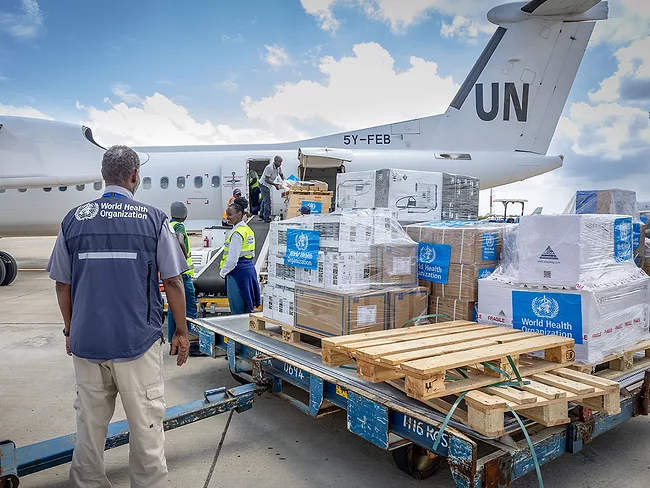
It is not surprising that a large Ebola outbreak would be considered a public health emergency of international concern. But the current PHEIC is notable for the speed with which it was declared, speaking to the urgency of the situation. World Health Organization Director-General Tedros Adhanom Ghebreyesus declared the outbreak a PHEIC on Sunday, May 17, without first convening an emergency committee. That step is unprecedented.
It is not surprising that a large Ebola outbreak would be considered a public health emergency of international concern. But the current PHEIC is notable for the speed with which it was declared, speaking to the urgency of the situation. World Health Organization Director-General Tedros Adhanom Ghebreyesus declared the outbreak a PHEIC on Sunday, May 17, without first convening an emergency committee. That step is unprecedented.
On Sunday, May 17th, 2026, the World Health Organization classified the ongoing Bundibugyo ebolavirus outbreak in the Democratic Republic of Congo (DRC) as a public health emergency of international concern (PHEIC). The rapid escalation to PHEIC is due to several factors. Given the high number of cases, the outbreak has likely been going undetected for some time, and may be a “much larger outbreak than what is currently being detected and reported, with significant local and regional risk of spread,” according to the WHO statement. The outbreak appears to already have crossed the border from the DRC into Uganda at least twice. And all this is happening with a virus for which there are no approved treatments or vaccines.
On Sunday, May 17th, 2026, the World Health Organization classified the ongoing Bundibugyo ebolavirus outbreak in the Democratic Republic of Congo (DRC) as a public health emergency of international concern (PHEIC). The rapid escalation to PHEIC is due to several factors. Given the high number of cases, the outbreak has likely been going undetected for some time, and may be a “much larger outbreak than what is currently being detected and reported, with significant local and regional risk of spread,” according to the WHO statement. The outbreak appears to already have crossed the border from the DRC into Uganda at least twice. And all this is happening with a virus for which there are no approved treatments or vaccines.