Psychiatry has struggled to enter the precision medicine era. But through a mix of innovations and bootstrapping, progress is coming to the field. Scientists are working on improving diagnoses by investigating potential biomarkers and collection methods.
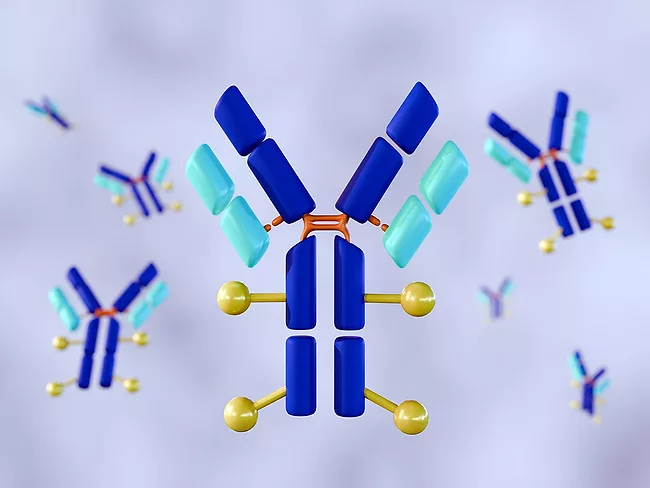
Antibody-drug conjugates (ADCs) are a mature technology. The first ADC, Mylotarg, was initially approved in 2000, and there are now 14 approved agents in both leukemias and solid tumors. According to Clarivate’s Cortellis Drug Discovery & Intelligence, those drugs collectively accounted for $13.55 billion in sales in 2024 – a figure that Cortellis projects will rise to $16 billion in 2025.
The 2025 Annual Congress of the European Society for Medical Oncology (ESMO) featured a track on tumor-agnostic therapies – the first time such a track has been included at ESMO, or at any major medical oncology meeting. “It’s a milestone,” Vivek Subbiah told the audience at a session on how to accelerate tumor-agnostic drug development.
At the 2025 European College of Neuropsychopharmacology (ECNP) Congress in Amsterdam this week, researchers presented new findings on the role of endocannabinoids in stress, addiction … and the integrity of the blood-brain-barrier.
At the 2025 European College of Neuropsychopharmacology (ECNP) Congress in Amsterdam this week, researchers presented new findings on the role of endocannabinoids in stress, addiction … and the integrity of the blood-brain-barrier.
The 2025 Nobel Prize in Chemistry “is a story full of holes, but with enormous capacity to absorb all your attention,” Heiner Linke told reporters. “And other things.” Linke is Chair of the Nobel Committee for Chemistry. On Oct. 8, 2025, the committee announced that it has awarded the 2025 Nobel Prize in Chemistry to Susumu Kitagawa, Richard Robson and Omar Yaghi “for the development of metal-organic frameworks” (MOFs).
The Nobel Committee announced today that it has awarded the 2025 Nobel Prize in Physiology or Medicine to three scientists for their discovery of regulatory T cells, which are a critical part of the way the body prevents autoimmune attacks.
The Nobel Committee announced today that it has awarded the 2025 Nobel Prize in Physiology or Medicine to three scientists for their discovery of regulatory T cells, which are a critical part of the way the body prevents autoimmune attacks.
Globally, over half of people living with HIV are women. But in clinical cure trials, they make up only about 20% of participants. And that gender imbalance is causing researchers to miss out on ways to improve cure strategies. Because women’s immune systems appear to be better at controlling HIV infection in a way that silences the reservoir – the provirus integrated into host cells in infected persons.
Globally, over half of people living with HIV are women. But in clinical cure trials, they make up only about 20% of participants. And that gender imbalance is causing researchers to miss out on ways to improve cure strategies. Because women’s immune systems appear to be better at controlling HIV infection in a way that silences the reservoir – the provirus integrated into host cells in infected persons.