BioWorld. Link to homepage.

Clarivate
  • BioWorld
  • BioWorld Science
  • BioWorld Asia
  • Data Snapshots
    • Biopharma
    • Medical technology
    • Infographics: Dynamic digital data analysis
    • Index insights
    • NME Digest
  • Special reports
    • Infographics: Dynamic digital data analysis
    • BCI
    • Ebola outbreak
    • Hantavirus
    • Trump administration impacts
    • Med-tech outlook 2026
    • Under threat: mRNA vaccine research
    • BioWorld at 35
    • Biopharma M&A scorecard
    • Bioworld 2025 review
    • BioWorld MedTech 2025 review
    • BioWorld Science 2025 review
    • Women's health
    • China's GLP-1 landscape
    • PFA re-energizes afib market
    • China CAR T
    • Alzheimer's disease
    • Coronavirus
    • More reports can be found here

BioWorld. Link to homepage.

  • Sign In
  • Sign Out
  • My Account
Subscribe
BioWorld - Wednesday, July 22, 2026
Home » Authors » Anette Breindl

Anette Breindl

Articles

ARTICLES

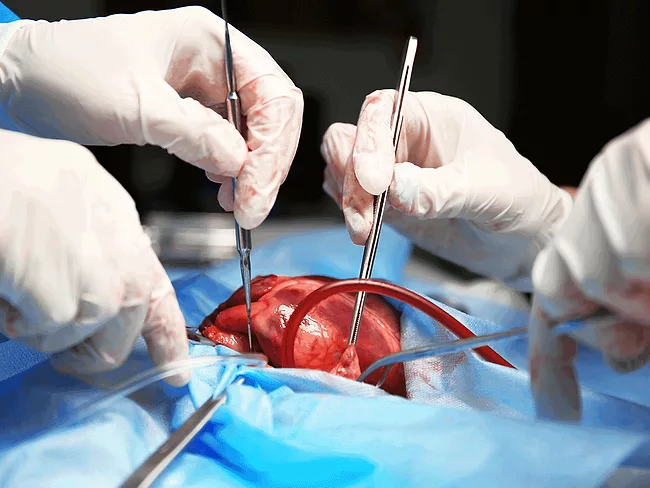
Heart surgery

Top Trends of 2022: For the first time …

Dec. 22, 2022
By Anette Breindl, Lee Landenberger, and Randy Osborne
Biopharma just wouldn’t be biopharma without continuing innovation. Even in a year rife with economic and regulatory turmoil, the industry still achieved major advancements set to change the health care landscape going forward. Standouts for 2022 include cell therapy and gene editing approaches making significant gains, while industry celebrated a new checkpoint inhibitor added to the oncology armamentarium.
Read More
DNA, drug development concept art.
Cancer

Repeat expansions are repeat feature of cancer genomes

Dec. 21, 2022
By Anette Breindl
Repeat expansions of two or more base pairs cause dozens of neurological disorders – Huntington’s disease, which is caused by an expansion of the triplet CAG in the coding sequence for huntingtin, is perhaps the most famous one. Now, investigators at Stanford University have shown that cancer genomes, too, frequently feature repeat expansions.
Read More
DNA sequencing illustration
Hematologic

For reference genome lack of diversity, an easier fix

Dec. 21, 2022
By Anette Breindl
CRISPR gene editing has been one of the important advances of the last decade, in biotechnology and increasingly in medicine. First applied to human cells in 2013, and honored with the 2020 Nobel Prize in Physiology or Medicine, its meteoric rise can make CRISPR look like the molecular equivalent of a miracle healer. But in the research and clinical trenches, CRISPR-based approaches, like any others, need to find applications where their desired effects outweigh their side effects. And finding those applications necessitates ways to identify off-target effects.
Read More
Diagram explaining engineered CAR T cells.
Cancer

Engineering brings situational awareness to CAR T cells

Dec. 20, 2022
By Anette Breindl
Chimeric antigen receptor (CAR) T cells are astounding. In B-cell cancers, they have been transformative. Yet engineering-wise, CAR T cells are in the equivalent of the Model T era. CAR T-cell engineering has already evolved, with the addition of costimulatory domains, which affect cell expansion and signaling. But once the cells are injected into a patient, there is really no way to affect their behavior.
Read More
Endocrine/Metabolic

Bile acid receptor regulates gut innate immunity

Dec. 16, 2022
By Anette Breindl
The farnesoid X receptor (FXR), a bile acid receptor, plays a direct role regulating innate immune cells in the gut, and treating mice with an FXR agonist improved symptoms of inflammatory bowel disease (IBD). The findings provide a link between diet and innate immunity, and could lead to better ways to treat IBD. “The intestine is a major target for inflammation and inflammatory disease, particularly in the modern Western culture, where high-fat diets are becoming very prevalent,” Ronald Evans told BioWorld.
Read More
DNA, drug development concept art.
Cancer

Repeat expansions are repeat feature of cancer genomes

Dec. 16, 2022
By Anette Breindl
Repeat expansions of two or more base pairs cause dozens of neurological disorders – Huntington’s disease, which is caused by an expansion of the triplet CAG in the coding sequence for huntingtin, is perhaps the most famous one. Now, investigators at Stanford University have shown that cancer genomes, too, frequently feature repeat expansions.
Read More
Reindeer in snow
Dermatologic

Path to scarless healing could be among the gifts reindeer bring

Dec. 14, 2022
By Anette Breindl
Unlike amphibians, mammals do not regenerate appendages. Except when they do. “If you amputate one of the branches off of the antler [of a reindeer], it will also regenerate,” Jeff Biernaskie told BioWorld. Even without amputation, the antlers of both male and female reindeer regenerate annually, including their skin. That regeneration is “the only large mammal model of true skin regeneration,” he said.
Read More
Fat targeting illustration
Endocrine/Metabolic

Nanomaterial allows location-specific fat targeting

Dec. 13, 2022
By Anette Breindl
The positively charged nanoparticle polyamidoamine generation 3 (P-G3) can be specifically targeted to either visceral or subcutaneous fat, and affects both types of fat in different ways, researchers from Columbia University reported in two papers recently published.
Read More
Fat targeting illustration
Endocrine/Metabolic

Nanomaterial allows location-specific fat targeting

Dec. 7, 2022
By Anette Breindl
The positively charged nanoparticle polyamidoamine generation 3 (P-G3) can be specifically targeted to either visceral or subcutaneous fat, and affects both types of fat in different ways, researchers from Columbia University reported in two papers recently published. The studies, published online in Nature Nanotechnology on Dec. 1, 2022, and in Biomaterials on Nov. 28, 2022, are both “a conceptual advance” and “quite amenable to translation,” co-corresponding author Kam Leong told BioWorld.
Read More
Neurons and amyloid plaques

Amyloid plaques recast as cause of neural network dysfunction

Dec. 6, 2022
By Anette Breindl
Researchers have identified a link between amyloid plaques and dysfunctional neuronal conduction in animal models of Alzheimer’s disease (AD). Their study, which was published in the Dec. 1, 2022, issue of Nature, suggests new ways to think about AD, as well as badly needed potential alternatives to plaque removal to fight the disease.
Read More
View All Articles by Anette Breindl

Popular Stories

  • Today's news in brief

    BioWorld
    BioWorld briefs for July 21, 2026.
  • ALN-5288 lowers tau levels in preclinical models

    BioWorld Science
    Pathological tau accumulation is a key driver of neurodegeneration in Alzheimer’s disease (AD) and other tauopathies such as progressive supranuclear palsy....
  • Neuropathy illustrated in legs and feet

    LIT-002 is strong candidate for autism and neuropathic pain

    BioWorld Science
    Researchers from the University of Strasbourg and the Centre National de la Recherche Scientifique (CNRS) have presented data on LIT-002, a nonpeptide oxytocin...
  • News in brief

    BioWorld Asia
    BioWorld Asia briefs for July 21, 2026
  • 3D illustration of neutrophils

    New biomarker may improve RSV drug screening

    BioWorld
    Respiratory syncytial virus (RSV) infection is responsible for 3.2 million hospital admissions and about 118,000 deaths in children under 5 years of age. The...
  • BioWorld
    • Today's news
    • Analysis and data insight
    • Clinical
    • Data Snapshots
    • Deals and M&A
    • Financings
    • Medical technology
    • Newco news
    • Opinion
    • Regulatory
  • BioWorld Science
    • Today's news
    • Biomarkers
    • Cancer
    • Conferences
    • Endocrine/metabolic
    • Immune
    • Infection
    • Neurology/psychiatric
    • NME Digest
    • Patents
  • BioWorld Asia
    • Today's news
    • Analysis and data insight
    • Australia
    • China
    • Clinical
    • Deals and M&A
    • Financings
    • Newco news
    • Regulatory
    • Science
  • More
    • About
    • Advertise with BioWorld
    • Archives
    • Article reprints and permissions
    • Contact us
    • Cookie policy
    • Copyright notice
    • Data methodology
    • Infographics: Dynamic digital data analysis
    • Index insights
    • Podcasts
    • Privacy policy
    • Share your news with BioWorld
    • Staff
    • Terms of use
    • Topic alerts
    • Videos
Follow Us

Copyright ©2026. All Rights Reserved. Design, CMS, Hosting & Web Development :: ePublishing