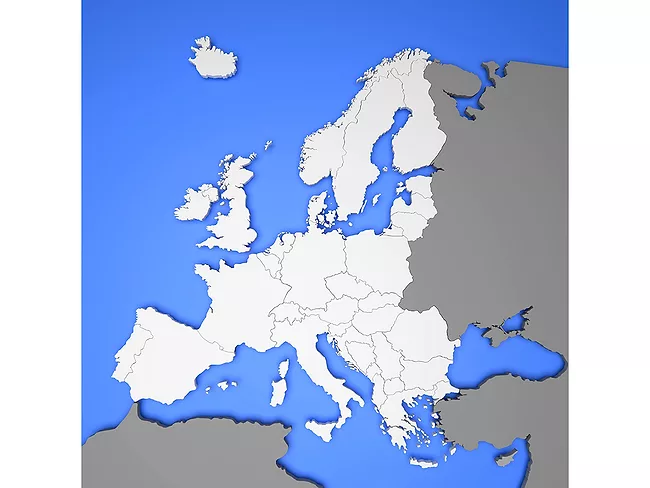
The European Commission has proposed legislation that would ease some of the EU’s barriers to innovation, but MedTech Europe said that while the European Innovation Act would be helpful, it is no substitute for fixing what’s already ailing the EU med-tech industry.
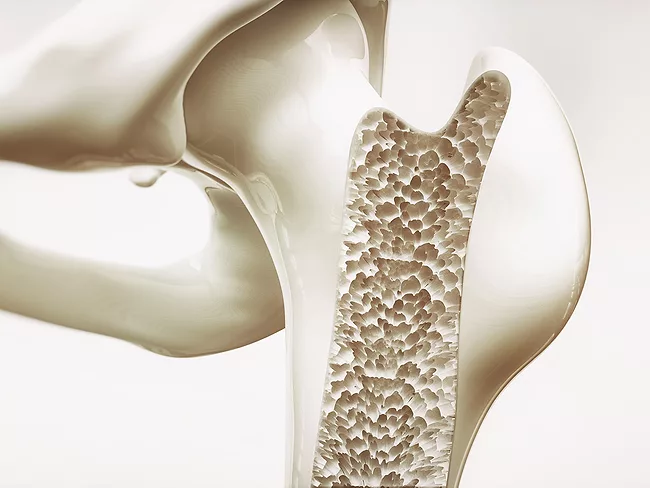
Vertebral compression fractures are one of the more obvious signs of osteoporosis but can be difficult to diagnose, one of several reasons the U.K. National Institute for Health and Care Excellence has given the nod to five AI products that can improve rapid detection of these fractures.
John Squires, the recently anointed director of the U.S. Patent and Trademark Office, has determined that a machine learning (ML) patent application met the standard for patent subject matter eligibility, an outcome that seems to bode well for ML-based patent applications going forward.
San Diego-based Dexcom Inc., is the target of a class action lawsuit in U.S. district court over the company’s G7 continuous glucose monitors, an action which follows a U.S. FDA warning letter by a mere seven months and a recall announced in July, suggesting that litigation often follows other sources of bad news for firms in the med-tech business.
The Trump administration’s consideration of a new round of tariffs has prompted two major med-tech trade association to advise the White House to leave medical consumables and medical devices out of any new tariffs, citing concerns about the impact on patient care.
The U.K. Competition and Markets Authority (CMA) has issued draft guidelines for remedies for mergers and acquisitions, which the agency insists incorporates some regulatory flexibility. However, CMA said its approach is premised on the notion that any regulated transaction should have zero effect on competition in the affected industry, a premise that would seem to quash any transaction that leads to fewer companies in that industry.
The U.K. Medicines and Healthcare Products Regulatory Agency reported the winners of the second phase of the AI Airlock challenge, which includes the Tortus AI, a medical scribe system developed by physicians in the U.K. National Health Service.
Total arterial revascularization (TAR) might not be the most popular approach to coronary artery bypass grafting (CABG), but it is gaining in popularity according to a new study appearing in the Journal of the American College of Cardiology. The authors said that TAR provides superior mortality outcomes compared to bypass grafting that relies on both veins and arteries for graft materials, a finding that might suggest lower rates of downstream angioplasty and stenting.
The U.S. Patent and Trademark Office (PTO) has proposed to limit the use of administrative challenges to patents when the patent in dispute is already the subject of litigation in district court, a change that many in the life sciences might see as an improvement over the current hyper-litigious environment.
China’s National Medical Products Administration (NMPA) recently met with a delegation from Singapore’s Health Sciences Authority (HSA) to discuss cooperation in the two agencies’ regulation of medical products, part of a series of efforts by NMPA to expand its use of regulatory reliance.