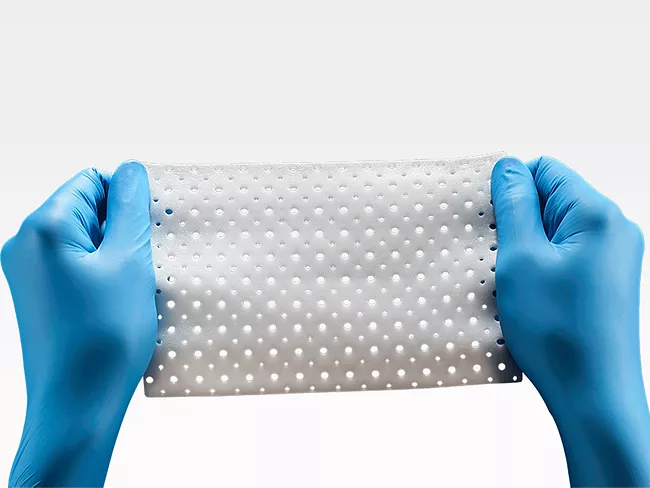
Despite that the device has been available for more than a decade under the 510(k) program, an FDA advisory committee voted narrowly that the benefits of the Surgimend device for breast reconstruction do not outweigh the risks. Another interesting feature of the application is that the pivotal study was based on real-world evidence (RWE), but while the FDA had direct access to the data, Integra Lifesciences Holdings Corp. did not, thus raising questions about whether RWE is necessarily useful for class III device premarket applications.
Enforcement against false claims filed with federal health care programs continues to snare a number of testing clinics as demonstrated by the recent news that a clinical lab has come to terms with federal prosecutors over urine drug testing. MD Spine Solutions LLC, of Reno, Nevada, has agreed to pay up to $16 million to settle allegations that it performed unnecessary urine drug tests, a case brought to the attention of the courts not by a former employee, but by Omni Healthcare Inc., which has been active in the False Claims Act space, thus highlighting the hazards of third-party litigation to clinical lab operators.
The push for legislation that would lower prescription drug prices in the U.S. has mounted in recent months, but support for Medicare pricing negotiations has faltered in the past few weeks. Sen. Bob Menendez (D-N.J.) is the latest Senate Democrat to signal his aversion to giving the government the authority to negotiate prices with drugmakers, breathing new life into hopes that the pharmaceutical industry will yet again escape a mechanism that critics say would suppress innovation at the expense of patients in desperate need of state-of-the-art therapies.
Patent subject matter eligibility has emerged as arguably the most controversial patent policy theme of the past two decades, one which has been most keenly felt in the world of in vitro diagnostics (IVDs). A new study pending publication suggests that venture capital (VC) investment in IVDs would have been $9.3 billion higher in the four years following the Supreme Court’s decision in Mayo v. Prometheus, a finding which the author said leads inevitably to the conclusion that the subject matter eligibility crisis “should receive Congress’ immediate attention.”
The FDA issued an Oct. 18 reminder to the diagnostics industry that the agency still requires test developers to register with an institutional review board (IRB) for all studies of human subjects. This still pertains to studies that make use of leftover, de-identified specimens in FDA-regulated studies, an alert to industry which suggests that enforcement actions may be in the near offing.
The FDA published a draft rule on Oct. 19 for over-the-counter hearing aids, four years after the Food and Drug Administration Reauthorization Act (FDARA) had directed the agency to do so by 2020. One of the potentially more problematic aspects of the draft is that the rule would be preemptive of state law on several points, including consumer protections, a consideration that could serve as a flashpoint in future litigation.
The U.S. Centers for Medicare & Medicaid Services’ (CMS) withdrawal of a proposal to provide automatic coverage of FDA-designated breakthrough devices has drawn criticism from device makers, but the industrial reaction runs the gamut.
The question of bias in artificial intelligence (AI) algorithms is generally thought to be overcome by ensuring that the data set used to train the algorithm is representative of the population at large. However, Naomi Aaronson, executive director of clinical evaluation at the Blue Cross Blue Shield Association, said its not that simple because demographic data can combine in unpredictable ways and thus “the only real understanding of whether it works is in the clinical validation” of the algorithm in various settings.
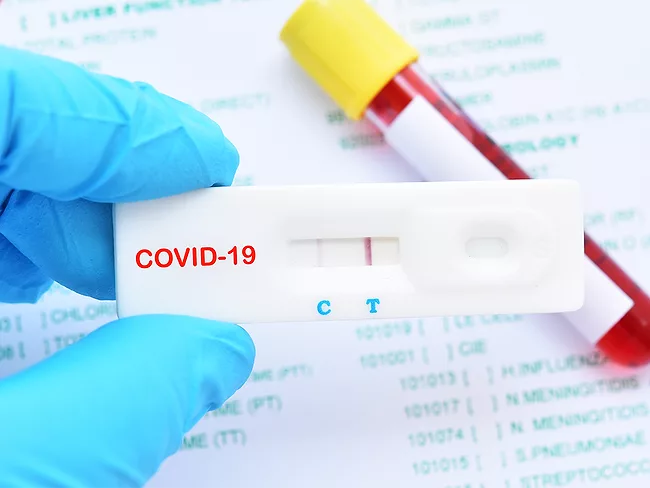
The U.S. National Institutes of Health reported Oct. 14 that it has awarded contracts in the amount of $77.7 million for development and manufacture of a dozen new rapid tests for the SARS-CoV-2 virus. The monies were awarded under the NIH’s Rapid Development of Diagnostics (RADx) program, and will add seven viral antigen detection and five viral RNA detection tests to the suite of offerings. all with an eye toward more rapid turn-around of test results. The news of the new round of RADx grants was followed by 24 hours the announcement that the Department of Health and Human Services has extended the public health emergency (PHE) for the COVID-19 pandemic for another three months.
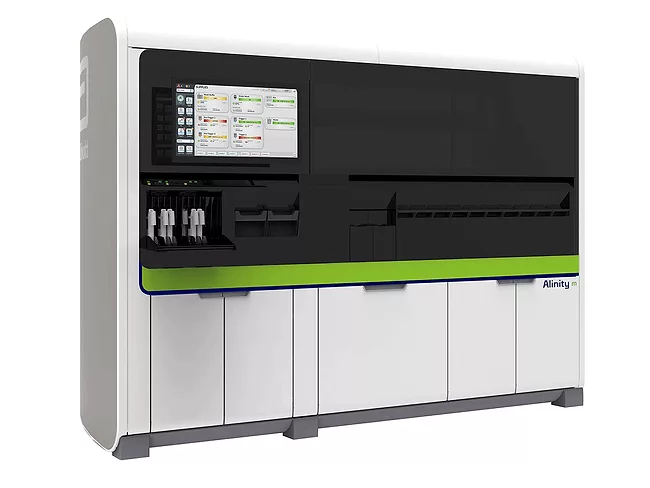
The FDA reported Oct. 14 that software used with the Alinity m test kit by Abbott Laboratories is being recalled for the potential for false positive results, a problem due to software used to automate the processing of the test. This recall was originally issued in mid-September, but the Abbott Park, Ill.-based company is advising labs to treat any test result as presumptive at best.