BioWorld. Link to homepage.

Clarivate
  • BioWorld
  • BioWorld Science
  • BioWorld Asia
  • Data Snapshots
    • Biopharma
    • Medical technology
    • Infographics: Dynamic digital data analysis
    • Index insights
    • NME Digest
  • Special reports
    • Infographics: Dynamic digital data analysis
    • Trump administration impacts
    • Med-tech outlook 2026
    • Under threat: mRNA vaccine research
    • BioWorld at 35
    • Biopharma M&A scorecard
    • Bioworld 2025 review
    • BioWorld MedTech 2025 review
    • BioWorld Science 2025 review
    • Women's health
    • China's GLP-1 landscape
    • PFA re-energizes afib market
    • China CAR T
    • Alzheimer's disease
    • Coronavirus
    • More reports can be found here

BioWorld. Link to homepage.

  • Sign In
  • Sign Out
  • My Account
Subscribe
BioWorld - Tuesday, April 21, 2026
Home » Authors » John Fox

John Fox

Articles

ARTICLES

3D model, X-rays of spine

New osteoporosis treatment target, inhibitor identified

Oct. 15, 2020
By John Fox
A Chinese study is the first to identify fibroblast activation protein (Fap) as an osteogenic suppressor that could be targeted to prevent osteoporosis and has shown that osteolectin, a bone glycoprotein that binds calcium, is an endogenous Fap inhibitor promoting bone mineralization.
Read More

Potential MND treatments move a step forward

Oct. 13, 2020
By John Fox
Australian researchers are the first to discover how inflammation is triggered in motor neuron disease (MND) and identified the molecules involved, which could be the first step toward development of treatments to slow the progression of MND and possibly other debilitating neurological diseases.
Read More
DNA

Inflammatory response gene identified in sepsis

Oct. 7, 2020
By John Fox
A whole-genome clustered regularly interspaced short palindromic repeats (CRISPR) screening study is the first to identify the gene regulating the inflammatory response and immune cell death during sepsis, Australian researchers reported in the October 5, 2020, edition of Nature Immunology.
Read More
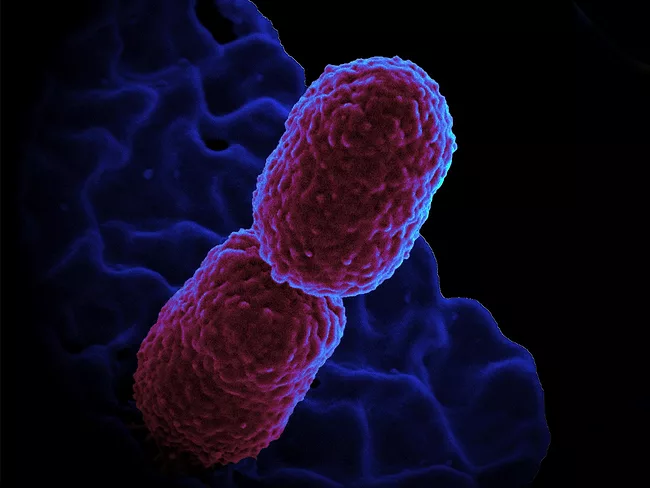
Klebsiella pneumonia

Stem cells can help stem Klebsiella infection

Oct. 2, 2020
By John Fox
A Taiwanese study has demonstrated that human placental mesenchymal stem cells were therapeutic in hypervirulent Klebsiella pneumonia intra-abdominal infections by secreting IL-1beta to augment neutrophil numbers and functions, while restraining immune responses by other leukocytes.
Read More
Brain-DNA illustration

Cerebral palsy risk has genetic component

Sep. 29, 2020
By John Fox
A U.S.-led international whole-exome sequencing study has discovered that mutations in genes encoding for the growth of the neurites necessary for neural connectivity increase the risk for cerebral palsy, the authors reported in the September 28, 2020, edition of Nature Genetics.
Read More
Hands holding petri dish

New potential broad-spectrum fungicides discovered

Sep. 23, 2020
By John Fox
A Chinese study has discovered that very long-chain fatty acids (VLCFAs) mediate septin organization in pathogenic fungi and that VLCFA biosynthesis represents a new target for controlling pathogenic fungi, which could lead to the development of new fungicides for use in plants and humans.
Read More
Glucose testing

New therapeutic target for blood sugar control identified

Sep. 8, 2020
By John Fox
An Australian study led by University of Melbourne scientists has identified a previously unknown role for the hepatokine, sparc-related modular calcium-binding protein 1 (SMOC1), in suppressing hepatic glucose production.
Read More
Glucose testing

New therapeutic target for blood sugar control identified

Sep. 3, 2020
By John Fox
An Australian study led by University of Melbourne scientists has identified a previously unknown role for the hepatokine, sparc-related modular calcium-binding protein 1 (SMOC1), in suppressing hepatic glucose production. The investigators reported their results in the Sept. 2, 2020, edition of Science Translational Medicine.
Read More
Glucose testing

New therapeutic target for blood sugar control identified

Sep. 2, 2020
By John Fox
An Australian study led by University of Melbourne scientists has identified a previously unknown role for the hepatokine, sparc-related modular calcium-binding protein 1 (SMOC1), in suppressing hepatic glucose production. The investigators reported their results in the Sept. 2, 2020, edition of Science Translational Medicine.
Read More
Science-8-14

Acupuncture shown to regulate inflammation in mice

Aug. 19, 2020
By John Fox
A Sino-U.S. collaborative study has demonstrated that acupuncture regulates inflammation by activating pro- or anti-inflammatory signaling pathways, while mitigating cytokine storms in mice with systemic inflammation, the study authors reported in the Aug. 12, 2020, edition of Neuron. The study also found that the acupuncture site, intensity and timing determined how it affected response, which has important implications for acupuncture use in inflammatory diseases and as adjunctive cancer therapy.
Read More
View All Articles by John Fox

Popular Stories

  • Today's news in brief

    BioWorld
    BioWorld briefs for April 20, 2026.
  • Man holding raised arm with illustrated overlay of nerves

    Biohaven reports details on discovery of BHV-2100

    BioWorld Science
    Transient receptor potential melastatin 3 (TRPM3) is a calcium-permeable TRP channel that is highly expressed in somatosensory neurons, including nociceptors of...
  • Elderly woman holding illustration of brain with missing puzzle piece

    Meta-analysis: Anti-amyloid Alzheimer’s drugs not ‘clinically meaningful’

    BioWorld
    The ongoing controversy over the effectiveness of anti-amyloid drugs is about to get more heated, after a review of clinical trials showed statistically...
  • New GABA(B) receptor PAMs revealed in Addex Pharma patents

    BioWorld Science
    Addex Pharma SA has disclosed new GABA(B) receptor positive allosteric modulators (PAMs) potentially useful for the treatment of chronic cough, urinary...
  • Novel caspase-2 inhibitor shows in vivo neuroprotective effects

    BioWorld Science
    Caspase-2-mediated cleavage of tau at Asp314 generates a neurotoxic fragment, Δtau314, that drives early synaptic dysfunction in Alzheimer’s disease (AD) and...
  • BioWorld
    • Today's news
    • Analysis and data insight
    • Clinical
    • Data Snapshots
    • Deals and M&A
    • Financings
    • Medical technology
    • Newco news
    • Opinion
    • Regulatory
  • BioWorld Science
    • Today's news
    • Biomarkers
    • Cancer
    • Conferences
    • Endocrine/metabolic
    • Immune
    • Infection
    • Neurology/psychiatric
    • NME Digest
    • Patents
  • BioWorld Asia
    • Today's news
    • Analysis and data insight
    • Australia
    • China
    • Clinical
    • Deals and M&A
    • Financings
    • Newco news
    • Regulatory
    • Science
  • More
    • About
    • Advertise with BioWorld
    • Archives
    • Article reprints and permissions
    • Contact us
    • Cookie policy
    • Copyright notice
    • Data methodology
    • Infographics: Dynamic digital data analysis
    • Index insights
    • Podcasts
    • Privacy policy
    • Share your news with BioWorld
    • Staff
    • Terms of use
    • Topic alerts
Follow Us

Copyright ©2026. All Rights Reserved. Design, CMS, Hosting & Web Development :: ePublishing