Targeted therapies and immunotherapies continue to show better results than chemotherapy in investigator-initiated and company-sponsored cancer trials, and newer options demonstrate improvements over older ones, supporting potential shifts in how patients are treated.
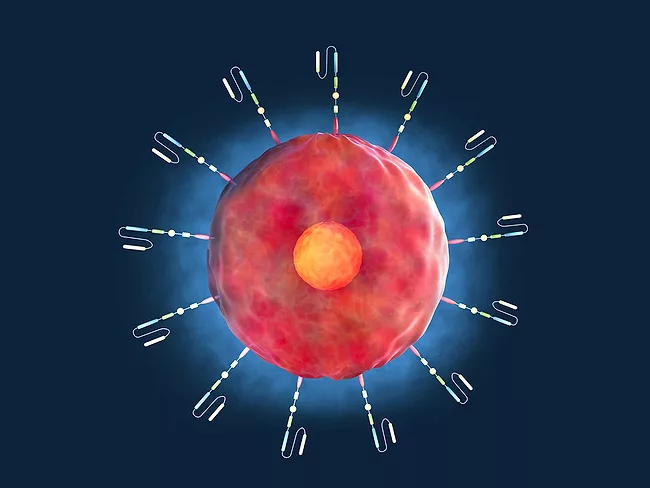
While several targeted therapies are approved for acute myeloid leukemia, a 2023 U.K. study found that median survival following diagnosis was only about seven months, highlighting the need not only for new therapies, but for a faster regulatory strategy. At the American Society of Hematology’s 67th annual meeting in Orlando Dec. 6, researcher Jesse Tettero presented data supporting the use of a measurable residual disease (MRD) surrogate endpoint in acute myeloid leukemia (AML) research.
Only a couple of years since the first sickle cell disease (SCD) gene therapies gained U.S. FDA approval, researchers are working to expand access for younger children, and to improve manufacturing and commercialization to reach patients faster.
After a more than 13-year period of stability with Janet Woodcock as the head of CDER, with Patrizia Cavazzoni taking charge during the next four years of former U.S. President Joe Biden’s tenure, the FDA division has had no fewer than five different people in charge throughout 2025. Up to bat now as acting director is Tracy Beth Høeg, a physician and epidemiologist who co-authored a paper in 2022 with CBER Director Vinay Prasad, FDA Commissioner Marty Makary and others demonstrating that COVID-19 boosters and college vaccine mandates were harmful to young men due to myocarditis risks.
Shares of Cosmo Pharmaceuticals NV rose sharply on Dec. 3 following top-line pivotal phase III data showing a statistically significant and clinically meaningful improvement in male androgenetic alopecia patients receiving clascoterone 5%, the first topical androgen receptor inhibitor, which uses the same active ingredient as the company’s acne treatment, Winlevi.
More than six years after Novartis AG’s Zolgensma was approved for children under 2 with spinal muscular atrophy (SMA) with biallelic mutations in the survival motor neuron 1 gene, the U.S. FDA cleared a new version, under the brand name Itvisma (onasemnogene abeparvovec), for those 2 and older, including teens and adults with the same mutation.
Changes to a U.S. CDC website regarding autism and vaccines has sparked a backlash from numerous scientific and other groups, placing HHS Secretary Robert F. Kennedy Jr. (RFK) in the spotlight once again for appearing to break promises made earlier this year to secure his nomination.
Changes to a U.S. CDC website regarding autism and vaccines has sparked a backlash from numerous scientific and other groups, placing HHS Secretary Robert F. Kennedy Jr. (RFK) in the spotlight once again for appearing to break promises made earlier this year to secure his nomination.
Two Flagship Pioneering Inc. biopharma companies founded in the last five years and focused on proteomic and genomic technologies entered agreements to help discover new therapeutics for respiratory and liver diseases under a framework collaboration with GSK plc. Under that agreement, Profound Therapeutics Inc. and Quotient Therapeutics Inc. would use their platform technologies to discover novel proteins and targets for developing drugs to treat chronic obstructive pulmonary disease and idiopathic pulmonary fibrosis, with Quotient taking on a third indication with metabolic dysfunction-associated steatohepatitis.
Tempest Therapeutics Inc. entered definitive agreements approved by its board to acquire certain dual-targeting CAR T programs from Factor Bioscience Inc. and its affiliates in an all-stock transaction expected to close in early 2026.


.webp?height=488&t=1670008838&width=650 "Acute myeloid leukemia")