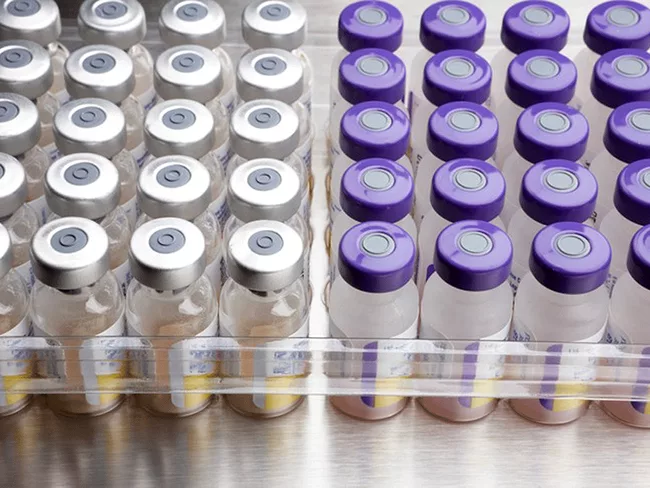
Biosimilars continue to pose cheaper alternatives to their established, blockbuster counterparts. The U.S. FDA has approved Tyruko (natalizumab-sztn) from Sandoz Inc., the generics business of Novartis AG. It is the first approved biosimilar to Biogen Inc.’s blockbuster Tysabri (natalizumab), an injectable monoclonal antibody for treating adults with relapsing forms of multiple sclerosis (MS).
The first special purpose acquisition company (SPAC) merger announced in 2023 has fallen apart. Aprinoia Therapeutics Inc. and Ross Acquisition Corp. II mutually agreed to call off the merger that had been valued at $280 million. The failed deal is part of a larger trend that has gained momentum in the past year as a struggling economy and tighter U.S. SEC restrictions dampened SPAC deals.
Fore Biotherapeutics Inc. has closed on a $75 million series D financing so that it can continue developing its lead asset, plixorafenib, an oral small molecule that selectively inhibits BRAF alterations.
Boehringer Ingelheim GmbH is the latest company to dive into the legal fray surrounding the federal government’s plan to change drug costs. The drug price negotiation program established by the Inflation Reduction Act is “unlawful,” according to the company’s brief, because it violates the due process clause and the just-compensation portion of the U.S. constitution’s Fifth Amendment.
The U.S. FDA has approved its second treatment for an ultra-rare disease in the past three days by greenlighting Veopoz (pozelimab-bbfg) from Regeneron Pharmaceuticals Inc. Approval of the priority BLA for Veopoz, a fully human monoclonal antibody to treat Chaple disease, was announced two days ahead of its Aug. 20 PDUFA date. It is the only FDA-approved therapy for the indication.
There are plenty of companies chasing the first U.S. FDA-approved treatment for the ultra-rare disease fibrodysplasia ossificans progressiva (FOP), but Ipsen SA stayed the course longer and won that approval Aug. 16 with Sohonos (palovarotene). Other companies have struggled to develop a treatment for FOP, which affects about 400 people in the U.S. and about 900 people worldwide. Some potential competitors are still in the clinic, trying to catch up.
The U.S. FDA has given its first approval for treating fibrodysplasia ossificans progressiva (FOP), an ultra-rare disease that creates bone formation outside the skeleton that can lead to immobility, life-threatening respiratory problems and a total locking of the jaw.
An updated trial protocol providing expanded bridging therapies are part of the agreement between the U.S. FDA and Arcellx Inc. that allows the lifting of the partial clinical hold on the company’s pivotal phase II study of CAR T-cell therapy CART-ddBCMA in multiple myeloma (MM).
The U.S. FDA has approved Daxxify (daxibotulinumtoxinA-lanm) for treating cervical dystonia in adults nearly a week ahead of its Aug. 19 PDUFA date. Approval of the sBLA for the injectable, peptide-formulated neuromodulator went to Revance Therapeutics Inc. The drug’s original approval was for treating glabellar lines, better known as frown lines, came in September 2022. Daxxify is the first neuromodulator stabilized with Revance’s peptide exchange technology. It is created without human serum albumin or animal-based components.
A complete response letter (CRL) from the U.S. FDA for GC-4419 (avasopasem) is causing Galera Therapeutics Inc. to dramatically change course to survive, with the company laying off about 70% of its workforce. That layoff, which will reach across several company departments, is designed to extend the cash runway into the second quarter of 2024. The adjustment comes after Galera expanded its commercial leadership in May to prep for a potential launch of avasopasem before the end of 2023.