Aspen Neuroscience Inc. has closed a series B financing of $147.5 million. The funds will help get its autologous neuron replacement candidate into a phase I/IIa study for Parkinson’s disease. Privately held Aspen has been talking about initiating the phase I/IIa clinical trial since at least 2019. But in April 2022, it came a lot closer to reality. That’s when the company launched its first patient screening studies at several sites in the U.S. Now, the trial-ready cohort study is designed to screen potential participants for the study.
IPOs continue to be sluggish but two companies, Pepgen Inc. and Bausch & Lomb Corp., that began trading May 6 managed to sidestep the turbulence despite having to lower their expectations before the market opened. Pepgen stock (NASDAQ:PEPG) closed at $12.89 per share May 6, up 7.4% on the day. Bausch & Lomb also had a solid IPO launch May 6 as shares (NYSE:BLCO) closed 11.1% upward at $20 each.
Little more than a month after selling a narcolepsy drug from its portfolio, Jazz Pharmaceuticals plc has replaced it with another. The company entered an exclusive development and commercialization rights agreement Sumitomo Pharma Co. Ltd.’s candidate for treating narcolepsy along with idiopathic hypersomnia and other sleep disorders. Sumitomo retains the rights for Japan, China and certain other Asia-Pacific countries and regions while Jazz gets the rights to everywhere else.
Privately held Amphista Therapeutics Ltd. has cut massive deals with two biopharma giants, Merck KGaA and Bristol Myers Squibb Co. (BMS), that together could bring the company up to $2.25 billion. The companies will use Amphista’s Eclipsys platform to generate protein degrader-based therapeutics. Merck is looking to discover and develop small-molecule protein degraders for treating cancer and immune disease. Indications in the BMS deal were not announced.
A quartet of companies on May 2 announced three complete response letters (CRLs) that left them scrambling to get back on the path to approval. Hutchmed Ltd.'s surufatinib met with word from the U.S. FDA that two positive phase III studies in China and a bridging study in the U.S. would not support approval of the drug for pancreatic and extra-pancreatic neuroendocrine tumors. A multi-regional clinical trial in the U.S. is needed, the regulator said, brushing aside China-only studies when seeking a U.S. approval.
The flop that is Aduhelm (aducanumab) made itself felt in Biogen Inc.’s executive suite as CEO Michael Vounatsos is leaving the company. He had the job for five and a half years and for less than a year after the controversial Alzheimer’s treatment was approved. He will stick around until a successor is found.
For Kevin Friedman, the secret to making newly emergent Kelonia Therapeutics Inc. a success is reducing complexity and keeping everything as simple as possible. The Boston-based company just raised $50 million in series A funding to further its development of genetic medicines encompassing a range of diseases.
A quartet of companies on May 2 announced three complete response letters (CRLs) that left them scrambling to get back on the path to approval. Hutchmed Ltd.'s surufatinib met with word from the U.S. FDA that two positive phase III studies in China and a bridging study in the U.S. would not support approval of the drug for pancreatic and extra-pancreatic neuroendocrine tumors. A multi-regional clinical trial in the U.S. is needed, the regulator said, brushing aside China-only studies when seeking a U.S. approval.
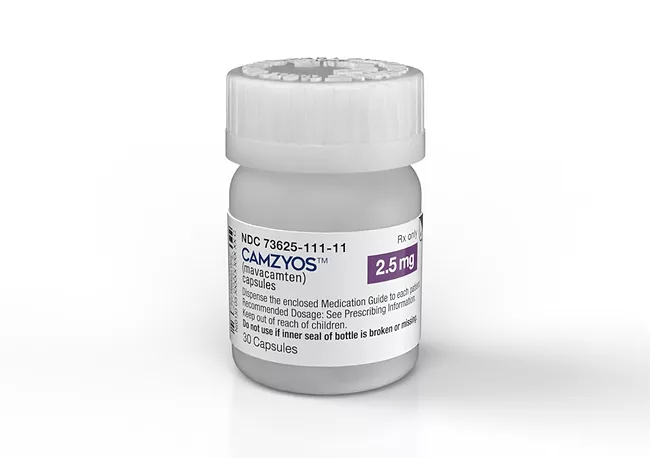
Bristol Myers Squibb Co.’s audacious $13.1 billion 2020 takeover of Myokardia Inc. appears to have paid off with U.S. FDA approval of the drug at the heart of the deal, mavacamten. The medicine, a cardiac myosin inhibitor for treating adults with obstructive hypertrophic cardiomyopathy (HCM), will be marketed under the brand name Camzyos.