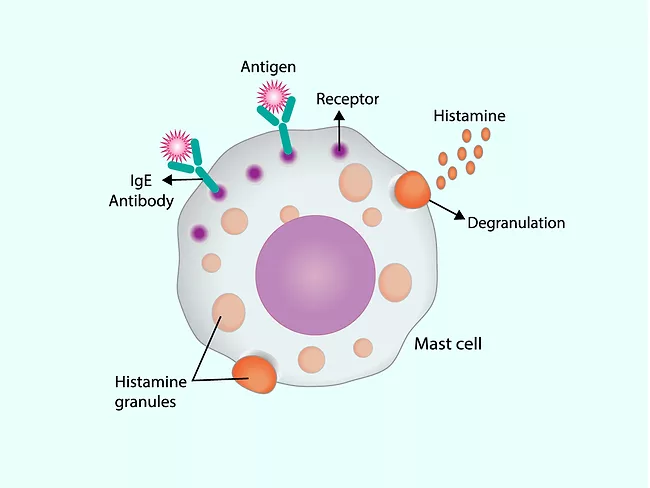
Just five months after raising a $70 million series A round, newly launched Excellergy Inc. agreed to a $2 billion M&A transaction that would bring its trifunctional allergic effector cell response inhibitors (ECRIs) to Novartis AG.
Excellergy Inc. has presented data for Exl-111, an investigational allergic effector cell response inhibitor (ECRI) targeting the IgE axis that is designed to disarm allergic effector cells at the source of activation.
In an article published in Cell Host & Microbe on March 3, 2026, researchers at McMaster University in Canada and at the Hospital Universitario de La Princesa in Spain have shed some light on the impact of microbiota on peanut-driven allergy and anaphylaxis.
In developed countries, up to 20% of the population suffers from pollen allergies to birch and related trees. Mabylon AG has developed an anti-tree pollen antibody therapeutic, MY-010, that targets several inducers of spring hay fever, such as birch, alder and hazel, among others.
In an article published in Cell Host & Microbe on March 3, 2026, researchers at McMaster University in Canada and at the Hospital Universitario de La Princesa in Spain have shed some light on the impact of microbiota on peanut-driven allergy and anaphylaxis.
Gliadin is the major allergen of wheat-dependent exercise-induced anaphylaxis (WDEIA). YH-35324 (lesigercept, GI-301) is a long-acting IgEtrap-Fc fusion protein that targets FcεR1α that could serve as a therapeutic approach in WDEIA. It is under development by Yuhan Corp. in early clinical trials as an allergy treatment.
IgE is known to drive allergic disease, and omalizumab is the only approved anti-IgE antibody to date that has shown suboptimal IgE affinity and limited use in scenarios with high IgE levels.
It’s not often that disclosure of a complete response letter (CRL) causes a company’s share price to rise, but that was case for Aquestive Therapeutics Inc., which saw its stock (NASDAQ:AQST) rise 39% to close Feb. 2 at $4.10 on news the U.S. FDA has declined – for now – to approve the NDA for Anaphylm (dibutepinephrine), delaying the commercial entry of what could be the first oral alternative to Epipen.
Moonlight Therapeutics Inc.’s IND application for MOON-101 has been cleared by the FDA, paving the way for a first clinical trial in adults and children with peanut allergy.
Researchers from Cincinnati Children’s Hospital Medical Center and collaborating institutions in the U.S. have developed a novel approach using allergen-encoding mRNA encapsulated in lipid nanoparticles (LNPs) for both therapy and prevention of allergic responses.