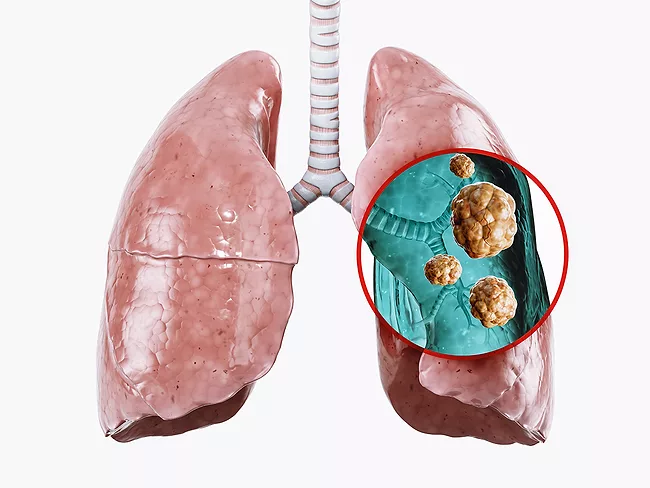
About a week after closing its $10.6 billion acquisition of Nuvalent Inc., GSK plc has reaped the first reward, announcing U.S. FDA approval of zidesamtinib in non-small-cell lung cancer (NSCLC). Branded Jideytro, the ROS1 selective inhibitor is indicated for use in adults with locally advanced or metastatic ROS1-positive disease who have received a prior ROS1 kinase inhibitor.
Another day, another two multibillion-dollar deals with Asian companies, this time involving Dizal Pharmaceutical Co. Ltd. and its EGFR inhibitor for lung cancer, as well as Innovent Biologics Inc. and its anti-CD40L antibody for a chronic fibroinflammatory condition.
Another day, another two multibillion-dollar deals with Asian companies, this time involving Dizal Pharmaceutical Co. Ltd. and its EGFR inhibitor for lung cancer, as well as Innovent Biologics Inc. and its anti-CD40L antibody for a chronic fibroinflammatory condition.
As China becomes a major source of global clinical trial evidence, the retraction of a high-profile China-led lung cancer study is raising questions about whether journals, regulators and drug developers have adequate systems to validate fast-moving clinical claims.
Roche Holding AG’s Genentech unit achieved superior phase III results with its KRAS G12C inhibitor divarasib over approved therapies in previously treated non-small-cell lung (NSCLC) cancer patients.
As China becomes a major source of global clinical trial evidence, the retraction of a high-profile China-led lung cancer study is raising questions about whether journals, regulators and drug developers have adequate systems to validate fast-moving clinical claims.
As China becomes a major source of global clinical trial evidence, the retraction of a high-profile China-led lung cancer study is raising questions about whether journals, regulators and drug developers have adequate systems to validate fast-moving clinical claims.
Samsung Bioepis Co. Ltd. announced positive top-line phase I and phase III data for SB-27, a proposed biosimilar to Merck & Co. Inc.’s blockbuster immunotherapy Keytruda (pembrolizumab). Preliminary analysis of parallel-run global phase I and phase III studies demonstrated SB-27’s clinical and pharmacokinetic (PK) equivalence to the reference product, according to a company announcement.
Samsung Bioepis Co. Ltd. announced positive top-line phase I and phase III data for SB-27, a proposed biosimilar to Merck & Co. Inc.’s blockbuster immunotherapy Keytruda (pembrolizumab). Preliminary analysis of parallel-run global phase I and phase III studies demonstrated SB-27’s clinical and pharmacokinetic (PK) equivalence to the reference product, according to a company announcement.