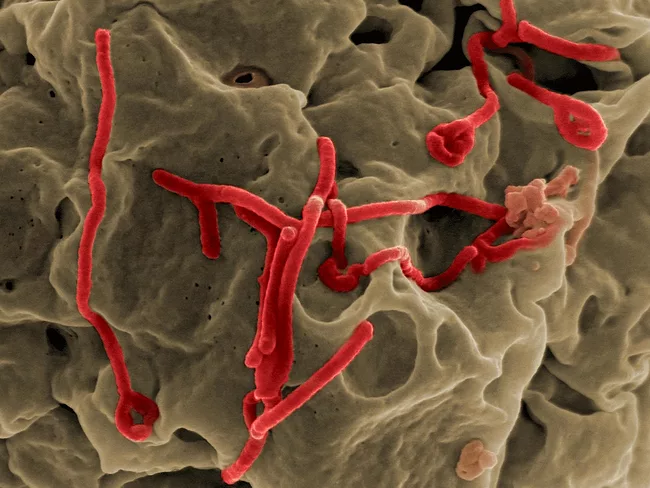
Ebola virus (EBOV) causes severe febrile illness that frequently leads to death within 10 days of infection due to multiorgan failure. Different therapeutic strategies have been developed against EBOV infection, including small-molecule drugs, monoclonal antibodies and viral vaccine vectors. Despite their promise, all these strategies have significant limitations that limit their clinical application. Researchers from Mayo Clinic recently presented a novel molecular therapy, which they called “therapeutic minigenome,” using EBOV’s own proteins to combat itself.
A global consortium led by Adaptvac ApS aims to design and test a new vaccine that could offer broad protection against several filoviruses, including Zaire ebolavirus, Sudan ebolavirus and Marburg virus.
Ebola virus and Marburg virus are single-stranded, enveloped and negative sense-RNA viruses belonging to the Filoviridae family, and they both cause deadly hemorrhagic fevers in humans and mammals.
The FDA has granted orphan drug designation to the active ingredient in Soligenix Inc.’s Suvax, a subunit protein vaccine of recombinantly expressed Sudan ebolavirus (SUDV) glycoprotein, for the prevention and post-exposure prophylaxis against SUDV infection. SUDV is a type of ebolavirus for which there is no current treatment or vaccine.
While there has been progress in the development and availability of treatments and vaccines for Ebola virus (EBOV), there are still no treatments for other filoviruses such as Sudan virus (SUDV, species Sudan ebolavirus), which caused the 2022-23 outbreak in Uganda.
Redhill Biopharma Ltd. has announced a survival benefit with its oral sphingosine kinase-2 (SPHK2) selective inhibitor opaganib (ABC-294640) in an in vivo Ebola virus study.
An international team of researchers has created two bat stem cell lines that reveal an unusual number of viral sequences in bat cells compared with those of other mammals. Writing in an article posted online Feb. 21, 2023, in Cell, the scientists suggested that the unusual amount of viral genetic material found in the bat stem cells could explain why these mammals are largely unaffected by most viral infections, despite being able to transmit them.
An international team of researchers has created two bat stem cell lines that reveal an unusual number of viral sequences in bat cells compared with those of other mammals. Writing in an article posted online Feb. 21, 2023, in Cell, the scientists suggested that the unusual amount of viral genetic material found in the bat stem cells could explain why these mammals are largely unaffected by most viral infections, despite being able to transmit them.