A joint Nankai University and Tianjin Accendatech Technology Co. Ltd. patent describes new isoalantolactone derivatives reported to be useful for the treatment of liver cancer.
Pilatus Bio Inc. is working to address a major under-addressed target of current checkpoint inhibitors: metabolic stress within solid tumors. “Traditional immunotherapies release immune ‘brakes,’ but they do not address the underlying metabolic stress in tumors,” Pilatus CEO and cofounder Raven Lin said. “That’s why more than 60% of solid tumor patients do not respond to treatment.”
Mixed lineage kinase domain-like pseudokinase (MLKL), a key effector of necroptosis, is highly expressed in hepatocellular carcinoma (HCC), and its targeting may promote parthanatos-mediated immunogenic cell death. Researchers from the Chinese Academy of Sciences and collaborators described the discovery and preclinical characterization of C-116, a MLKL PROTAC degrader developed using AI-assisted rational drug discovery.
Ring finger protein 4 (RNF4) is a SUMO-targeted ubiquitin ligase that modulates proteins involved in cancer progression. Researchers from Chongqing Medical University and collaborators reported the development and preclinical characterization of [I], the first RNF4-targeting PROTAC degrader for the treatment of hepatocellular carcinoma (HCC).
Previously, Chinese researchers used long-read RNA sequencing to identify a unique alternative splicing variant of CD44 transmembrane protein, named CD44E, which is highly expressed in hepatocellular carcinoma (HCC) tumors compared to adjacent nontumoral liver tissues. In a new study, the team analyzed the Genotype-Tissue Expression (GTEx) database and confirmed that CD44E expression is limited in essential normal organs, while CD44S standard isoform is broadly expressed on most cell types.
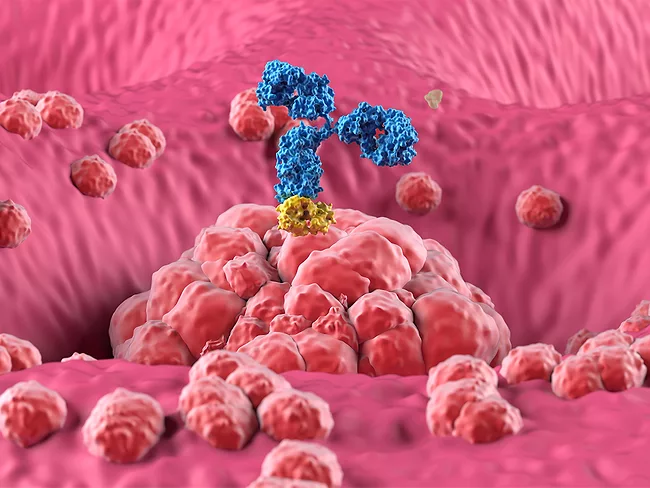
Akeso Inc.’s first-in-class trispecific antibody, AK-150, has received IND clearance from China’s National Medical Products Administration (NMPA) for clinical trials in patients with advanced solid tumors. Engineered using Akeso’s AI-driven drug discovery platform and its proprietary Tetrabody technology, AK-150 is a humanized anti-CSF-1R, ILT2 and ILT4 trispecific antibody that achieves multipathway blockade of both innate and adaptive immunity.
IRAK1, a key mediator of TLR/IL-1R signaling, drives tumor cell proliferation and a pro-inflammatory microenvironment when aberrantly activated. Its overexpression has been observed in multiple cancers, including hepatocellular carcinoma (HCC).
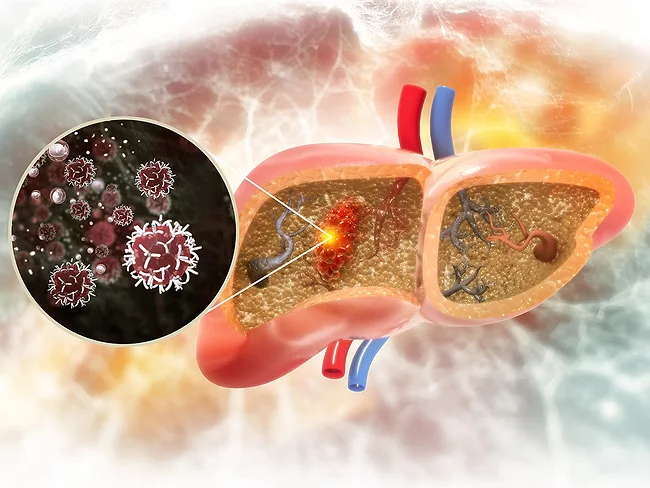
Hepatocellular carcinoma (HCC) is the most common form of primary liver cancer, representing approximately 75-85% of all cases. Often considered preventable, primary liver cancer ranks as the sixth most frequently diagnosed cancer and the third leading cause of cancer deaths worldwide. Through a multi-institutional effort, researchers have identified activated ATF6α as a driver of HCC that suppresses immune defenses, predicts response to immune checkpoint therapy, and represents a potential target for intervention.
Elevar Therapeutics Inc. appointed Kim Dong-gun (DG) as CEO Jan. 29, as the company focuses on post-NDA strategies for lirafugratinib in bile duct cancer, and the twice-rejected rivoceranib-camrelizumab combination for liver cancer.
Elevar Therapeutics Inc. appointed Kim Dong-gun (DG) as CEO Jan. 29, as the company focuses on post-NDA strategies for lirafugratinib in bile duct cancer, and the twice-rejected rivoceranib-camrelizumab combination for liver cancer.




-CEO-Elevar-1-30.webp?height=488&t=1769801176&width=650 "Kim Dong-gun (DG), CEO, Elevar")