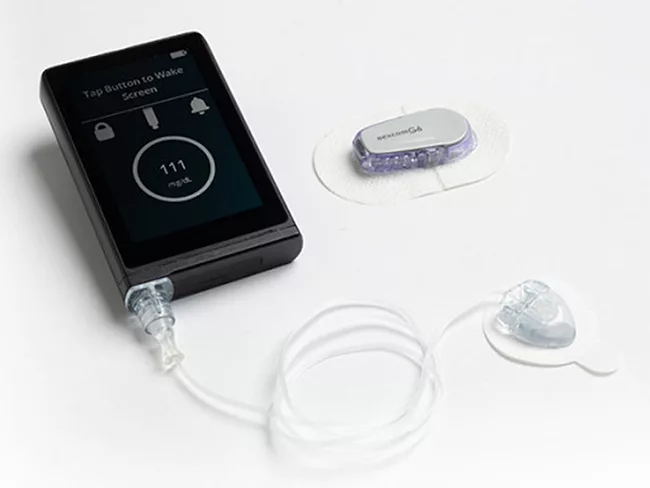
Beta Bionics Inc.’s preliminary results for its first full year as a public company offered an early read on developments and market positioning in the insulin pump and patch market, with analysts pointing to steady growth, rising pharmacy channel penetration and intensifying pressure as more products target both type 1 and type 2 diabetes.
Investors poured a further $13 million into Vicentra BV for Kaleido, its insulin patch pump system, taking the total raised in the company’s series D financing round to $98 million. The funds come amid significant changes across diabetes technology, particularly the acceleration of patch pumps. Kaleido is one of the smallest, lightest, and most precise insulin patch pumps available.
Over the last year, diabetes technology saw significant changes, including the acceleration of patch pumps, ever-smaller continuous glucose monitors (CGM), implanted CGMs and increased interest in devices that measure additional chemicals in blood without needles.
The first international consensus framework for the use of continuous ketone monitoring in people with diabetes, published in The Lancet Diabetes & Endocrinology, calls development and use of ketone sensors for the prevention of diabetic ketoacidosis “transformational.” Several companies in the diabetes technology market have recently reported that they are developing dual glucose-ketone sensors, though none have gained U.S. FDA approval yet.
The U.S. Centers for Medicare & Medicaid Services posted the draft home health rule for calendar year 2026, which includes a proposal to subject continuous glucose monitors and insulin pumps to competitive bidding, but the agency is also considering a more rapid pace of replacement of these technologies.
The rapid adoption of the Omnipod 5 answered a question automated insulin delivery system manufacturers posed for years: with clear health benefits and payer coverage, why has pump adoption been so slow? Insulet Corp.’s Omnipod 5’s rapid rise to dominance demonstrated unequivocally that people with diabetes want a stick-and-forget device. The American Diabetes Association’s 85th Scientific Sessions in Chicago on June 20-23 made just as clear that pump makers received the message with several companies outlining plans to introduce a patch system in the next two years.
Abbott Laboratories grabbed attention in early June with its announcement of a partnership with Tandem Diabetes Care Inc. to develop a multianalyte sensor for people with diabetes that would measure ketones as well as glucose.
Pregnant women with type 1 diabetes who used a hybrid closed loop automated insulin delivery system averaged more than three additional hours per day in their recommended glucose range than those who managed their diabetes with insulin injections or non-automated pump systems, a study presented at the 85th Scientific Sessions of the American Association in Chicago demonstrated.
Medtronic plc revealed plans to spin off its underperforming diabetes unit as a separate public company during its fourth quarter 2025 earnings call May 21. The company expects to complete the separation within 18 months.