Tavo Biotherapeutics Inc. has successfully closed a $17 million series A financing, with the proceeds directed to advancing the company’s pipeline of innovative therapies targeting glaucoma and retinal disease.
In its first substantial M&A transaction since 2021, Bayer AG is buying Perfuse Therapeutics Inc., a firm that has operated quietly, though it reported positive midstage data last year for PER-001, an endothelin antagonist, in glaucoma and diabetic retinopathy.
Armed with a fully subscribed $80 million series D round, Life Biosciences Inc. is making progress with its lead candidate, ER-100, which is in phase I trials testing its theory on reversing the biological effects of aging via partial epigenetic reprogramming.
A smart polymer contact lens measures intraocular pressure (IOP) in real time and automatically releases medication into the eye when IOP goes beyond a critical limit. This technological advance, developed by scientists at the Terasaki Institute for Biomedical Innovation (TIBI), could enable personalized glaucoma therapy, avoiding poor patient adherence to their prescribed regimen and eliminating the need for bulky electronic devices. Animal models tolerate it well and, although the load is concentrated at the edges of the lens, it is still unknown how it could affect visual acuity.
A smart polymer contact lens measures intraocular pressure (IOP) in real time and automatically releases medication into the eye when IOP goes beyond a critical limit. This technological advance, developed by scientists at the Terasaki Institute for Biomedical Innovation, could enable personalized glaucoma therapy.
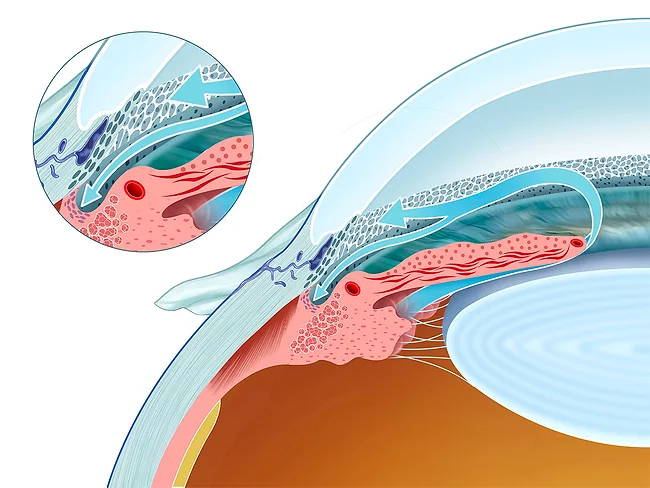
Scientists at Duke University have uncovered how macrophages help maintain intraocular pressure and have found that a specific type, resident macrophages, is essential for proper drainage of intraocular fluid. When these cells are removed, drainage becomes impaired and intraocular pressure rises, contributing to the development of glaucoma.
Scientists at Duke University have uncovered how macrophages help maintain intraocular pressure and have found that a specific type, resident macrophages, is essential for proper drainage of intraocular fluid. When these cells are removed, drainage becomes impaired and intraocular pressure rises, contributing to the development of glaucoma.
A recent study published in Molecular Therapy by researchers from West China Hospital at Sichuan University and collaborators aimed to investigate the effect of CaMKII gene therapy on retinal ganglion cell (RGC) protection in mouse models of retinal ischemia/reperfusion (I/R) injury and congenital glaucoma.
Another two biopharma companies priced IPOs on Nasdaq to raise a combined $350 million, becoming the fourth and fifth firms to debut on U.S. markets in 2026.