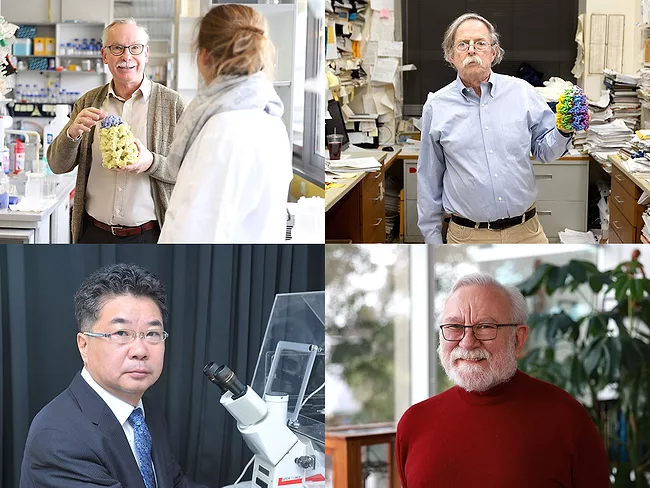
The discovery of how proteins fold and what happens if they don’t, or do it wrong, has impacted medicine. Protein function and several pathologies depend on folding. Four scientists, Franz-Ulrich Hartl, Arthur Horwich, Kazutoshi Mori and Peter Walter, revealed the role of chaperones in assisting proteins to acquire their correct structure and described a failure warning system, the unfolded protein response (UPR). For their studies, the researchers will receive the 2024 Frontiers of Knowledge Award in Biology and Medicine from the BBVA Foundation.
A team of scientists led by Liang Ge from Tsinghua University have identified a chaperonin subunit CCT2 as a new type of aggrephagy receptor which specifically accelerates the autophagic clearance of solid aggregates independent of ubiquitination, providing a promising therapeutic target for neurodegenerative diseases.
How organisms age, and what determines their lifespan, is one of the basic questions of biology. It is also a major area of biopharmaceutical interest. Partly, this is because most people want to delay shuffling off this mortal coil for as long as possible.