Concert Pharmaceuticals Inc. is on track for an NDA filing for CTP-543 in alopecia areata during the first half of 2023, following a positive read-out from the first of two phase III trials of the oral Janus kinase 1/2 inhibitor. The molecule hit the primary endpoint of the placebo-controlled Thrive-AA1 study, which was defined as the percentage of patients achieving a SALT (Severity of Alopecia Assessment Tool) score of 20 or less after 24 weeks of therapy.
LONDON – The U.K. Recovery trial has added a fourth drug to the list of therapies it has shown are effective in treating hospitalized COVID-19 patients, demonstrating the JAK inhibitor Olumiant (baricitinib) reduces the risk of death by 13% in seriously ill patients. That effect is in addition to treatment with dexamethasone, which became standard of care after the Recovery trial showed it reduced mortality by one-third in patients on ventilators.
In another cautionary tale for JAK inhibitors, the U.S. FDA is requiring updated boxed warnings for three drugs in the class that are approved to treat inflammatory conditions – Pfizer Inc.’s Xeljanz/Xeljanz XR (tofacitinib), Eli Lilly and Co.’s Olumiant (baricitinib) and Abbvie Inc.’s Rinvoq (upadacitinib).
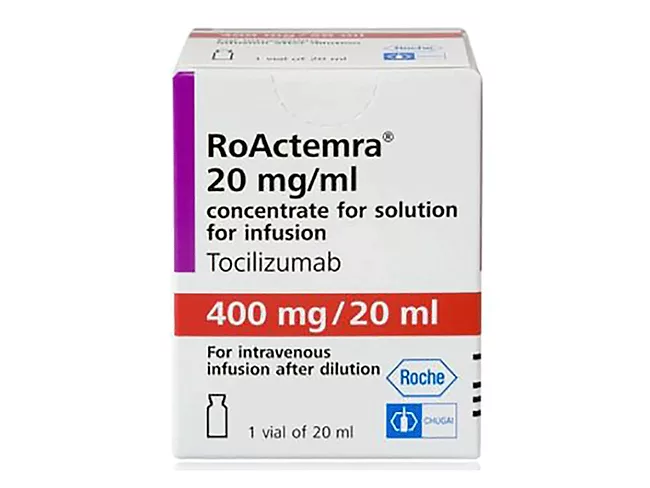
PERTH, Australia – As the Delta variant of SARS-CoV-2 sweeps across the globe, drugs like Roche Holding AG’s interleukin-6 receptor inhibitor Actemra (tocilizumab) are being used, often off-label, to treat serious cases of COVID-19. That usage, however, is resulting in serious drug shortages that may leave some without treatment options.
As more therapies are approved to treat severe atopic dermatitis, U.S. payers should make available at least one biologic and one JAK1 inhibitor, given how different the drug classes are in their onset of action and their risk profile, a panel of experts recommended at a recent Institute for Clinical and Economic Review (ICER) roundtable.
New top-line results from the phase IIb/III Allegro trial of Pfizer Inc.'s once-daily oral JAK3 inhibitor, ritlecitinib, have met the trial's primary efficacy endpoint of improving scalp hair regrowth in patients with alopecia areata vs. placebo. The new data, to be paired with long-term trial results from Pfizer's long-term Allegro-LT study, move the program one step closer to an expected early 2022 NDA filing.
Investigators at the University of California at San Francisco have identified a confounder that appears to be behind the purported anti-SARS-CoV-2 effects of a number of therapeutic candidates that were identified via repurposing.
As a first step in developing a portfolio of COVID-19 therapies, the European Commission identified five promising candidates June 29, including four monoclonal antibodies under rolling review at the EMA and an immunosuppressant that could have its marketing authorization extended to include the treatment of COVID-19 infections.
Challenges to ongoing efforts to provide effective aid for hospitalized patients with COVID-19 continued April 8, with two new trial failures reported. A phase III trial testing the Olumiant (baricitinib) vs. placebo, both on top of standard of care, missed its primary endpoint of progression to non-invasive ventilation, invasive mechanical ventilation or death, said drugmakers Eli Lilly and Co. and Incyte Corp. A phase II trial testing Beigene Ltd.'s Brukinsa (zanubrutinib) vs. placebo in patients hospitalized with respiratory symptoms of COVID-19 also fell short, missing its co-primary efficacy endpoints of respiratory failure-free survival or reduction in days on oxygen.
LONDON – After a number of equivocal small studies, the U.K. Recovery trial has applied its heft to turn in statistically significant evidence that the rheumatoid arthritis treatment Roactemra (tocilizumab) reduces mortality in hospitalized COVID-19 patients.