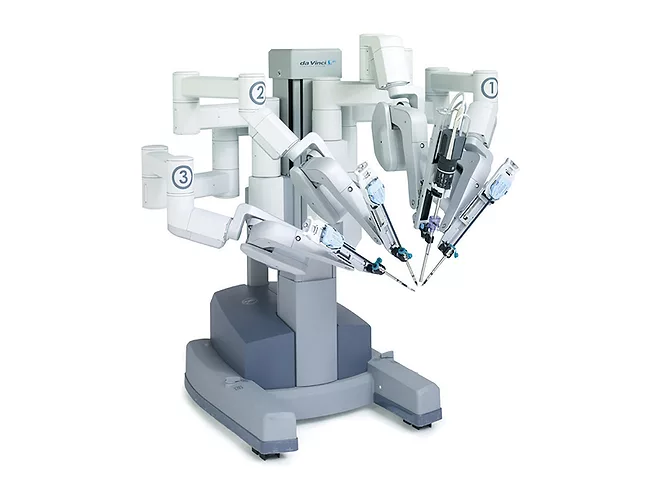
Intuitive Surgical Inc. strengthened its position as the market leader in robotic-assisted surgery in 2025 on the back of increasing demand for minimally invasive procedures. Intuitive’s da Vinci system is seeing robust growth in procedures and installations, fueling increased revenues.
The U.S. FDA’s clearance of Medtronic plc’s Hugo robotic-assisted surgery (RAS) system is certainly a boon for the company which is betting on the unit to be a key growth driver. While the soft tissue robotics market is dominated by Intuitive Surgical Inc.’s da Vinci system, the space is growing, and Medtronic has the scale, resources and market presence to make headway but there are also a plethora of smaller, versatile and cost-effective systems looking for a piece of the pie.
Medtronic plc expects its Hugo robotic-assisted surgery system to be a key growth driver, especially when it receives U.S. FDA approval. Already approved for use in Europe, Medtronic recently received CE mark for the Ligasure technology to be used with the Hugo RAS system, expanding its capabilities for gynecologic, general and urologic procedures, across the region.
Johnson & Johnson received U.S. FDA investigational device exemption to begin the pivotal clinical trial for the Ottava robotic surgical system. If the trial goes well, Ottava could pose a significant challenge to decades-long dominance of the robotic surgical market by Intuitive Surgical Inc.’s Da Vinci system.
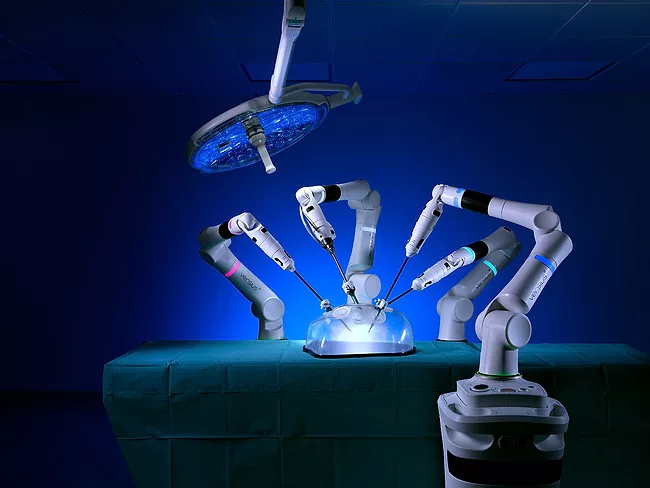
CMR Surgical Ltd. recently submitted its application to the U.S. FDA for approval for its Versius surgical system as it seeks to get more surgeons using the small, portable, robotic tool in laparoscopic procedures.
Johnson & Johnson expects to submit the long-awaited Ottava robotic surgical system to the U.S. FDA for an investigational device exemption (IDE) in the second half of 2024, nearly three years later than the company anticipated when its Ethicon Inc. unit acquired Ottava along with Auris Health Inc. in 2019.
Medical Microinstruments Inc. (MMI) is expanding its Symani surgical system into the Asia Pacific – a region with “clear demand for the technology” – through two local partners, Device Technologies Australia Pty Ltd. and Seoul-based TRM Korea Corp.
Intuitive Surgical Inc. benefited from keen interest in resuming surgeries during pandemic troughs and hospitals investing in its Da Vinci robotic system in preparation for a more endemic phase of COVID-19, Intuitive CEO Gary Guthart said in a presentation at the J.P. Morgan 40th Annual Healthcare Conference on Jan. 12. The company’s unaudited preliminary fourth quarter and full year 2021 results also showed strong growth in procedure volumes – 19% year-over-year compared to 2020 and 13% compared to 2019. Still, Intuitive reported that “during 2021, COVID-19 resurgences continued to impact Da Vinci procedure volumes. The impact of the COVID-19 pandemic on the company’s business has, and continues to, differ by geography and region.”
The FDA has posted an advisory regarding robotically assisted surgery (RAS) for mastectomy, but the agency also pointedly noted that it is aware of studies underway for such indications without the appropriate oversight. The FDA did not name Intuitive Surgical Inc. in the notice, but the company nonetheless responded to the FDA statement by confirming the absence of any devices thus approved or cleared. The FDA had previously issued a Feb. 28, 2019, advisory stating that the safety and efficacy of RAS devices for mastectomy and the prevention or treatment of breast cancer had not been established.
Robotic-assisted surgical procedures have fallen off steeply as the ongoing global pandemic has unfolded, but the real impact on Intuitive Surgical Inc. will come as its hospital customers may have to limit orders for expensive equipment upgrades as they struggle to manage unprecedented financial burdens. The U.S. accounts for about 70% of its robotic surgery procedures, but by the last few weeks in March, that activity had been curtailed by roughly two-thirds.