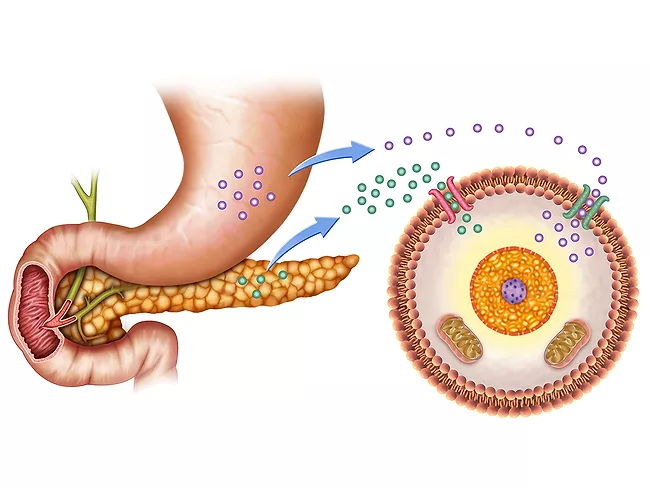
The main feature of type 1 diabetes is the destruction of pancreatic β cells that produce insulin. Immunotherapy directed at inhibiting immune interactions between cytokines and islet cells and preserving its functioning is key to reverse the progression of the disease.
Insulin secretion by pancreatic β cells is a fundamental component of glucose homeostasis. Aldehyde dehydrogenase 1 family member A3 (ALDH1A3) is a molecule involved in pancreatic β-cell dedifferentiation, leading to cell failure, and a marker of type 2 diabetes progression.
Preserving beta-cell mass and expansion is a key point in diabetes. Prolonged hyperglycemia may lead to glucose toxicity, which impairs insulin production and secretion, promoting a cycle with increasing glucose concentrations that promote a decline of beta-cell function and eventually their death.
Pre-existing insulin-secreting pancreatic beta cells, but not their progenitors, have been shown to contribute to new beta cells in the adult pancreas, according to a Chinese study led by scientists at the Shanghai Institute of Biochemistry and Cell Biology, Chinese Academy of Sciences.
So far, the excitement surrounding “living drugs” is that of pioneer work, with the Carl June and Steve Rosenberg playing the roles of Lewis and Clark or the Wright brothers.